

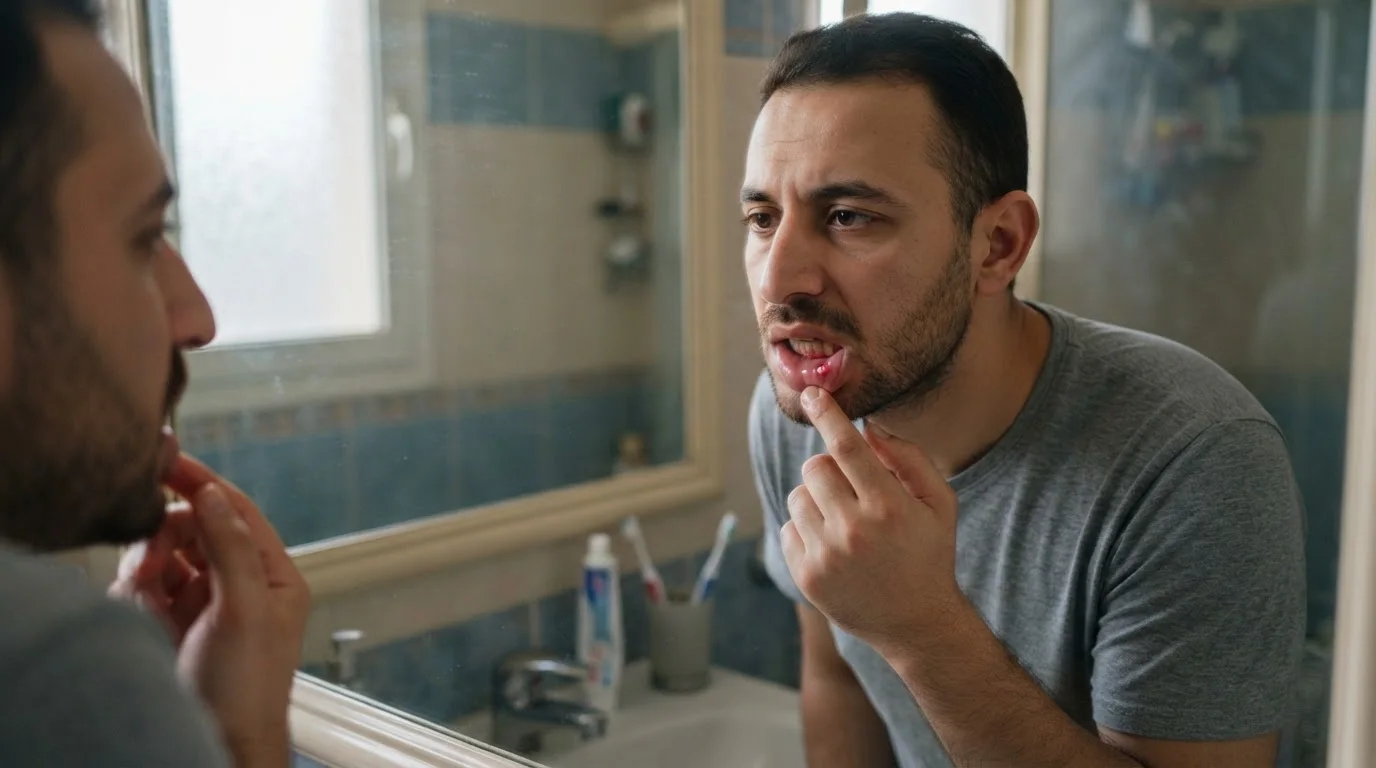
Mouth ulcers are among the most common oral problems, affecting at least 20% of people at some point in life. Most are minor and resolve on their own, but some may indicate deeper systemic disease. In this article, the ClinicsJo Editorial Team covers types, causes, and effective treatments.
Types of Mouth Ulcers
1. Minor Aphthous Ulcers
The most common (80% of cases). Small (2–8 mm), round, with a white center and red border. Appear inside the cheek, lip, or on the tongue. Heal in 7–14 days without scarring.
2. Major Aphthous Ulcers
Deeper and larger (more than 1 cm), more painful, may last weeks and leave a scar. Need medical treatment.
3. Herpetiform Ulcers
Clusters of 10–100 tiny ulcers that merge. Rare but uncomfortable.
4. Cold Sores (Oral Herpes)
Caused by Herpes Simplex Virus (HSV-1). Appear on the outside of the lip or around the mouth, starting as vesicles that burst. Contagious.
Canker Sores vs Cold Sores
- Canker: inside the mouth, non-contagious, non-viral cause.
- Cold sore: outside on the lip, contagious, caused by HSV.
Causes of Canker Sores
- Local injury: cheek bite, hard brush, orthodontic appliances.
- Vitamin/mineral deficiencies: B12, folate, iron, zinc.
- Stress and fatigue.
- Hormonal changes: menstrual cycle.
- Toothpaste sensitivity: sodium lauryl sulfate (SLS).
- Food allergies: nuts, chocolate, strawberries, coffee, tomatoes.
- Systemic diseases: lupus, celiac, Crohn's, ulcerative colitis, Behçet's.
- Medications: NSAIDs, beta-blockers.
- Immune suppression: HIV, chemotherapy.
Diagnosis
Mostly clinical. In recurrent or severe cases, the doctor may order:
- Blood tests (CBC, B12, folate, iron, ferritin).
- Food allergy testing.
- Biopsy to rule out cancer if the ulcer lasts more than 3 weeks.
- Workup for Behçet's (oral + genital ulcers + eye inflammation).
Topical Treatment
- Antiseptic rinses: chlorhexidine 0.2% twice daily.
- Topical anesthetic gel: benzocaine or lidocaine 2%.
- Topical steroid gel: triamcinolone in Orabase.
- Steroid rinse: dexamethasone (prescription).
- Tetracycline rinse: for recurrent cases.
- Silver nitrate cautery: in-office, speeds healing.
Home Remedies
- Rinse with warm salt water 3 times daily.
- Avoid spicy, acidic, or rough foods.
- Use SLS-free toothpaste.
- Consume yogurt and honey (natural anti-inflammatories).
- Drink celery juice or cold chamomile tea.
- Apply a cold wet tea bag to the ulcer.
- Avoid foods that trigger your sensitivity.
Prevention
- Eat a balanced, vitamin-rich diet.
- Correct any deficiency after blood work.
- Avoid trigger foods.
- Manage stress with exercise and meditation.
- Review medications with your doctor if suspected.
- Replace your toothbrush every 3 months.
Medical tip: Any mouth ulcer lasting more than 3 weeks must be evaluated to rule out oral cancer, especially in smokers and older patients.
When to See a Doctor Urgently
- An ulcer lasting more than 3 weeks.
- Recurrent monthly ulcers.
- Very large ulcers (>1 cm).
- Ulcers with fever, rash, or joint pain.
- Bleeding ulcers.
- Difficulty swallowing or speaking.
- Ulcers unresponsive to any treatment.
For accurate diagnosis and treatment of chronic ulcers, book an appointment with a dentist or dermatologist on ClinicsJo.