

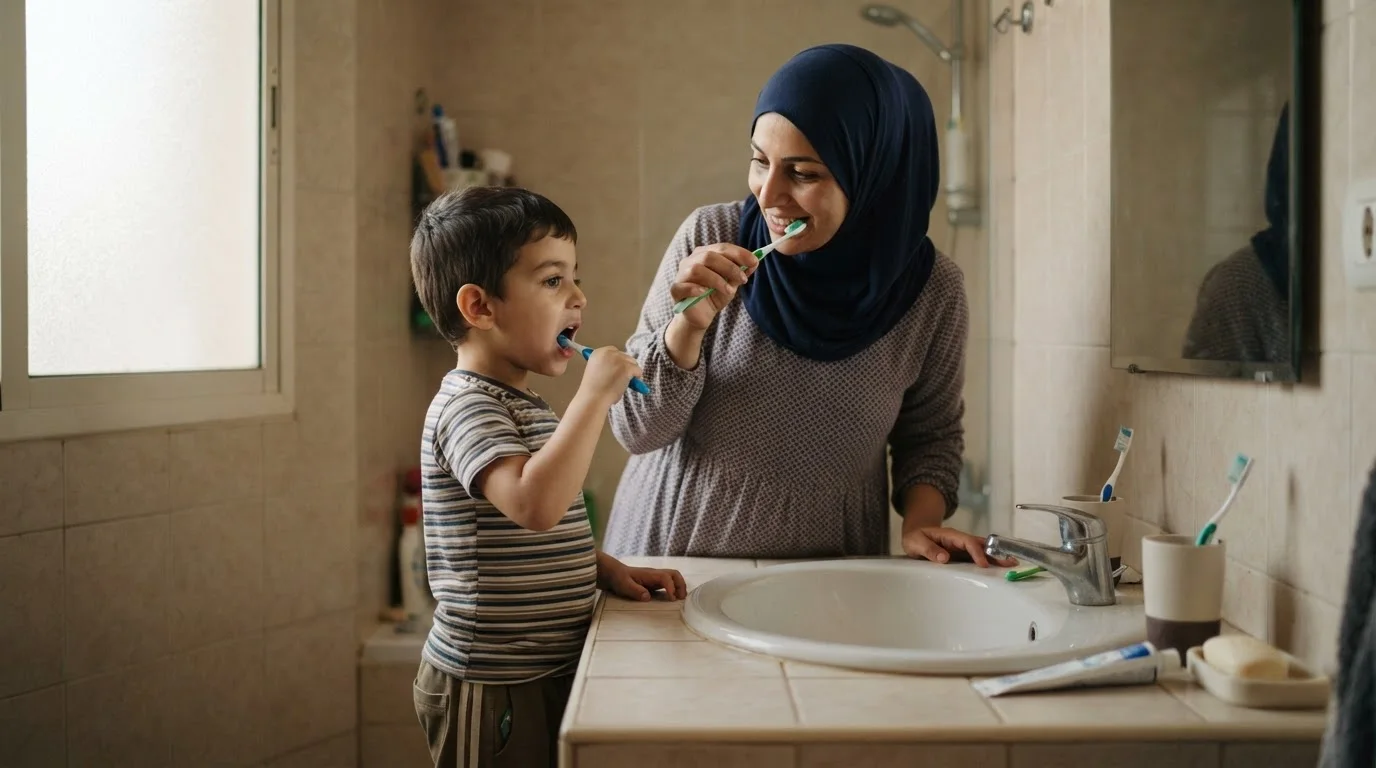
Children's dental health is the foundation of their adult oral health. Baby tooth decay affects permanent tooth development and a child's self-confidence. In this guide from the ClinicsJo Editorial Team, we answer parents' questions from the first tooth to the first dental visit.
When Do Baby Teeth Erupt?
The typical eruption order:
- Lower central incisors: 6–10 months.
- Upper central incisors: 8–12 months.
- Lateral incisors: 9–16 months.
- Canines: 16–23 months.
- First molars: 13–19 months.
- Second molars: 23–33 months.
All 20 baby teeth typically appear by age 3. A 1–2 month delay is normal.
Teething Symptoms in Infants
- Increased drooling.
- Biting on objects and fingers.
- Swollen, red gums.
- Irritability and disturbed sleep.
- Mild fever (no higher than 38°C / 100.4°F).
- Temporary reduced appetite for solid food.
When Do Baby Teeth Get Replaced?
Replacement starts at age 6 years and continues until age 12. The first permanent tooth to appear is the first permanent molar (six-year molar) just behind the baby teeth, then incisors fall and adult ones replace them in the same order.
How to Clean Your Child's Teeth
Before Teeth Erupt (0–6 Months)
Wipe gums with a clean damp cloth after every feeding.
Age 6–24 Months
Use a small, soft infant brush with rice-grain-sized fluoride toothpaste twice daily. Don't rinse; wipe with cloth.
Age 2–6 Years
Pea-sized fluoride toothpaste. Parents should brush themselves until age 5–6, then supervise.
Age 6+ Years
Child can brush alone with occasional supervision. Add flossing once teeth touch each other.
Tooth Decay in Children
Very common in Jordan; causes include:
- Frequent sweets and sugary drinks.
- Giving infants a milk bottle during sleep (Baby Bottle Tooth Decay).
- Neglecting bedtime brushing.
- Lack of routine dental visits.
- Genetics and weak enamel.
Baby Tooth Decay Treatment
- Topical fluoride: for the white-spot stage.
- Fissure sealants: protective coating on children's molars.
- White fillings: for mild to moderate decay.
- Stainless steel crowns: for large decay on baby molars.
- Baby tooth pulpotomy: when decay reaches the nerve.
- Extraction: last resort, followed by a space maintainer.
Medical tip: Baby teeth aren't "temporary teeth not worth caring for"; losing them early disrupts jaw development and crowds permanent teeth.
First Dental Visit
The American Dental Association recommends the first visit before the child's first birthday, or within 6 months of the first tooth. Early visits:
- Catch developmental problems early.
- Familiarize the child with the clinic without fear.
- Give parents key guidance on hygiene and nutrition.
Easing Your Child's Dental Anxiety
- Choose a pediatric dentist — colorful clinic and child-sized tools.
- Don't use scary words like "pain," "needle," or "drill."
- Never threaten your child with the dentist as punishment.
- Read books about dental visits before the appointment.
- Bring them along to your own visits first.
- Reward them after the visit (not with sweets!).
Sedation in Children
- Local anesthesia: very safe, used for most procedures.
- Laughing gas (N₂O): safe, reduces anxiety and enables longer treatment painlessly.
- Mild oral sedation: for uncooperative children.
- General anesthesia: for complex cases or multiple procedures, done in a hospital with an anesthesiologist.
For a complete assessment of your child's teeth, book an appointment with a pediatric dentist on ClinicsJo.


