

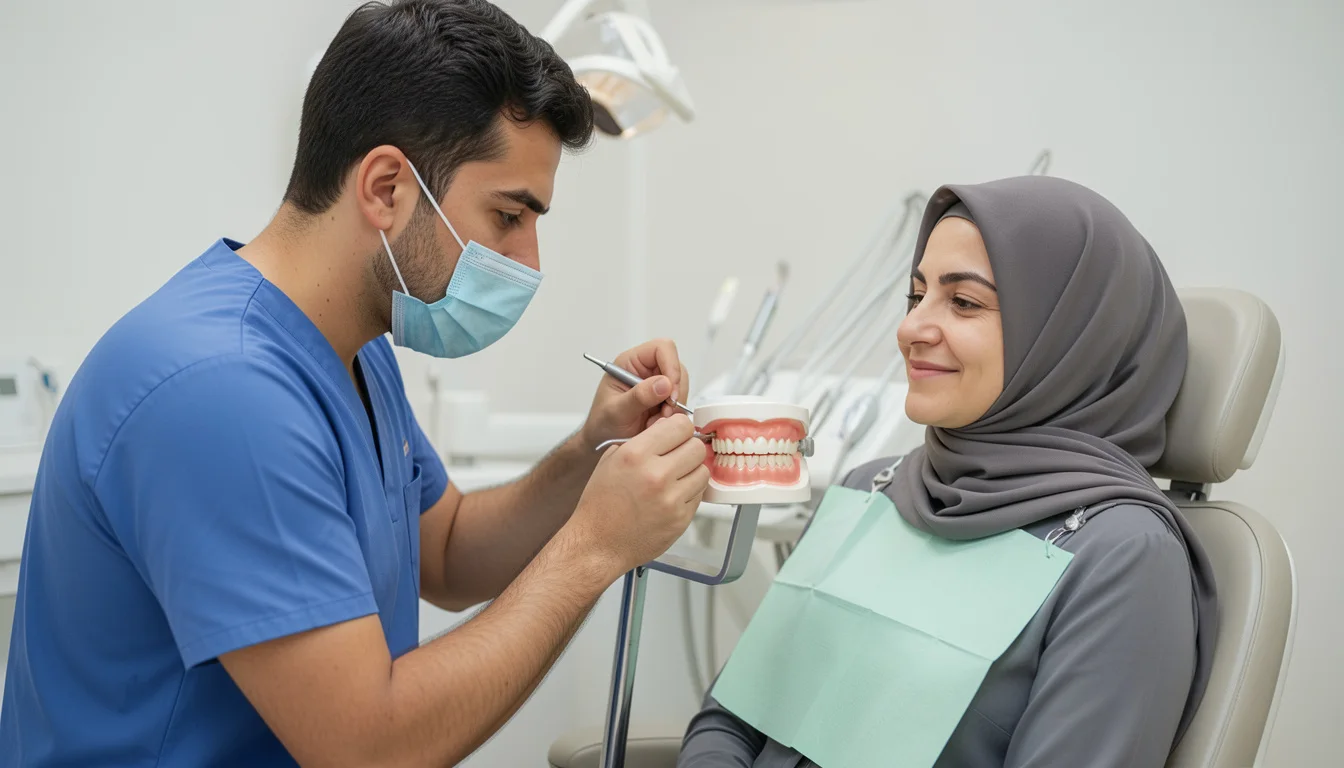
"Why do I need a professional cleaning when I brush daily?" A very common question. The short answer: brushing removes soft plaque, but it cannot remove the hardened tartar that builds up on teeth and below the gum line — and that's what a dental cleaning does. The ClinicsJo Editorial Team covers everything about this important session.
Plaque vs Tartar
- Plaque: a sticky, transparent biofilm of bacteria and food debris that forms within hours. Removable by brushing and flossing.
- Tartar (calculus): plaque that has hardened with calcium salts from saliva. Visible as a yellow or brown layer on teeth and at the gum line. Cannot be removed by brushing — requires specialized in-office tools.
Why Tartar Is Harmful
- Harbors millions of bacteria that cause gum disease.
- Leads to gum recession and bone loss.
- Causes bad breath.
- Can hide underlying decay.
- Discolors teeth.
- May extend below the gum line (subgingival calculus) and cause advanced disease.
Signs You Need a Cleaning
- Visible yellow or brown layer on teeth.
- Bleeding gums when brushing.
- Bad breath.
- Red, swollen gums.
- Rough tooth surface when you run your tongue over it.
- More than 6 months since your last cleaning.
Cleaning Session Steps
- Initial exam: the dentist checks for decay, gum disease, or signs of other conditions.
- Ultrasonic scaling: a device emits fine vibrations to break up tartar, accompanied by a water spray for cooling and rinsing.
- Hand scaling: precise hand tools (curettes) remove remaining tartar, especially under the gum line.
- Polishing: a special paste and rotating rubber cup remove surface stains and smooth the enamel.
- Interdental cleaning: floss or fine brushes.
- Fluoride application: optional, to strengthen enamel.
Is the Cleaning Painful?
Usually not. You may feel mild vibration and some sensitivity if you already have sensitive teeth or heavy subgingival tartar. The session takes 30–60 minutes and is a non-surgical preventive procedure. If you feel pain, mild local anesthesia can be requested.
When Is Deep Cleaning Needed?
If subgingival tartar has built up and extended into deep gum pockets, you need scaling and root planing — a deep cleaning over several sessions under local anesthesia, used to treat periodontitis.
How Often Should You Get a Cleaning?
- Healthy adults: every 6 months.
- Smokers, diabetics, pregnant women: every 3–4 months.
- Gum disease patients: per dentist's recommendation (every 3–6 months).
- Children: typically once a year with their routine exam.
Benefits of Regular Cleaning
- Prevents gum disease and tooth loss.
- Catches decay early.
- Early detection of oral cancer.
- Improves breath.
- Whiter teeth from stain removal.
- Supports general health (gum disease links to heart disease and diabetes).
Medical tip: Don't worry about small gaps you may feel between teeth after a cleaning — those were filled with tartar, and you'll adjust within days. The sensation means tartar was successfully removed.
Does Cleaning Damage Enamel?
No — this is a common myth. The tools used are precise and designed safely; they don't scratch enamel. What damages teeth is accumulated tartar, not cleaning.
Post-Cleaning Instructions
- You may feel temporary sensitivity for 2–3 days; use a sensitive-teeth toothpaste.
- Avoid very hot or cold foods for the first day.
- Avoid staining foods (coffee, tea, berries) for 24 hours after polishing.
- Resume daily oral hygiene immediately.
Cleaning Costs in Jordan
- Standard cleaning: JOD 25–50.
- Cleaning with polishing and fluoride: JOD 35–70.
- Deep cleaning (scaling and root planing): JOD 100–200 per arch.
For routine cleaning and preventive exams, choose a trusted dentist on ClinicsJo.