

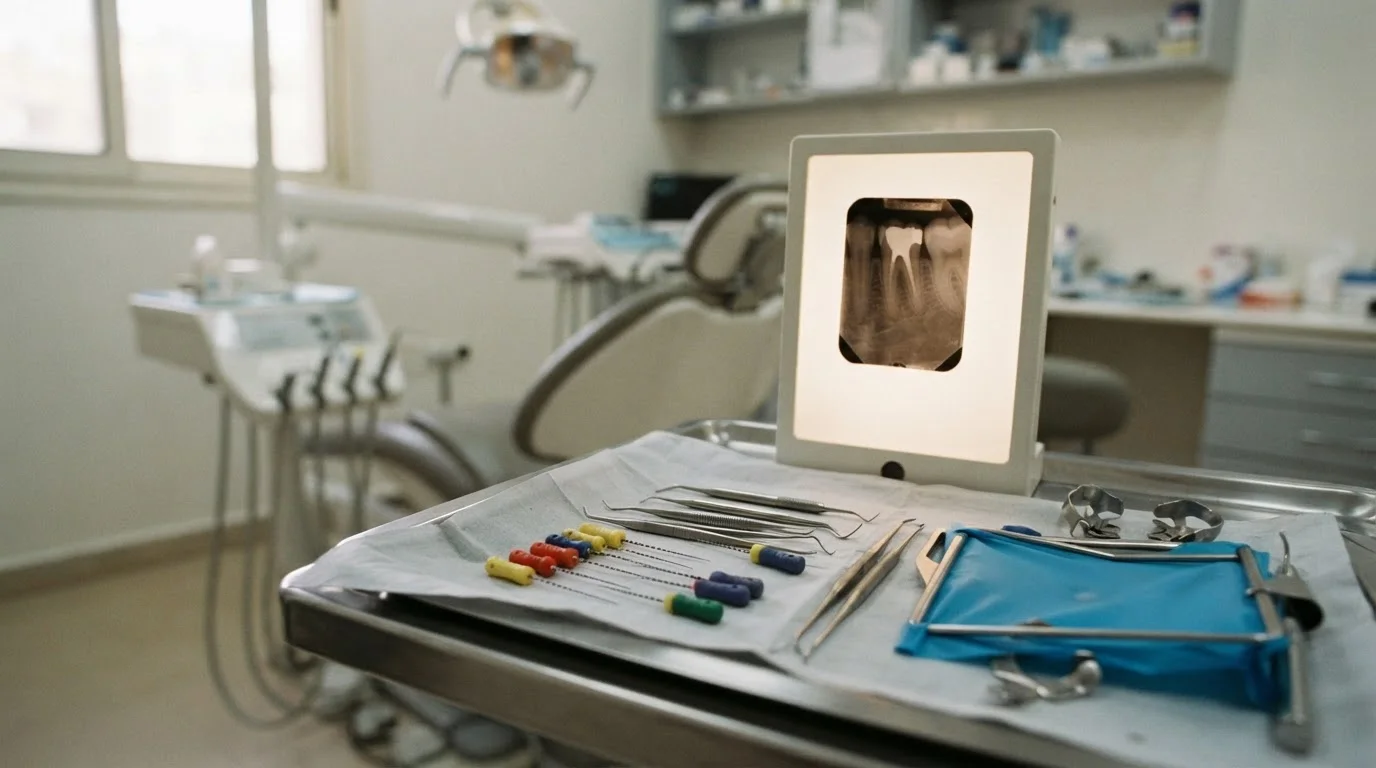
Root canal treatment, often informally called "nerve removal," is one of the most feared dental procedures — yet modern anesthesia and instrumentation have made it virtually painless. In this guide, the ClinicsJo Editorial Team explains when it's necessary, how it's performed, and the alternatives.
What Is Root Canal Treatment?
Inside every tooth is a soft tissue called the pulp, containing nerves and blood vessels. When the pulp becomes infected or severely inflamed from deep decay, fractures, or trauma, root canal treatment removes this dead pulp, cleans and disinfects the root canals, then fills them with a special material to prevent reinfection.
When Is a Root Canal Needed?
- Deep decay that has reached the nerve.
- Pulp inflammation with severe persistent pain.
- A crack or fracture reaching the nerve.
- An abscess at the root tip (swelling, pus, fever).
- Past trauma (e.g., from an accident) that killed the nerve.
- A darkened tooth indicating nerve death.
Signs You May Need a Root Canal
- Severe persistent pain that worsens at night.
- Spontaneous pain without a trigger.
- Pain lasting more than 30 seconds after a thermal trigger.
- Swelling of the gum or face.
- Severe hot and cold sensitivity.
- Tooth darkening to gray.
- Pain on biting or pressure.
- A sinus tract (small opening in the gum draining pus).
Root Canal Treatment Steps
- Diagnosis: clinical exam + X-rays to confirm pulpitis or abscess.
- Local anesthesia: strong injection to completely numb the area.
- Isolation: a rubber dam is placed around the tooth to prevent saliva contamination.
- Access: a small opening is made into the top of the tooth.
- Pulp removal: using very fine files.
- Cleaning and disinfection: with special irrigants (hypochlorite).
- Canal length measurement: using an apex locator and X-rays.
- Canal filling: with gutta-percha material and dental cement.
- Temporary or permanent filling.
- Final crown: essential to protect the tooth, especially molars.
Is a Root Canal Painful?
No — modern root canal therapy is virtually painless thanks to strong local anesthesia. Many patients describe it as easier than a large filling. The pain people fear is actually the inflamed tooth itself before treatment, which disappears once the dead nerve is removed. Mild discomfort may persist for 1–3 days post-treatment, managed with simple painkillers.
How Many Sessions?
Depends on the tooth type and number of canals:
- Front teeth (one canal): 1–2 visits.
- Premolars (1–2 canals): 1–2 visits.
- Molars (3–4 canals): 2–3 visits.
Root Canal Costs in Jordan
- Front teeth: JOD 70–120.
- Premolars: JOD 100–150.
- Molars: JOD 130–200.
- Retreatment of a failed previous root canal: JOD 200–300.
- Crown after root canal: JOD 150–400.
Medical tip: Don't delay the crown more than 1–2 months after a root canal. A treated tooth becomes very brittle and prone to fracture under chewing forces.
Success Rate
Success rate ranges from 85% to 95% in expert hands, and the treated tooth can last decades. Failures occasionally happen due to: undiscovered extra canals, root fractures, or reinfection from a leaking crown.
Is Extraction a Better Option?
The modern dental approach is preserving natural teeth whenever possible. Extraction is a last resort because:
- A natural tooth is better than any artificial replacement.
- Implant + crown cost is much higher than root canal + crown.
- Extraction affects adjacent teeth and surrounding bone.
If you have severe tooth pain, don't delay — book an appointment with a dentist or endodontist for evaluation and the right treatment plan.
