

Best Joint Replacement Clinic in Aqaba
This page shows 2 of 2 matching clinics on ClinicsJo in Aqaba. Compare the published specialty, practice location and available contact or booking options to choose a provider suited to your needs. Featured placement is not a clinical ranking.
2 clinics
Results use recorded primary and secondary specialties. Main specialties include their child specialties; review the doctor, clinic and listed services before booking.
Clinics specialised in Joint Replacement in Aqaba
Owner-selected priority within featured profiles appears first, followed by admin placements, then a random selection that stays consistent throughout the day. Specialty, service and publication rules remain required; cards identify featured options from the wider Amman area. This is not a clinical ranking; confirm details and availability with the clinic.
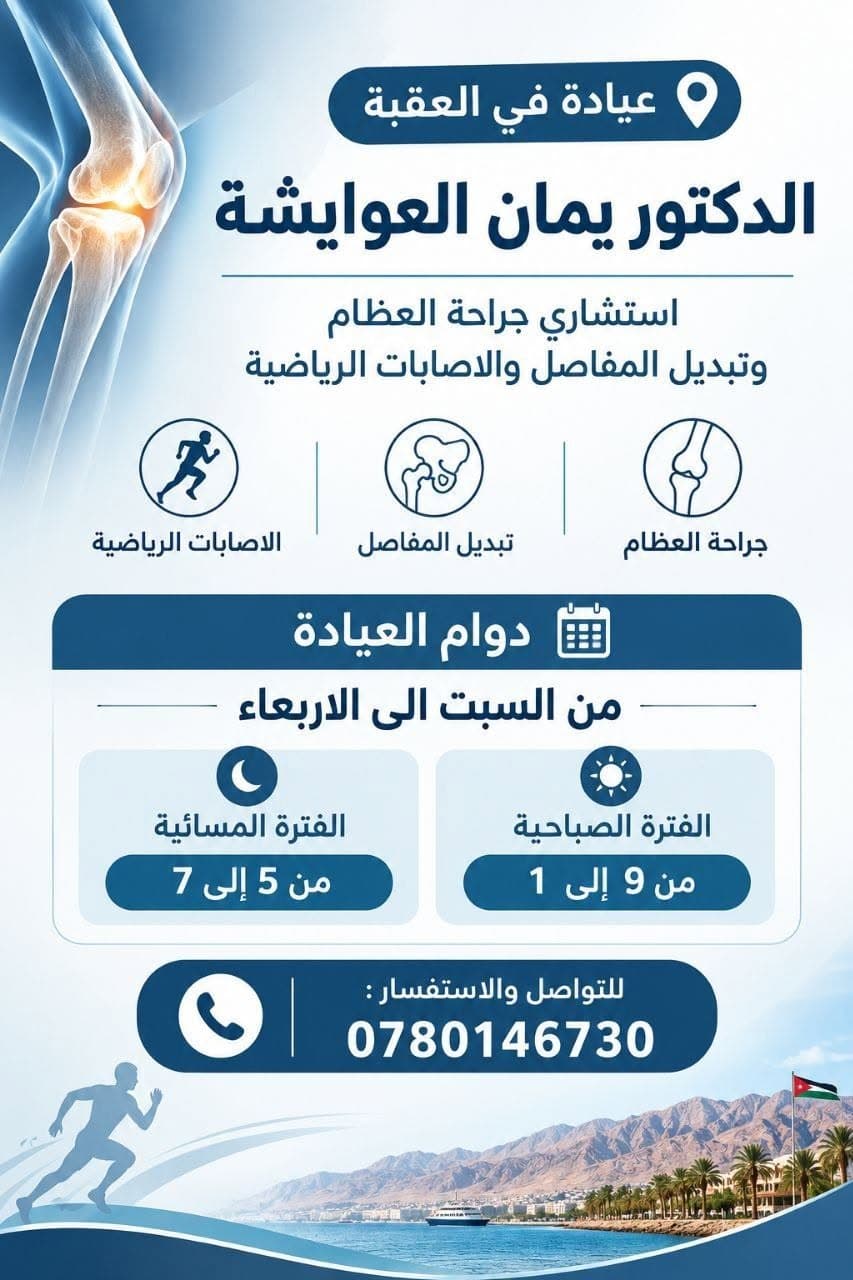

More best-of lists in the same place
- Top 79 Clinics in Aqaba
- Top 76 Doctors in Aqaba
- Top 41 Dentistry Doctors in Aqaba
- Top 41 Dentistry Clinics in Aqaba
- Top 14 Cosmetic Dentistry Doctors in Aqaba
- Top 13 Dental Implants Doctors in Aqaba
- Top 9 Prosthodontics (Crowns & Bridges) Doctors in Aqaba
- Top 6 Obstetrics & Gynecology Doctors in Aqaba
- Top 6 Ophthalmology Doctors in Aqaba
- Top 6 Obstetrics & Gynecology Clinics in Aqaba
- Top 5 Orthodontics Doctors in Aqaba
- Top 4 Retina Doctors in Aqaba
Joint replacement surgery in Aqaba is an effective surgical solution for people suffering from severe joint wear and tear, particularly in the hip and knee, which limits movement and daily functioning. In Aqaba Governorate, home to around 250,000 residents and blessed with warm winters year-round, these procedures are now available at several government and private hospitals equipped with state-of-the-art technology. Whether you live in Aqaba city itself or in nearby areas like Al-Quwaira, Wadi Araba, or Wadi Rum, finding the best orthopedic surgeon specializing in joint replacement requires clear knowledge of the doctor's qualifications, experience, and patient feedback.
About Joint Replacement and Its Medical Importance
Joint replacement (Arthroplasty) is a surgical procedure in which the damaged part of a joint is removed and replaced with an artificial substitute called a prosthesis. Common reasons for undergoing this procedure include:
- Advanced osteoarthritis (OA): wearing away of natural cartilage causing persistent pain and stiffness.
- Rheumatoid arthritis: leading to rapid joint deterioration.
- Complex fractures: that do not respond to conservative treatments.
- Avascular necrosis: typically in the hip.
- Obesity and advanced age: among the most common risk factors.
The most commonly replaced joints are the knee, hip, and shoulder. Patients should consult an orthopedic surgeon when experiencing persistent pain, swelling, or limited mobility despite conservative treatments (medication, physiotherapy, injections).
Local Medical Context in Aqaba Governorate
Aqaba, as a strategic economic seaport on the Red Sea, is experiencing growth in its medical services. The region enjoys warm winter weather, which facilitates recovery after joint surgeries, and residents face no harsh climatic challenges during rehabilitation. The governorate is home to several government and private hospitals:
- Prince Hashim bin Abdullah II Military Hospital: offers advanced services for military personnel and insured beneficiaries.
- Aqaba Modern Hospital: a private center with modern facilities.
- The Islamic Hospital: serves broad segments of the population.
- Aqaba University Hospital: offers multidisciplinary services.
Additionally, since 2025, a King Hussein Cancer Center facility has opened in Aqaba, reflecting commitment to developing medical infrastructure for patients across the southern governorates (Ma'an, Karak, and Aqaba).
Residents of neighboring areas such as Al-Quwaira, Wadi Rum periphery, Al-Disah, and Wadi Araba typically travel to central Aqaba clinics and hospitals for specialized care.
How to Choose the Best Joint Replacement Surgeon in Aqaba
Selecting the right doctor is fundamental to surgical success. Here are effective criteria for choosing:
### 1. Qualifications and Credentials - Look for a surgeon with a Jordanian or Arab Board certification in orthopedic surgery and joint care. - Prefer someone who completed specialized training abroad (USA, Europe) focusing on joint replacement procedures. - Verify the doctor is a member of the Jordanian Medical Association with no disciplinary records.
### 2. Specific Specialty and Experience - Do not settle for a general orthopedic doctor; seek one specializing exclusively in joint replacement (especially hip and knee). - Ask about the number of procedures performed annually — a leading surgeon performs dozens of cases yearly. - Ideally, the surgeon should have at least 10-15 years of experience post-training.
### 3. Patient Reviews and Feedback - Inquire about long-term prosthesis outcomes (how many years before complications arise). - Check patient ratings on reliable medical platforms. - Request before-and-after images and testimonials from previous patients.
### 4. Facility and Equipment - Verify the hospital has advanced imaging technology (MRI and 3D X-ray). - Look for use of computer-assisted surgical navigation or robotic-assisted systems, if available. - Choose clinics and hospitals that are internationally accredited for cleanliness and safety standards.
### 5. Communication and Post-Operative Care - Select a doctor who dedicates adequate time to initial consultation and answers your questions clearly. - Ensure availability of regular follow-up programs (minimum 6–12 months post-surgery). - Confirm provision of specialized physiotherapy and rehabilitation services to maximize success rates.
### 6. Insurance Recognition and Financial Flexibility - Confirm the clinic accepts major insurance plans (see next section). - Request a clear explanation of total costs before signing any consent.
Pricing and Health Insurance in Aqaba
The cost of single joint replacement (knee or hip) in Jordan ranges between:
- Government hospitals: 4,500 — 6,500 Jordanian Dinars (without insurance).
- Private hospitals and specialized centers: 7,500 — 12,000 Jordanian Dinars (depending on prosthesis quality and facility reputation).
Note: These are approximate prices and vary based on prosthesis type (metal, ceramic, plastic), surgeon reputation, and hospital standing.
Recognized Health Insurance Providers
Most Jordanian health insurance companies cover joint replacement surgeries (especially for medically necessary cases):
- Globemed: comprehensive coverage for most cases after evaluation.
- MetLife: comprehensive insurance with a wide network of hospitals.
- Allianz: known for rapid approval of necessary joint surgeries.
- NextCare (نكست كير): flexible plans with good coverage.
- Arab Orient (المشرق العربي): reliable local insurance.
- Jordan Insurance (الأردنية للتأمين): traditional but reliable coverage.
Before Booking: contact your insurance provider to confirm: - Coverage percentage (usually 70–100%). - List of approved hospitals and doctors. - Waiting period clauses (some policies exclude surgeries in early months).
What to Expect in Your Treatment Journey
### Before Surgery (2–4 Weeks) 1. Initial Consultation: the doctor will request imaging (X-rays, MRI), perform a full clinical examination. 2. Laboratory Tests: blood work, cardiac and renal function tests, ECG (especially for patients over 50). 3. Anesthesia Consultation: to ensure safety under general anesthesia. 4. Medical Preparations: the doctor may ask you to stop certain medications (e.g., blood thinners). 5. Pre-Operative Fasting: usually 6–8 hours before surgery.
### Day of Surgery - The procedure takes 1–2 hours depending on joint type and prosthesis. - Usually performed under general anesthesia. - You may remain hospitalized one or more nights for monitoring and pain control.
### After Surgery (First Weeks and Months) 1. Week 1: complete rest, limb elevation, ice application. 2. Weeks 2–4: begin light physiotherapy (stretching and gentle strengthening). 3. Months 2–3: gradual increase in movement, walking without crutches (in most cases). 4. Months 4–6: gradual return to daily activities. 5. Months 9–12: full recovery of strength and mobility (in successful cases).
### Long-Term Follow-Up - Follow-up visits at 6 weeks, 3 months, 6 months, then one year post-surgery. - Periodic X-rays to confirm prosthesis stability. - Avoid strenuous activities or heavy lifting for life (may damage the prosthesis). - Maintain a healthy weight to reduce pressure on the artificial joint.
Additional Tips for Aqaba and Surrounding Areas Residents
- Aqaba's warm climate aids rehabilitation; take advantage by practicing walking exercises with a specialist.
- If you live in Al-Quwaira or Wadi Araba, do not hesitate to visit central Aqaba hospitals — the distance is manageable and services are superior.
- Schedule consultations in the morning if possible to avoid intense heat and ease post-surgery mobility.
- Contact your employer's HR department to confirm your right to full medical leave (typically 3–4 weeks minimum).
Frequently asked questions
How many Joint Replacement clinics in Aqaba are listed on ClinicsJo?
There are currently 2 matching published profiles in this directory. This is the platform's published inventory, not a census of all doctors in the area. Availability changes as profiles are updated.
How do I choose the best fit among Joint Replacement clinics in Aqaba?
Compare the published specialty, qualifications, practice address and any patient reviews. Confirm that the doctor sees your age group and condition. A featured listing or a high rating alone is not a clinical recommendation.
How much is a consultation with Joint Replacement clinics in Aqaba?
Fees depend on the doctor, clinic and service. A price is shown only when it has been supplied; a missing price does not mean the consultation is free. Confirm the current fee, follow-up terms and any additional charges with the clinic before booking.
How can I check insurance for Joint Replacement clinics in Aqaba?
Check any insurer information published in the profile, then confirm the exact policy network, referral or approval requirements and your share of the cost with the clinic and insurer. A company name in a profile does not confirm coverage for every policy or procedure.
How do I book with Joint Replacement clinics in Aqaba?
Use the booking option or contact details available in the chosen profile. Confirm the appointment time, branch and doctor with the clinic before travelling. Booking availability and required details vary by clinic.
Are you a doctor in Aqaba?
Help patients find your specialty, practice location and contact options. Explore ClinicsJo membership and clinic management.