
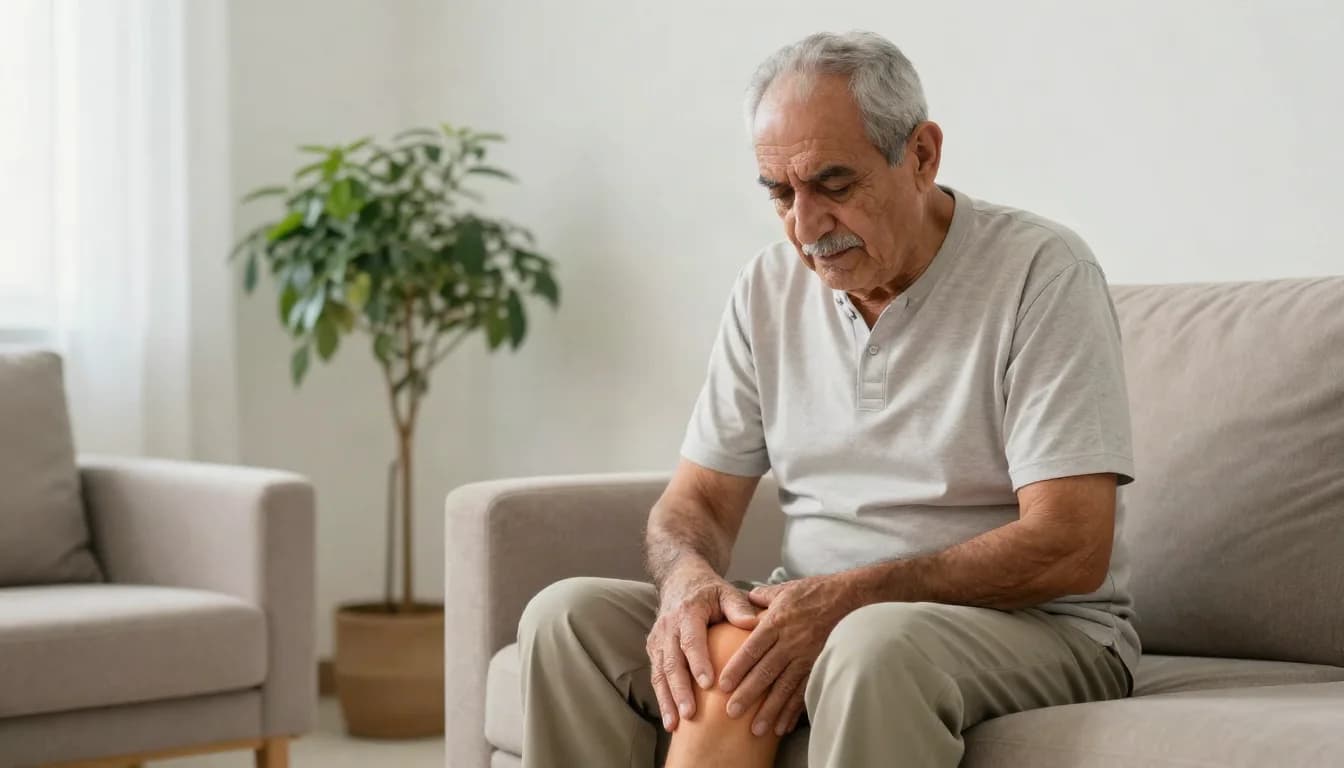
Calcific shoulder tendonitis is the deposition of calcium crystals inside one of the rotator cuff tendons, most often the supraspinatus. The deposit itself may sit silently for years without causing symptoms. Pain usually appears when the body starts to reabsorb it: the tendon becomes inflamed and swollen, and the shoulder turns acutely painful, typically worse at night, when lifting the arm overhead, reaching a high shelf or fastening a seat belt. Assessment starts with a clinical examination that locates the source of pain and separates calcific tendonitis from a rotator cuff tear, bursitis, a frozen shoulder, or pain referred from the neck. A plain X-ray usually shows the deposit, and ultrasound may be added to define its exact position, its consistency and how close it lies to the tendon surface, because those details decide which treatment is likely to help. The condition follows a natural sequence of phases, and many patients improve without surgery. Care is built in layers: pain control, a guided exercise programme that protects range of motion and strengthens the shoulder-blade muscles, shockwave therapy, ultrasound-guided needling and aspiration of the deposit, and a selective injection into the bursa around the tendon rather than into the tendon itself. Arthroscopic surgery is a late option, reserved for shoulders that have not responded after an adequate period of organised non-surgical care. Knowing the limits matters. Removing the deposit does not switch the pain off the same day, because the tendon needs time to settle. An injection reduces inflammation but does not repair an existing tendon tear, and no procedure guarantees that calcium will never re-form. A deposit seen on the X-ray of a painless shoulder is not a disease that requires intervention. **Complete rest and keeping the arm in a sling are not treatment.** Prolonged immobility leads to stiffness and a frozen shoulder, and a frozen shoulder itself improves with time and regular exercise, not with rest. Suitability for any step is decided by clinical examination, never by reading a web page.
Procedure steps
- 1
Clinical assessment and pain mapping
The doctor measures shoulder range and rotator cuff strength and performs localising tests that separate tendon, bursa, joint and neck as pain sources, alongside a history of night pain, aggravating movements and the effect on work and sleep.
- 2
Imaging to characterise the deposit
A plain X-ray shows the position and size of the calcification, and ultrasound may be added to judge its consistency, its distance from the tendon surface and the state of the adjacent bursa, and to exclude a tear that would change the plan.
- 3
Guided conservative treatment
Treatment begins with pain control and modification of provoking movements, combined with daily guided exercises that preserve range of motion and strengthen the scapular muscles. Exercise is the core of care; its aim is to prevent stiffness, not to force the shoulder through pain.
- 4
Ultrasound-guided needling or shockwave therapy
If pain persists, options include breaking the deposit down with shockwave therapy over several sessions, or ultrasound-guided needling and aspiration under local anaesthesia. Pain may briefly increase after the session before it settles.
- 5
Arthroscopy then rehabilitation
For resistant cases, arthroscopy removes the deposit and addresses associated bursitis or subacromial narrowing. Guided movement starts early afterwards, and rehabilitation continues over weeks to months.
Before the procedure
Tell your doctor how long the pain has lasted and what makes it worse, about any previous shoulder injury or operation, and about every medicine or supplement you take, especially blood thinners. Mention allergies, diabetes or high blood pressure. Bring earlier X-rays and reports so tests are not repeated without reason. If needling or an injection is planned, wear loose clothing that allows the whole shoulder to be exposed, and do not fast unless you are specifically asked to. Arrange someone to drive you home if stronger sedation is expected. Never stop a prescribed medicine on your own. Ask before the session what a realistic goal is and when the result will be judged, and start any prescribed exercises beforehand, because a shoulder that already moves rehabilitates faster afterwards.
After the procedure
Expect some pain or heaviness in the shoulder for a few days after needling or shockwave therapy, and use short cold packs together with the pain relief your doctor prescribed. Move the shoulder daily within the allowed range and do not keep the arm in a sling for long, because prolonged immobility causes stiffness that is hard to reverse. Avoid overhead lifting and heavy loads until your doctor allows them, and attend your physiotherapy sessions, since they are what consolidates the result. **Seek care immediately if you develop fever, hot red swelling or discharge at the injection site, pain that escalates quickly and is not eased by analgesia, sudden inability to lift the arm after an injury, or numbness and weakness spreading into the arm or hand.** If shoulder pain comes with chest pain, breathlessness or sweating, go to the emergency department at once.
Expected duration
An assessment visit usually takes 20 to 30 minutes. A shockwave session commonly lasts 10 to 20 minutes and is repeated over several sessions. Ultrasound-guided needling and aspiration usually takes 20 to 40 minutes with a short observation period afterwards. Arthroscopy often takes 45 to 90 minutes, and rehabilitation continues over weeks to months.
Our directory of Calcific Shoulder Tendonitis Treatment doctors in Jordan is growing
There are no matching published profiles in this directory yet. ClinicsJo is expanding its coverage and working to welcome more Calcific Shoulder Tendonitis Treatment doctors in Jordan. Check this page regularly for newly added profiles, practice details and available contact options.
Browse all doctorsBrowse Hand & Upper Limb Surgery profilesFinding Calcific Shoulder Tendonitis Treatment services in Jordan
Which doctors are listed for Calcific Shoulder Tendonitis Treatment in Jordan?
There are currently no doctor profiles linked to Calcific Shoulder Tendonitis Treatment in this directory. You can browse the related specialty or the wider doctors directory. This does not mean that the service is unavailable in Jordan.
How can I find an appointment for Calcific Shoulder Tendonitis Treatment?
Start with an available doctor's profile and use the contact or booking options shown there. Confirm the service, practice location and appointment time with the clinic. If this list is empty, broaden your search using the directory links on this page.
What does Calcific Shoulder Tendonitis Treatment cost in Jordan?
Ask the practice for the current price and what it includes. A consultation fee shown on a profile is not necessarily the price of a procedure, tests or follow-up. Confirm any additional charges and insurance arrangements before your visit.