
Diet for irritable bowel syndrome patients in Jordan
نظام غذائي لمرضى القلون العصبي
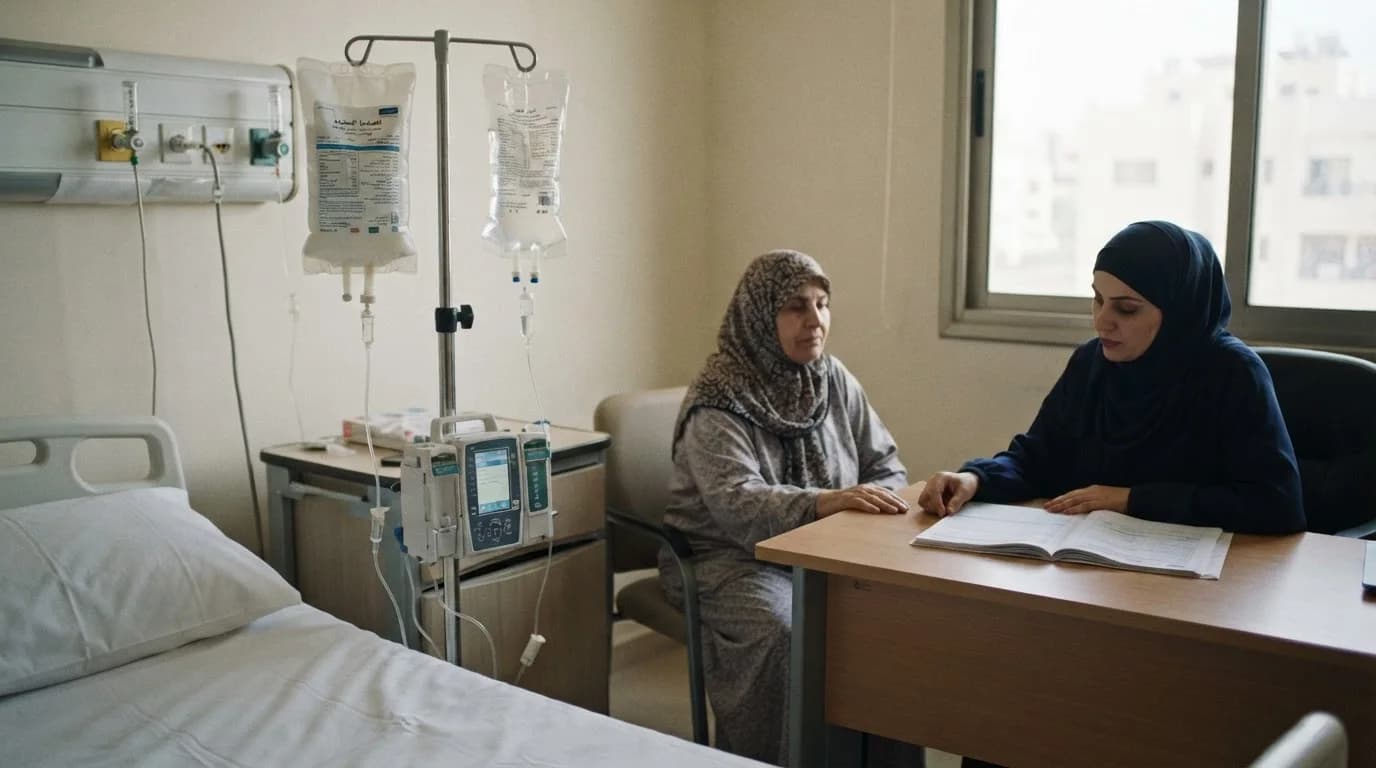
Dietary care in irritable bowel syndrome is a staged plan managed by a dietitian together with the doctor to reduce bloating, pain and disturbed bowel habit. It is not a permanent list of banned foods. IBS is a functional disorder: the bowel works and no visible damage is found at endoscopy, but its sensitivity and motility are disturbed. The diagnosis is clinical, based on the pattern and duration of symptoms once conditions that mimic it have been excluded, such as coeliac disease, inflammatory bowel disease, thyroid disorders and lactose intolerance. For that reason the service starts with a clear diagnosis rather than with a self-chosen diet. The plan is built around the dominant symptom pattern in this particular patient: diarrhoea, constipation or alternation between them, the severity and timing of bloating, the eating history, medicines, anxiety and sleep, weight and its trend, and whatever tests the doctor requested. In practice work begins with the basics, which are often enough on their own: regular meal times, eating slowly and calmly, moderating caffeine, fizzy drinks, fried fat and sweeteners, and adjusting the type of fibre according to the dominant pattern, because not all fibre helps everyone and some kinds increase bloating. If the basics are not enough, a structured trial of reduced fermentable carbohydrates, widely known as a low-FODMAP approach, is run in phases, and this is where the common danger lies. **The restriction phase is temporary and limited, and structured reintroduction is a compulsory part of the treatment.** Staying on broad restriction for months without supervision impoverishes the diet, harms muscle mass and the beneficial gut flora, and makes social life harder than the symptoms were. That is why no food lists or portions are published here: the approach is managed by a dietitian who knows how to bring a patient out of it, not only how to start it. The limits must be stated: **diet does not cure irritable bowel syndrome**. It reduces symptoms in many people, does not help everyone to the same degree, does not replace the doctor's treatment, and does not address the accompanying anxiety or stress, which needs its own approach. Be wary too of severe elimination diets adopted without supervision, of commercial food-sensitivity blood tests sold to identify forbidden foods, which are not an accepted way to diagnose food intolerance, of colon-cleansing mixtures and herbal products of unknown origin, of fat-burner supplements, and of slimming injections promoted without diagnosis, some of which worsen bowel symptoms in the first place. Ketogenic eating or prolonged fasting without supervision can deepen constipation and narrow the diet further, and in diabetes or kidney disease it is a medical decision. Whether any phase of the plan is appropriate and how long it should last are decided by clinical assessment and laboratory results, not by reading a page. Dietitian and gastroenterologist work together, and the plan is reviewed whenever symptoms change or a warning sign appears that calls for fresh investigation.
Procedure steps
- 1
Confirming the diagnosis and excluding mimics
The pattern and duration of symptoms and their relationship to bowel movements are reviewed, with direct questions about warning signs such as weight loss, blood in the stool, anaemia, symptoms that wake the patient at night, and a family history of bowel cancer. The doctor's tests are reviewed to exclude coeliac disease, inflammation and thyroid disorders, and no dietary restriction begins until the diagnosis is clear.
- 2
Assessing intake, habits and symptoms
A food and symptom diary of seven to fourteen days is requested, linking what was eaten to the timing of bloating and pain and to stool form, along with meal times, speed of eating, caffeine, fizzy drinks, sweeteners and late-night meals. Sleep, stress and physical activity are discussed, as are any self-imposed lists of forbidden foods and how far they have narrowed the diet.
- 3
Starting with basics rather than restriction
The basics are addressed first because they are enough for many patients: regular meals, eating slowly, moderating caffeine, fizzy drinks, fried fat and sweeteners, adequate fluid, daily movement, and adjusting the type of fibre according to whether diarrhoea or constipation dominates. This is given enough time to be judged before moving to anything more complex, and whatever genuinely improved is recorded.
- 4
A structured trial with compulsory reintroduction
Where needed, fermentable carbohydrates are reduced in phases for a defined period, then foods are reintroduced one at a time in a planned order to establish what actually troubles this patient and what does not. The goal is the widest possible diet with the fewest symptoms, not the narrowest list. A patient who does not respond is referred back to the doctor to review diagnosis and treatment rather than pushed into tighter restriction.
- 5
Follow-up and protecting dietary variety
Follow-up is scheduled every two to four weeks during the trial phase to review symptoms, weight, dietary variety and the adequacy of calcium and fibre. A final personal list of genuine triggers is documented, a plan is made for travel, social occasions and fasting, and the whole plan is revisited whenever symptoms change or a warning sign appears.
Before the procedure
Keep a food and symptom diary for seven to fourteen days before the appointment: what you ate and when, the timing of bloating or pain, how often you opened your bowels and the stool form, and how all of it related to stress, sleep and, for women, the menstrual cycle. Bring your laboratory results and any endoscopy reports, plus a list of medicines and supplements including laxatives, antacids and herbal products, ideally in their original packaging. Write down which foods you have already banned for yourself, since when and why, as this is among the most useful information. Tell the dietitian about any unintentional weight loss, blood in the stool, symptoms that wake you at night, or family history of bowel cancer, and do not start broad self-restriction before the visit, because it makes diagnosis harder.
After the procedure
Keep meal times regular and eat slowly, and record your symptoms weekly so improvement can be judged objectively. **Reintroducing foods after the restriction phase is not optional; it is part of the treatment.** Do not remain on broad restriction for months without supervision, and see your dietitian if you feel your diet is narrowing. Do not use colon-cleansing mixtures, unlabelled herbal products or regular laxatives without a prescription, and do not rely on commercial food-sensitivity tests to decide what to avoid. **Seek medical review promptly for: unintentional weight loss, which signals illness rather than success** · **blood in the stool or black stools** · **dizziness or fainting while on the plan** · anaemia, pallor or severe fatigue · persistent fever · diarrhoea that wakes you at night, or dehydration · repeated vomiting, severe abdominal pain, or distension with no bowel movement or passage of wind · symptoms starting at an older age or changing pattern suddenly. These are not features of irritable bowel syndrome and need investigation. If food becomes a source of **obsession with weight, deliberate vomiting or laxative misuse, that is an eating disorder needing psychological and medical care, not a stricter diet**.
Expected duration
A first visit usually takes 40 to 60 minutes and follow-up 15 to 30 minutes. The basics are typically assessed over two to four weeks, while a reduced fermentable-carbohydrate phase is usually run for only four to six weeks, followed by structured reintroduction over several further weeks depending on how many foods are tested.
Our directory of Diet for irritable bowel syndrome patients doctors in Jordan is growing
There are no matching published profiles in this directory yet. ClinicsJo is expanding its coverage and working to welcome more Diet for irritable bowel syndrome patients doctors in Jordan. Check this page regularly for newly added profiles, practice details and available contact options.
Browse all doctorsBrowse Clinical Dietetics profilesFinding Diet for irritable bowel syndrome patients services in Jordan
Which doctors are listed for Diet for irritable bowel syndrome patients in Jordan?
There are currently no doctor profiles linked to Diet for irritable bowel syndrome patients in this directory. You can browse the related specialty or the wider doctors directory. This does not mean that the service is unavailable in Jordan.
How can I find an appointment for Diet for irritable bowel syndrome patients?
Start with an available doctor's profile and use the contact or booking options shown there. Confirm the service, practice location and appointment time with the clinic. If this list is empty, broaden your search using the directory links on this page.
What does Diet for irritable bowel syndrome patients cost in Jordan?
Ask the practice for the current price and what it includes. A consultation fee shown on a profile is not necessarily the price of a procedure, tests or follow-up. Confirm any additional charges and insurance arrangements before your visit.