
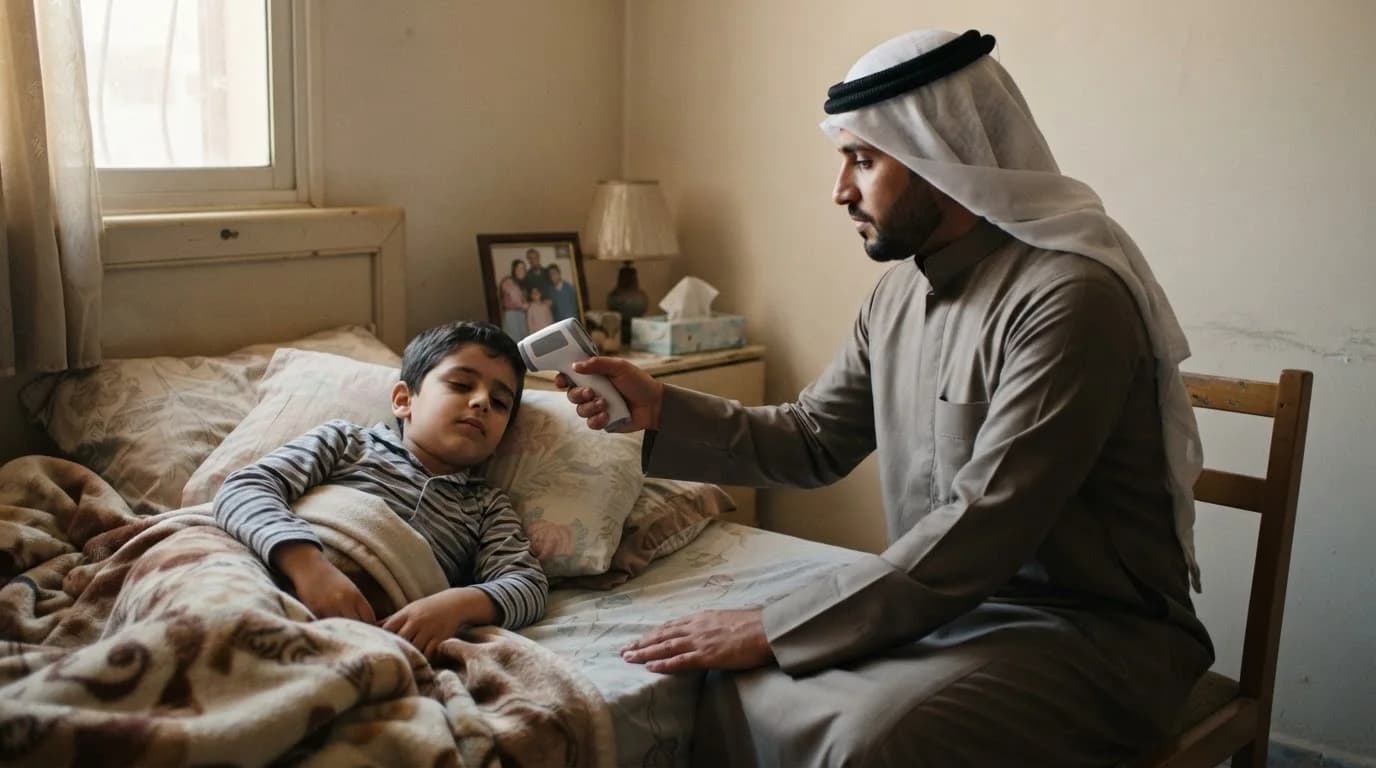
High blood pressure treatment in children in Jordan
علاج ارتفاع ضغط الدم عند الاطفال
Treating high blood pressure in a child begins with confirming that the diagnosis is real, before any medicine is considered. A child's blood pressure is not judged against one fixed number as in adults; it is compared with reference charts for age, sex and height, and it must be measured with a cuff sized for that child's arm. A cuff that is too small on a chubby arm reads higher than the truth and pulls healthy children into treatment for no reason. The first rule is that a single high reading is not a diagnosis. Confirmation requires repeated readings at separate visits with the child settled and comfortable, and twenty-four hour ambulatory monitoring is often used to separate genuine hypertension from white-coat elevation caused by anxiety. Many children are referred after an incidental reading at school or before an operation, and turn out on proper assessment to have normal pressure. The key difference from adults is that a larger share of children, especially younger ones, have **secondary** hypertension with a cause that can be found: kidney disease or renal scarring, narrowing of a renal artery, narrowing of the aorta, endocrine disorders, or a drug effect from certain nasal drops, steroids, energy drinks and bodybuilding supplements. Assessment is therefore incomplete without urinalysis, kidney function tests, kidney ultrasound and, where suspicion exists, blood pressure measured in all four limbs. Two questions come up constantly in a paediatric kidney clinic and deserve a clear answer here. First, **recurrent urinary tract infection in a child calls for evaluation, not just repeated courses of antibiotics**, because vesicoureteral reflux and renal scarring are recognised causes of later hypertension and are picked up early with the right imaging. Second, **bedwetting is not spoiling, laziness or defiance, and it is never treated with punishment or scolding**. It is a common condition with causes that can be assessed and managed through a behavioural and medical plan; punishment makes it worse and damages the child's confidence. Treatment itself starts, in mild cases, with non-drug measures: less salt and fewer processed foods, attention to weight and daily physical activity, adequate sleep, less screen time, and stopping any suspect product. Medicines are prescribed when the elevation is confirmed and sustained, or when there is organ involvement, kidney disease or diabetes. The choice and dose are decided by the paediatric nephrologist according to cause and age, and are followed with regular home readings. Medication controls the number but does not by itself correct a secondary cause, so the search for that cause stays at the centre of the plan, and eligibility for any treatment is settled by clinical examination rather than by reading.
Procedure steps
- 1
Correct measurement and confirming the diagnosis
Pressure is measured with a cuff matched to the child's arm after a short rest, repeated at separate visits and compared with reference charts. Twenty-four hour ambulatory monitoring may be requested to rule out white-coat elevation.
- 2
Looking for a secondary cause
Urinalysis, kidney function and electrolytes are checked, the kidneys and urinary tract are scanned, and limb pressures are compared when aortic narrowing is suspected. Medicines, supplements and energy drinks are reviewed, along with any history of recurrent urine infection or family kidney disease.
- 3
Assessing effect on the organs
An echocardiogram assesses the heart, the retina is examined, and urine protein is measured to see whether the elevation has begun to affect an organ. The result of this assessment weighs heavily on whether medication is started.
- 4
The non-drug plan
A practical family plan is built: less salt, fewer processed foods and sweetened drinks, daily activity suited to the child's age, regular sleep, less screen time, and stopping any product suspected of raising pressure. In many mild cases these measures are enough on their own.
- 5
Medication and follow-up when needed
When required, the paediatric nephrologist selects a medicine according to cause, age and kidney function, and teaches the family home measurement and record keeping. The plan is reviewed regularly and adjusted as the child grows; never stop the medicine or change its dose on your own.
Before the procedure
Bring your home blood pressure log if you keep one, together with the device model and cuff size, because accuracy of measurement matters more than the number of readings. Tell the doctor everything your child takes: regular medicines, nasal drops, steroid creams or tablets, sports supplements, energy drinks, herbal products and mixtures. Mention the pregnancy and delivery history, whether your child needed an umbilical catheter or neonatal care, and whether there have been recurrent urine infections, stones or ongoing bedwetting. Bring previous laboratory reports and imaging along with height and weight records from the child health booklet, and the growth chart if you have it. Report family illnesses: early hypertension, kidney failure, diabetes or inherited kidney disease. Do not withhold your child's usual meal unless fasting was requested for a specific test, and choose an appointment time when the child is calm rather than tired or crying.
After the procedure
Continue home measurement exactly as you were taught: after five minutes of rest, with the child seated, back supported, feet on the floor and the arm at heart level, and record the reading with date and time in a single notebook you bring to every visit. Never measure straight after play or crying. Keep to the dietary plan and reduce salt gradually without turning it into a battle, and protect daily activity and regular sleep. Give medication at the same time each day; do not stop it because readings improved and do not double a dose because one reading was high. Tell any doctor who sees your child that treatment for blood pressure is being given, and ask before using painkillers or nasal drops. **Seek urgent care immediately for** severe headache or repeated vomiting, **confusion or a seizure**, breathlessness or sudden swelling of the face and feet, disturbed vision, chest pain, **tea or cola coloured urine or a clear drop in urine output**, or dizziness and falls after a new medicine is started.
Expected duration
The first assessment visit usually takes 30 to 45 minutes; confirming the diagnosis takes two weeks to several weeks of repeated readings plus twenty-four hour monitoring when needed, followed by review every one to three months depending on response.
Our directory of High blood pressure treatment in children doctors in Jordan is growing
There are no matching published profiles in this directory yet. ClinicsJo is expanding its coverage and working to welcome more High blood pressure treatment in children doctors in Jordan. Check this page regularly for newly added profiles, practice details and available contact options.
Browse all doctorsBrowse Pediatric Nephrology profilesFinding High blood pressure treatment in children services in Jordan
Which doctors are listed for High blood pressure treatment in children in Jordan?
There are currently no doctor profiles linked to High blood pressure treatment in children in this directory. You can browse the related specialty or the wider doctors directory. This does not mean that the service is unavailable in Jordan.
How can I find an appointment for High blood pressure treatment in children?
Start with an available doctor's profile and use the contact or booking options shown there. Confirm the service, practice location and appointment time with the clinic. If this list is empty, broaden your search using the directory links on this page.
What does High blood pressure treatment in children cost in Jordan?
Ask the practice for the current price and what it includes. A consultation fee shown on a profile is not necessarily the price of a procedure, tests or follow-up. Confirm any additional charges and insurance arrangements before your visit.