
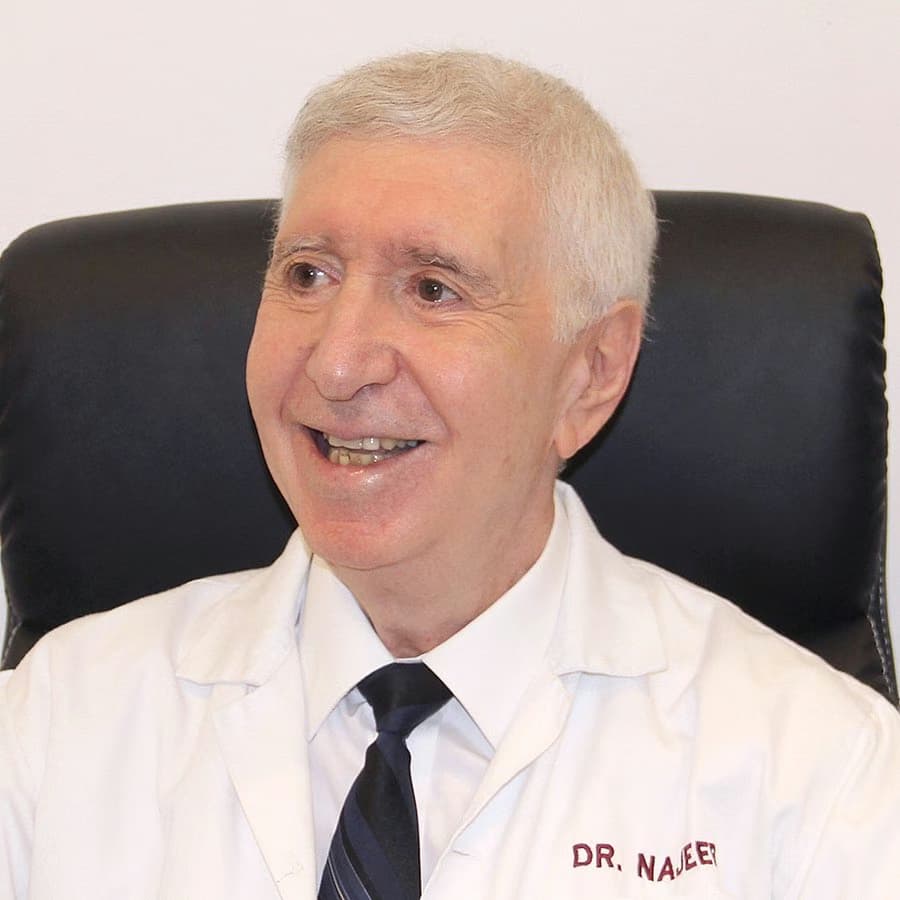
Dr Najeeb Layyous Clinic
Dr Najeeb Layyous practises obstetrics, gynaecology and fertility medicine in Amman. His published qualifications include the Jordanian Board, fellowship of the…
Treatments
Hours not listedInsurance not specified6 views
Trusted medical platform in Jordan

استئصال بطانة الرحم المهاجرة
Excision of endometriosis is surgery, usually laparoscopic, in which deposits of endometrial-like tissue growing outside the uterine cavity are removed, whether on the peritoneum, the ovaries, the pelvic ligaments or the space between the uterus and rectum, together with release of the adhesions they cause. The aims are to reduce pelvic pain, period pain and pain during intercourse, and to improve fertility in selected cases, while preserving the ovaries and uterus wherever possible. Diagnosing this disease is neither easy nor quick. Ultrasound and magnetic resonance imaging may show ovarian cysts and deep nodules, but they can completely miss superficial deposits, so scans may look normal in a woman who is genuinely in pain. For that reason treatment often begins clinically with analgesia and hormonal therapy before surgery, while definitive confirmation still rests on direct surgical visualisation and histology. It is also important to know that pain severity does not match disease volume: small deposits can cause severe pain, and large cysts can cause few symptoms. In specialist practice, complete excision of a deposit is preferred over merely burning its surface, particularly for deep nodules, because superficial ablation leaves the deep part behind. In ovarian cysts the operation balances removing the cyst against preserving as much healthy ovarian tissue as possible, since that relates to egg reserve. Severe disease may require a combined team with colorectal or urological surgery when deposits involve the bowel, ureter or bladder, and this is planned before the operation rather than improvised during it. The limits of surgery must be stated openly. It is not a permanent cure: symptoms can return after years, which is why hormonal treatment is often prescribed afterwards to reduce the chance of recurrence, except for women trying to conceive immediately. It does not guarantee pregnancy, and the decision to operate before assisted reproduction is weighed case by case. Nor is it sufficient on its own once pain has become chronic with a nerve or pelvic-floor muscle component, which needs pain management and pelvic floor physiotherapy. And hysterectomy alone does not end the disease if deposits remain outside the uterus. Whether you are a candidate, and when to operate, is decided by clinical examination, imaging and a discussion of your goals, whether pain, fertility or both, and not by reading online.
The pattern of pain and its relation to periods, intercourse, urination and defaecation is documented, with a pelvic examination, specialist ultrasound and sometimes magnetic resonance imaging to assess deep nodules and ovarian cysts. The goal is defined explicitly, whether pain relief, improved fertility or both, because it changes the extent of excision and the treatment that follows.
Necessary blood tests and anaesthetic assessment are completed, bowel or urinary tract evaluation may be requested when deposits lie close to them, and a combined surgical team is arranged when needed. The possibilities, limits and risks of the operation are explained, including injury to the bowel, ureter or bladder in deep disease, and consent covers this plan.
Laparoscopy is performed under general anaesthesia through small incisions after the abdomen is insufflated with gas. The surgeon inspects the whole pelvis systematically and records the location of deposits and adhesions and the state of the fallopian tubes, documenting findings with images that serve as a reference for follow-up and any later fertility treatment.
Deposits are excised completely where feasible rather than surface-ablated, adhesions are divided to return organs to their normal positions, and an ovarian cyst is drained and its wall removed while preserving as much healthy tissue as possible. In deep nodules a specialist surgeon may join to manage the bowel or ureter. All tissue is sent for histology.
Most patients go home the same day or within one to three days depending on the extent of surgery. Findings and images are explained and a forward plan is agreed: hormonal treatment to reduce recurrence for women not seeking pregnancy now, or a fertility plan with a reproductive specialist, plus pelvic floor physiotherapy and a pain programme where pain has become chronic.
Come with a written record of your pain: when in the month it starts, its severity out of ten, whether it worsens with intercourse, urination or bowel movements, how many days it stops you working, and which painkillers and hormonal treatments you have tried and how well they worked. Bring all previous imaging on disc with the reports, any previous laparoscopy report, your blood tests, and a list of medicines and supplements. Tell your surgeon whether you are seeking pregnancy now or later, about any previous abdominal or pelvic surgery, bowel or urinary disease, any drug or latex allergy, and about blood thinners, which are stopped only on the instruction of the prescriber. Follow the fasting instructions from the anaesthetist, complete bowel preparation if requested for deep disease, and arrange leave and help at home for several days.
Expect abdominal and shoulder-tip discomfort from the gas used in laparoscopy that eases over two to three days, vaginal spotting for several days, and fatigue for a week or more depending on the extent of surgery. Mobilise early with short frequent walks to reduce clot risk and help the gas disperse, drink enough fluids, and prevent constipation with a suitable diet or a laxative your doctor prescribes. Avoid heavy lifting, strenuous sport, intercourse, vaginal pessaries and swimming for the period your surgeon specifies, usually two to four weeks. Start the agreed hormonal treatment or fertility plan without delay. **Go to the emergency department immediately if you develop: fever or shivering; abdominal pain that increases instead of easing; repeated vomiting or distension with no passage of wind or stool; foul vaginal discharge or heavy bleeding; redness or discharge from a port site; burning, inability to pass urine or visible blood in the urine; or chest pain, breathlessness, or leg swelling and pain.**
Usually one to about three hours, and longer in deep disease involving the bowel or ureter that requires a combined surgical team.
Dr Najeeb Layyous practises obstetrics, gynaecology and fertility medicine in Amman. His published qualifications include the Jordanian Board, fellowship of the…
There are currently 1 doctor profiles linked to Surgical excision of endometriosis on ClinicsJo. Review the listed services and contact the practice to confirm availability with the doctor and branch you choose.
Start with an available doctor's profile and use the contact or booking options shown there. Confirm the service, practice location and appointment time with the clinic. If this list is empty, broaden your search using the directory links on this page.
Ask the practice for the current price and what it includes. A consultation fee shown on a profile is not necessarily the price of a procedure, tests or follow-up. Confirm any additional charges and insurance arrangements before your visit.