
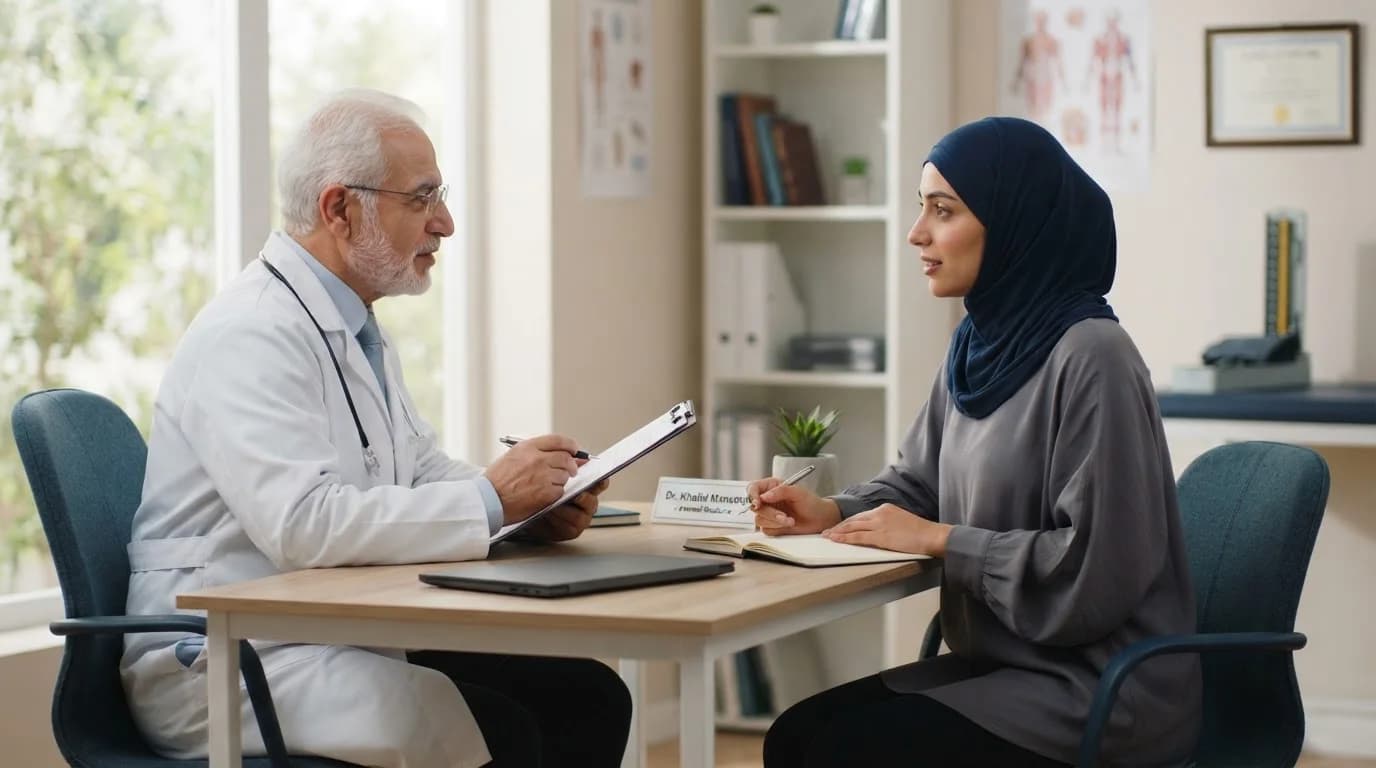
Malaria is a parasitic infection transmitted to humans by the bite of the female Anopheles mosquito, and it is diagnosed by a laboratory blood test rather than by symptoms alone, because its symptoms resemble any other fever: bouts of fever, shivering, sweating, headache, muscle pain and nausea. Jordan is free of local malaria transmission, so cases seen here are linked to travel to, or residence in, endemic areas of Africa, South Asia or South-East Asia, followed by return. **Any fever that appears after you return from an endemic area is an illness that needs assessment the same day, not watchful waiting and not home treatment.** The reason is that one species of malaria can progress within hours to a severe form that damages the brain, kidneys and blood, and delay in diagnosis is the single most dangerous factor in this disease. Testing is done with a microscopic blood film or a rapid test, and it may need repeating a few hours later if the first result is negative while suspicion remains, because the parasite is not visible at every point in its cycle. Treatment is built on the parasite species, the severity of illness, and the drug-resistance record of the region where infection occurred, since resistance patterns differ from country to country. Severe cases are treated in hospital with intravenous medicines and monitoring, while uncomplicated cases are treated with oral medicines and follow-up. Some species leave dormant stages in the liver that can bring the illness back weeks or months later, so a second phase of treatment is added to clear them. **Stopping treatment as soon as the fever settles exposes you to relapse and contributes to resistance, and buying malaria medicine without a prescription or from a market while travelling is dangerous, because a medicine that does not match the species will not cure the illness — it merely masks its severity.** Prevention has limits that must be stated plainly: **preventive medicine taken before travel greatly reduces risk but does not remove it, and it does not mean a fever after your return cannot be malaria.** Measures to avoid bites therefore remain essential: a treated bed net, insect repellent on exposed skin, long clothing around dusk and dawn, and closed windows. The correct sequence is to attend a travel clinic well before your trip — typically four to six weeks ahead — because the vaccinations needed for the region and preventive medicines are started before departure and completed after return. They cannot be arranged at the last minute at the airport.
Procedure steps
- 1
Urgent assessment and travel map
The doctor asks which countries you visited and the dates of departure and return, the pattern and onset of the fever, whether you took preventive medicine and adhered to it, and any medicines used while travelling. Fever after return from an endemic area is treated as urgent, with tests arranged the same day.
- 2
Laboratory blood testing
A microscopic blood film or a rapid test is performed to detect the parasite and identify its species, along with a complete blood count, liver and kidney function and blood glucose to gauge severity. If the first result is negative while suspicion persists, the test is repeated hours later — a single negative result does not rule malaria out.
- 3
Species, severity and place of care
The doctor classifies the illness as uncomplicated — treated as an outpatient with close follow-up — or severe, requiring admission and monitoring. Severity signs such as confusion, breathlessness, reduced urine output, jaundice and repeated vomiting are assessed, with special attention to higher-risk groups including pregnant women, young children, older adults and people without a spleen.
- 4
Targeted treatment and completing the course
The medicine is chosen according to species, region of infection, pregnancy status and other drugs, given intravenously in severe illness and orally otherwise. **The full course must be completed even after the fever has gone**, and a second phase is added to clear liver stages in the species that relapse, preceded where needed by a specific test.
- 5
Follow-up and prevention for future travel
Tests are repeated to confirm the parasite is clearing, and the possibility of relapse and when to return are explained. A safer plan for future travel is then built: attending a travel clinic well before the trip, the vaccinations required for the destination, preventive medicine, bed nets and repellents — because prevention is arranged in advance, never at the last moment.
Before the procedure
Bring a timeline of your travel with the cities and countries you visited in recent months, including short stopovers. Tell the doctor whether you took malaria preventive medicine and whether you completed it after returning, and whether you took any medicine or received treatment while abroad — bring the packet if you still have it. Record the times of your fever, shivering and sweating from the start. Do not take malaria medicine on your own or from a leftover pack, as this masks the diagnosis and delays treatment. Tell the doctor if you are pregnant or breastfeeding, if your spleen has been removed, and if you take long-term medicines or know of any drug allergy. Do not postpone the visit waiting for the fever to settle — attend for assessment the same day.
After the procedure
Take your medicine at the scheduled times and complete the full course even after the fever has gone, and tell your doctor immediately if you vomit a dose. Drink enough fluids, rest, and use fever-reducing medicine as your doctor advised. Attend follow-up tests on time, and keep a copy of your case report for any doctor you see later. Be aware that some species can relapse after weeks or months, so with any new fever you should tell the doctor that you have had malaria before. Go to the emergency department immediately if any of the following occurs: **confusion, extreme drowsiness or a seizure** · **rapid or difficult breathing** · **reduced urine output, very dark urine or yellowing of the eyes** · **repeated vomiting that prevents taking medicine or drinking** · **unusual bleeding or marked pallor** · **fever in a pregnant woman, a young child, or a person with weakened immunity**.
Expected duration
The first assessment with blood sampling usually takes 30 to 45 minutes and the test result is available within hours. Oral treatment for uncomplicated illness runs over a few days with follow-up, while severe cases require hospital admission for several days.
Our directory of Treatment of malaria doctors in Jordan is growing
There are no matching published profiles in this directory yet. ClinicsJo is expanding its coverage and working to welcome more Treatment of malaria doctors in Jordan. Check this page regularly for newly added profiles, practice details and available contact options.
Browse all doctorsBrowse Infectious Diseases profilesFinding Treatment of malaria services in Jordan
Which doctors are listed for Treatment of malaria in Jordan?
There are currently no doctor profiles linked to Treatment of malaria in this directory. You can browse the related specialty or the wider doctors directory. This does not mean that the service is unavailable in Jordan.
How can I find an appointment for Treatment of malaria?
Start with an available doctor's profile and use the contact or booking options shown there. Confirm the service, practice location and appointment time with the clinic. If this list is empty, broaden your search using the directory links on this page.
What does Treatment of malaria cost in Jordan?
Ask the practice for the current price and what it includes. A consultation fee shown on a profile is not necessarily the price of a procedure, tests or follow-up. Confirm any additional charges and insurance arrangements before your visit.