
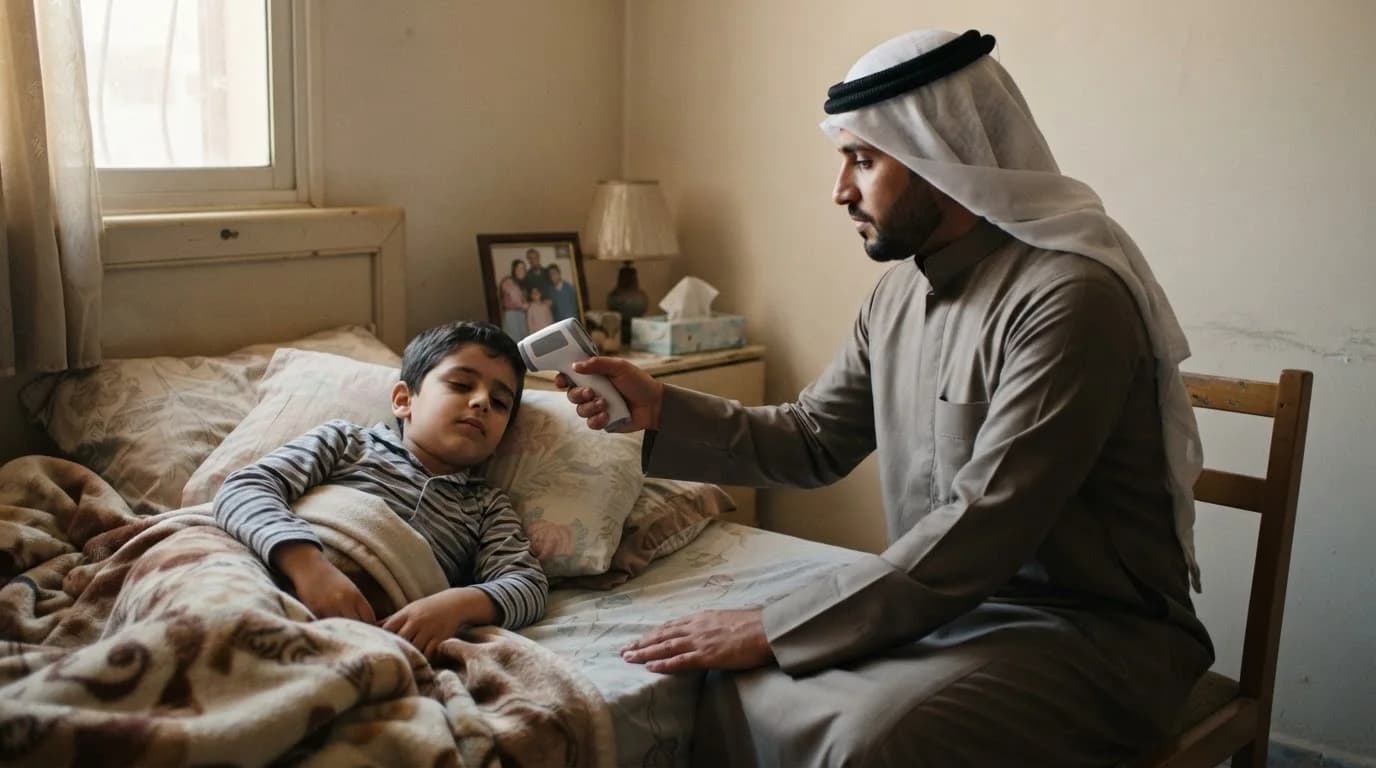
Meningitis in children is inflammation of the membranes surrounding the brain and spinal cord, and it must be treated as a medical emergency until proven otherwise. The cause is either bacterial, which is the dangerous form that can deteriorate within hours, viral, which is the most common and usually milder, or less common causes such as tuberculosis and fungi. The types cannot be distinguished simply by looking at the child, which is why suspected bacterial meningitis is treated immediately while investigations are completed. In older children the symptoms include fever, severe headache, neck stiffness, vomiting, discomfort in bright light, and lethargy or confusion. In infants the signs are deceptive and non-specific: fever or even a low temperature, poor feeding, irritability with a high-pitched cry that does not settle on being held, marked lethargy and difficulty waking, seizures, or a bulging fontanelle. The absence of neck stiffness never rules out the diagnosis in an infant. Diagnosis rests on a lumbar puncture, in which cerebrospinal fluid is withdrawn for analysis and culture, alongside blood tests, blood cultures, glucose, and imaging where indicated. The lumbar puncture is essential and has no substitute for determining the type of meningitis and the appropriate antibiotic and its duration; delaying it without a medical reason means longer and riskier blind treatment. For bacterial meningitis, treatment is intravenous antibiotics started at once without waiting for results, then narrowed according to culture findings, together with supportive care: carefully calculated fluids, fever control, treatment of seizures, and monitoring of consciousness, blood pressure and signs of raised intracranial pressure. Corticosteroids may be added in defined situations depending on the child's age and the organism, at the doctor's discretion. Viral meningitis is largely managed supportively, and antibiotics do not help it, except in specific circumstances such as suspected herpes infection, which requires antiviral treatment. An important correction: meningitis is not a cold in the head, and it is not caused by bathing, by draughts of air, or by sleeping with wet hair. More dangerously, giving your child leftover antibiotics from home when you are worried may obscure culture results and delay diagnosis without treating the disease. A temperature that falls after antipyretics is not evidence of improvement. Vaccination against Haemophilus influenzae type b, pneumococcus and meningococcus is the strongest available protection, and receiving these on schedule genuinely reduces risk. The type and duration of treatment are set by the doctor from examination and results, not by estimation.
Procedure steps
- 1
Urgent assessment and stabilisation
When meningitis is suspected the child is assessed at once: level of consciousness, temperature, breathing and circulation, a neurological examination, palpation of the fontanelle in infants, and inspection of the skin for spots or bruises that do not fade under pressure. Intravenous access is obtained and any circulatory compromise, low oxygen or low blood sugar is corrected before anything else.
- 2
Laboratory tests and lumbar puncture
Blood tests, blood cultures, glucose and electrolytes are taken, and a lumbar puncture is performed: the child is carefully positioned, the skin over the lower back is cleaned, local anaesthesia is applied, and a small volume of cerebrospinal fluid is withdrawn for cell count, protein, glucose and culture. The puncture is deferred when there is a medical contraindication such as an unstable child or signs of raised intracranial pressure, and in that case treatment is started immediately.
- 3
Starting intravenous treatment without delay
When a bacterial cause is suspected, broad-spectrum intravenous antibiotics are started immediately, before culture results are available, because every hour of delay increases the risk of complications. Corticosteroids are added in defined situations according to age and organism, an antiviral is added when herpes infection is suspected, and respiratory isolation is applied in some cases to protect those around the child.
- 4
Supportive care and monitoring for complications
The child is monitored closely: conscious level, head circumference in infants, electrolytes and fluid balance, seizures, and signs of raised intracranial pressure or a subdural collection. Fever and pain are treated, fluids are managed precisely, and brain imaging is performed if there is a prolonged seizure, a focal neurological sign, or failure to improve.
- 5
Narrowing treatment, follow-up and prevention
Once culture results return, the antibiotic is adjusted and the duration of treatment is set according to the organism and the child's age. Before discharge a hearing test is arranged, since hearing loss is among the best-recognised complications, and neurological recovery, growth and learning are followed. Preventive medication for selected close contacts is decided in defined situations, and any due vaccinations are completed.
Before the procedure
If you suspect meningitis, do not wait and do not attempt anything at home: go to the emergency department immediately. Do not give your child leftover antibiotics or an old prescription, because they may invalidate culture results and delay diagnosis without treating the illness. Do not push food or large amounts of fluid if the child is vomiting or drowsy. Bring the vaccination record, a list of the child's medicines and allergies, and reports of any chronic illness, immune deficiency, or previous head or ear surgery. Note precisely when the fever started, the highest temperature you measured, the time of the last urine output, how many times the child vomited, whether a seizure occurred and how long it lasted, and when the drowsiness began. Tell the doctor if the child has been in contact with a case of meningitis or has had a recent throat infection. If a lumbar puncture is recommended, ask for an explanation rather than refusing out of fear; it is what determines the correct treatment.
After the procedure
Complete the full course of intravenous treatment as prescribed and do not request early discharge because the child looks better, since apparent improvement does not mean the infection has cleared. Attend the recommended hearing test after discharge and do not postpone it, because hearing loss can be subtle and affects speech and learning. Over the following weeks watch sleep, attention, balance, speech and school performance, and report any regression to the doctor. Complete any due vaccinations, and give preventive medication to close contacts if the doctor has prescribed it for those who qualify. Attend to nutrition, fluids and rest, expect fatigue and reduced appetite for a period, and keep neurological follow-up appointments. Go to the emergency department immediately if there is: **fever with marked lethargy or difficulty waking the child**; **red or purple spots or bruises that do not fade when pressed**; **a seizure, abnormal movements or partial paralysis**; **severe headache with repeated vomiting or double vision**; **a bulging fontanelle or rapidly increasing head circumference in an infant**; **complete refusal to feed or drink, or reduced urine output**; **a continuous high-pitched cry that will not settle when held**; **return of fever after treatment ends**; **any suspicion of hearing loss or failure to respond to sound**.
Expected duration
Assessment and lumbar puncture usually take one to three hours in the emergency department; intravenous treatment of bacterial meningitis typically runs seven to twenty-one days depending on organism and age, while viral meningitis usually needs a few days of supportive care.
Our directory of Treatment Of Meningitis In Children doctors in Jordan is growing
There are no matching published profiles in this directory yet. ClinicsJo is expanding its coverage and working to welcome more Treatment Of Meningitis In Children doctors in Jordan. Check this page regularly for newly added profiles, practice details and available contact options.
Browse all doctorsBrowse Pediatrics profilesFinding Treatment Of Meningitis In Children services in Jordan
Which doctors are listed for Treatment Of Meningitis In Children in Jordan?
There are currently no doctor profiles linked to Treatment Of Meningitis In Children in this directory. You can browse the related specialty or the wider doctors directory. This does not mean that the service is unavailable in Jordan.
How can I find an appointment for Treatment Of Meningitis In Children?
Start with an available doctor's profile and use the contact or booking options shown there. Confirm the service, practice location and appointment time with the clinic. If this list is empty, broaden your search using the directory links on this page.
What does Treatment Of Meningitis In Children cost in Jordan?
Ask the practice for the current price and what it includes. A consultation fee shown on a profile is not necessarily the price of a procedure, tests or follow-up. Confirm any additional charges and insurance arrangements before your visit.