
Tuberculosis (TB) is a slow-growing bacterial infection that affects the lungs in most cases but can also involve lymph nodes, bones, the membranes around the brain, or other organs. Its usual pulmonary symptoms are a cough lasting more than two weeks, recurring low-grade fever, night sweats, and loss of weight and appetite, sometimes with blood in the sputum. Its treatment is not a single medicine but a combination of medicines taken together every day for months, under supervision and with regular follow-up. It is important to distinguish two entirely different states. Latent infection means the bacteria are present in a dormant form with no symptoms; **a person with latent infection is not contagious and cannot pass the disease to anyone**, and may be offered a simpler, shorter preventive course to reduce the chance of it becoming active. Active disease causes symptoms, spreads through the air, and requires the full combination treatment along with contact tracing. Telling the two apart rests on clinical examination, imaging and laboratory testing together, never on a single test. **The most dangerous mistake in this illness is stopping the medicines once you feel better.** Patients feel markedly better within weeks of starting treatment while the bacteria are far from eradicated, and stopping the medicines or missing doses at that stage is the leading cause of drug-resistant TB — which takes far longer to treat, requires heavier medicines, and offers less certain outcomes. The full duration prescribed by the doctor must therefore be completed, and medicines are never adjusted or stopped by the patient alone, even if side effects appear: the doctor is consulted first. TB is a notifiable disease, followed through the national programme in Jordan, with tracing of household and workplace contacts. The treatment pathway has limits that deserve explanation. **Clinical improvement does not equal cure**, and the decision that treatment is complete rests on clinical and laboratory follow-up rather than on how the patient feels. A chest image may show permanent scarring after cure, which does not mean the disease persists and is not treated with a new course of medicines. **The BCG vaccine protects children against severe forms of the disease but does not prevent infection in adults**, and a previous episode does not prevent another. People with diabetes, weakened immunity, malnutrition, or those living with HIV are at higher risk and need closer follow-up. Eligibility for any treatment regimen is determined by clinical assessment together with drug-susceptibility results.
Procedure steps
- 1
Assessment and clinical suspicion
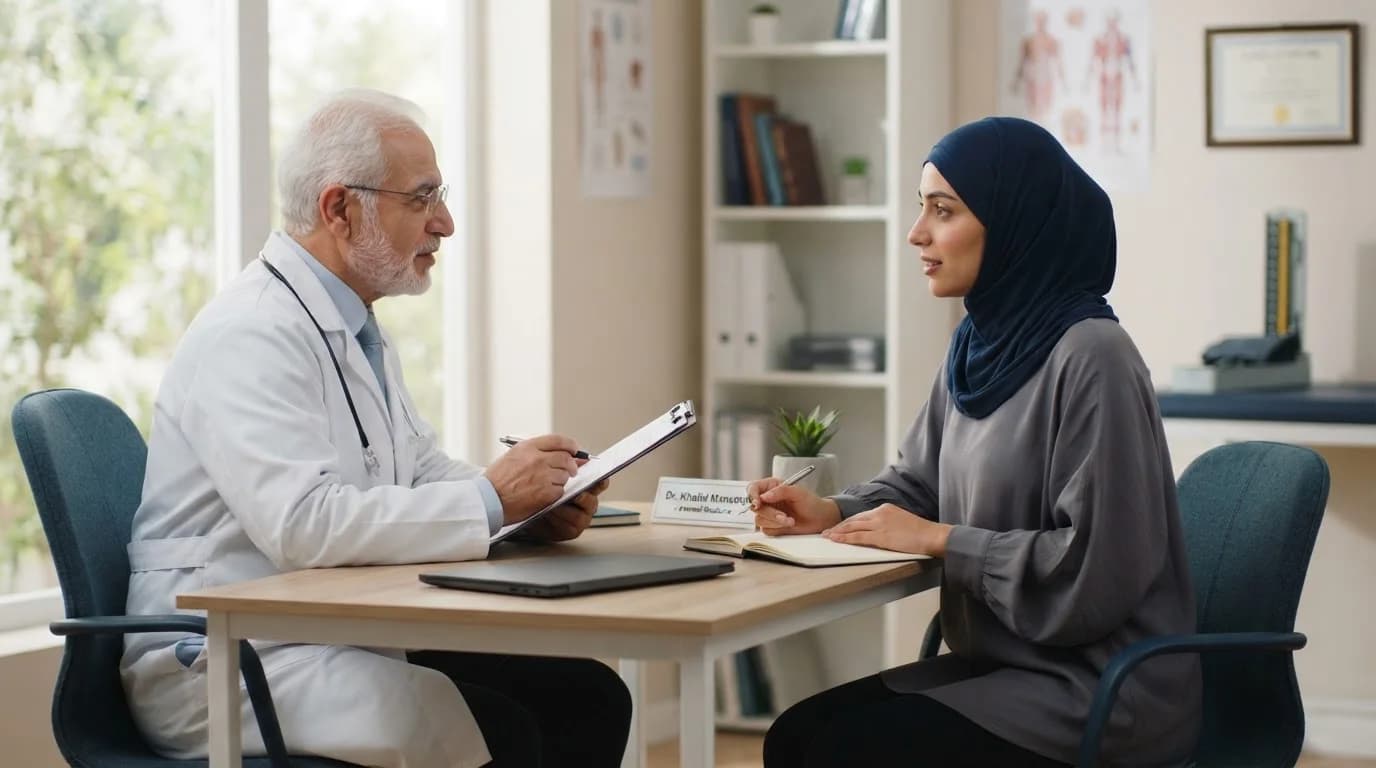
The doctor asks about the duration of cough, blood in the sputum, night sweats, weight loss and fever, contact with a TB patient, travel, crowded housing, diabetes, smoking and any immunosuppressant medicines, then examines the chest and lymph nodes and records weight as a baseline for follow-up.
- 2
Confirmatory tests and drug-susceptibility testing
Sputum samples are taken for microscopy, a rapid molecular test and culture, along with a chest image, and a sample from a lymph node, fluid or tissue may be needed in non-pulmonary forms. Drug-susceptibility testing is performed because the presence of resistance changes the entire regimen from the outset.
- 3
Starting combination treatment: the intensive phase
Treatment begins with a group of medicines taken daily and regularly through an intensive phase, with baseline liver, kidney and, where relevant, vision checks. Every side effect that warrants review is explained, and the importance of never missing a dose is emphasised, because regularity is what prevents resistance.
- 4
Respiratory precautions and contact tracing
During the first weeks of treatment for infectious pulmonary TB, measures to reduce transmission are followed: a mask around others, good ventilation, covering the mouth when coughing, and limiting contact with children and people whose immunity is weakened. Household members and close contacts are screened, because detecting disease early in them breaks the chain.
- 5
Monthly follow-up and the continuation phase
Regular visits follow symptoms, weight, adherence, liver tests and sputum samples, after which treatment moves to the continuation phase until the full duration is completed. **The decision that treatment is finished is a medical one based on laboratory and clinical follow-up, not on the patient feeling better.**
Before the procedure
Bring a list of every medicine and supplement you take, because TB medicines interact with many drugs, including contraceptive pills, anticoagulants, diabetes medicines and several treatments for chronic conditions. Tell your doctor if you are pregnant, breastfeeding or planning pregnancy, if you have liver or kidney disease, diabetes, reduced vision or numbness in the limbs, and if you take any immunosuppressant therapy. Mention whether you have had contact with a TB patient and when. Gather previous chest images and reports of any TB treatment you received before, including the medicines used and their duration — this is decisive information for choosing the regimen. Stop smoking and avoid alcohol entirely, since the liver carries an extra burden during treatment. If a sputum sample is required, follow the instructions to collect it in the morning, and wear a mask at the clinic.
After the procedure
Take all your medicines every day at the same time, never miss a dose, and do not stop treatment once you feel better — completing the full course is what prevents relapse and drug-resistant TB. Use an alarm or a weekly pill box to stay organised, and attend every follow-up visit, liver test and sputum sample. Keep your home ventilated and wear a mask during the early weeks, look after your nutrition and weight, and avoid smoking and alcohol completely. Expect some body fluids to change colour with certain medicines, which is harmless. Contact your doctor immediately, before the next dose, if any of the following occurs: **yellowing of the eyes or dark urine with nausea and vomiting — possible liver injury** · **any change in vision or colour perception** · **a widespread rash or severe itching** · **numbness or burning in the limbs** · **vomiting that prevents taking the medicine**. Go to the emergency department immediately for: **heavy coughing of blood** · **severe breathlessness or chest pain** · **a severe headache with a stiff neck, light sensitivity or confusion** · **rapid breathing with fever**.
Expected duration
The first assessment visit usually takes 30 to 45 minutes, molecular test results arrive within one to two days while cultures take weeks, and combination treatment typically extends over six months or longer depending on the form of disease and drug susceptibility.
Our directory of Tuberculosis Treatment doctors in Jordan is growing
There are no matching published profiles in this directory yet. ClinicsJo is expanding its coverage and working to welcome more Tuberculosis Treatment doctors in Jordan. Check this page regularly for newly added profiles, practice details and available contact options.
Browse all doctorsBrowse Infectious Diseases profilesFinding Tuberculosis Treatment services in Jordan
Which doctors are listed for Tuberculosis Treatment in Jordan?
There are currently no doctor profiles linked to Tuberculosis Treatment in this directory. You can browse the related specialty or the wider doctors directory. This does not mean that the service is unavailable in Jordan.
How can I find an appointment for Tuberculosis Treatment?
Start with an available doctor's profile and use the contact or booking options shown there. Confirm the service, practice location and appointment time with the clinic. If this list is empty, broaden your search using the directory links on this page.
What does Tuberculosis Treatment cost in Jordan?
Ask the practice for the current price and what it includes. A consultation fee shown on a profile is not necessarily the price of a procedure, tests or follow-up. Confirm any additional charges and insurance arrangements before your visit.