
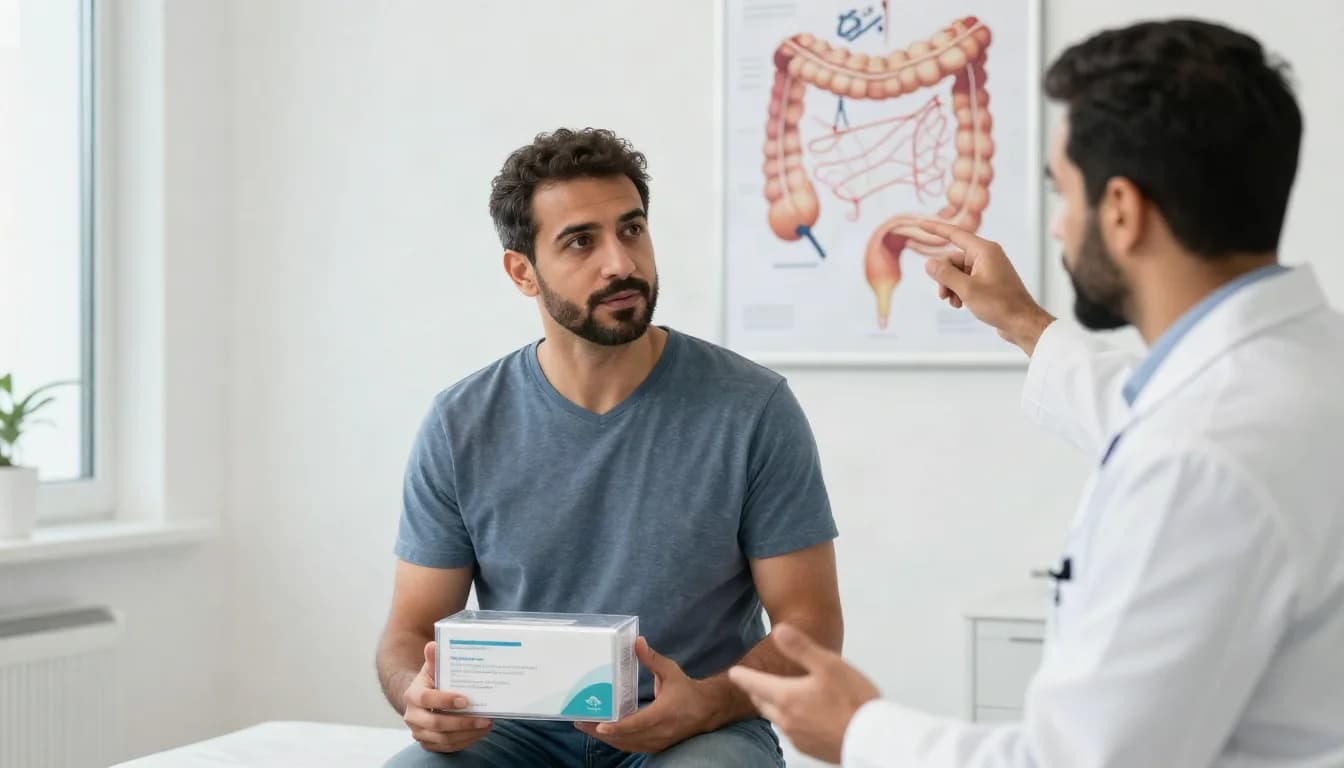
Ulcerative colitis treatment in Jordan
علاج التهاب القولون التقرحي
Ulcerative colitis is a chronic inflammatory disease affecting the mucosal lining of the rectum and colon in a continuous pattern, running a course of remissions in which symptoms settle and relapses in which they return. Treatment has two sequential goals: bringing the current flare under control quickly and safely, then maintaining remission with continuous therapy aimed at healing the mucosa itself rather than merely silencing symptoms. The commonest features are frequent diarrhoea mixed with blood or mucus, marked urgency to open the bowels, abdominal cramping, night-time bowel motions, and fatigue or anaemia when bleeding persists. Manifestations outside the bowel may also appear, including joint pain, eye inflammation, mouth ulcers and skin rashes; these are part of the disease rather than separate problems. Treatment is selected according to how far the inflammation extends through the colon and how severe it is. Disease confined to the rectum is managed differently from inflammation involving the whole colon, and therapy may be topical via suppositories or enemas, oral, or intravenous in severe flares requiring admission. In selected cases the team discusses biologic therapy or surgery, and surgery is not a failure but an effective treatment option in the right circumstances. The limits of treatment matter just as much. The disease is not cured by diet, and no single eating plan treats it; food helps tolerance and nutrition rather than suppressing inflammation. Stopping maintenance medication as soon as symptoms improve is the commonest cause of relapse, because inflammation can remain active after symptoms quieten. Ulcerative colitis is not irritable bowel syndrome and does not turn into it; it is not contagious and does not spread through contact or food; and antibiotics are not a treatment for it. Non-steroidal anti-inflammatory painkillers may trigger a flare. Which plan or medication suits you is determined by endoscopy and clinical assessment, not by reading a page online.
Procedure steps
- 1
Confirming the diagnosis and excluding infection
Diagnosis rests on the clinical history plus lower endoscopy with biopsies, since the histological pattern is decisive. Stool culture and Clostridioides difficile toxin testing are requested to exclude an infection that mimics or accompanies a flare, along with blood tests for inflammation, anaemia, iron status and liver function.
- 2
Defining extent and severity
Endoscopy documents how far inflammation extends: the rectum alone, the left colon, or the entire colon. Severity is graded by stool frequency, presence of blood, temperature, pulse rate, anaemia and inflammatory markers in blood and stool. This classification is what determines the form of medication and its route of delivery.
- 3
Treating the flare
Mild to moderate flares are usually treated with intestinal anti-inflammatory therapy given topically, orally, or both, and a time-limited corticosteroid course with a clear tapering schedule may be added. A severe flare is managed in hospital with intravenous therapy, fluids and iron replacement, alongside daily monitoring of the response.
- 4
Maintenance therapy
Once remission is reached the most important phase begins: maintenance medication taken continuously even when symptoms have disappeared entirely. It may be topical, oral, an immunomodulator or a biologic, depending on your disease course. Corticosteroids are not maintenance therapy and are not used long term. Adherence at this stage is what actually protects the colon.
- 5
Long-term monitoring
Tests are repeated periodically to assess inflammation, anaemia, liver safety and drug tolerance, and a surveillance colonoscopy is scheduled some years after diagnosis because extensive chronic inflammation raises the risk of colonic change. Vitamin D, iron and bone health are followed, along with vaccinations, and pregnancy is planned in advance with the team.
Before the procedure
Before the visit, record how many times you open your bowels by day and at night, whether there is blood or mucus, how severe the urgency is, and any fever or weight loss; this diary is what actually measures severity. Tell your physician about all your medications, especially non-steroidal anti-inflammatory painkillers and any recent antibiotics, and about recent travel or gastroenteritis. Bring previous endoscopy and biopsy reports and imaging on disc. Before biologic therapy or immunosuppressants, screening for tuberculosis and viral hepatitis plus completion of vaccinations is usually required, so raise this early. If a colonoscopy is booked, follow the bowel preparation instructions exactly as written along with the fasting times, and tell the team about blood-thinning and diabetes medications and any drug allergy.
After the procedure
Continue maintenance medication at the prescribed dose and duration even when you have no symptoms, since stopping it on your own is the commonest cause of relapse. If corticosteroids were prescribed, follow the tapering schedule and do not stop them abruptly. Avoid non-steroidal anti-inflammatory painkillers and use what your physician permits instead. Replace fluids and iron as instructed, and keep a diary of stool frequency and bleeding for comparison. Complete your vaccinations and discuss any pregnancy or travel in advance. Contact your physician if blood returns, stool frequency rises, or you develop joint pain, a red eye, a new rash, or fever while on immunosuppressive therapy. **Go to the emergency department immediately if bloody diarrhoea becomes heavy with fever and a racing pulse, if the abdomen becomes distended and painful with no passage of gas or stool, if there is persistent vomiting or severe abdominal pain, or if you become pale, dizzy, faint or short of breath — these are signs of major bleeding or dangerous colonic distension needing urgent assessment without delay.**
Expected duration
A mild to moderate flare usually responds within two to eight weeks, a severe flare is managed in hospital typically for three to ten days, and maintenance therapy continues for years with review every 3 to 12 months.
Our directory of Ulcerative colitis treatment doctors in Jordan is growing
There are no matching published profiles in this directory yet. ClinicsJo is expanding its coverage and working to welcome more Ulcerative colitis treatment doctors in Jordan. Check this page regularly for newly added profiles, practice details and available contact options.
Browse all doctorsBrowse Inflammatory Bowel Disease profilesFinding Ulcerative colitis treatment services in Jordan
Which doctors are listed for Ulcerative colitis treatment in Jordan?
There are currently no doctor profiles linked to Ulcerative colitis treatment in this directory. You can browse the related specialty or the wider doctors directory. This does not mean that the service is unavailable in Jordan.
How can I find an appointment for Ulcerative colitis treatment?
Start with an available doctor's profile and use the contact or booking options shown there. Confirm the service, practice location and appointment time with the clinic. If this list is empty, broaden your search using the directory links on this page.
What does Ulcerative colitis treatment cost in Jordan?
Ask the practice for the current price and what it includes. A consultation fee shown on a profile is not necessarily the price of a procedure, tests or follow-up. Confirm any additional charges and insurance arrangements before your visit.