Coughing is a symptom, not a disease: it is a protective reflex that clears mucus or irritants from the airway. In medicine, therefore, treating a cough means treating its cause, and no single syrup treats every cough. Cough is classified by duration into acute under three weeks, subacute from three to eight weeks, and chronic beyond eight weeks, and that classification is what steers the diagnosis.
Acute cough is usually caused by a viral upper respiratory infection and settles on its own, sometimes leaving a dry cough for weeks afterwards. In a non-smoker, chronic cough most often comes from one of three sources: postnasal drip from allergy or sinus inflammation, asthma or cough-variant airway inflammation, and acid reflux from the stomach. Other important causes include certain blood pressure medications known to produce a persistent dry cough, smoking in all its forms, chronic obstructive pulmonary disease, tuberculosis, bronchiectasis, heart disease, and lung cancer in a smoker.
For that reason the examination, chest auscultation, and a detailed history determine treatment, not the name of a syrup. The limits should be explicit: cough suppressants are not used with a productive cough because they trap sputum; antibiotics do not help a viral cough; a normal chest X-ray does not exclude every cause, since several do not show on it; and habit cough is a diagnosis made after organic causes are excluded, never before.
Some myths need correcting. Holding your breath or blowing up balloons does not strengthen the lungs and does not treat a cough; the training that genuinely helps is a structured pulmonary rehabilitation programme for those who need it. A smoker's cough is also not a normal state to live with but a symptom that warrants lung function testing, and stopping smoking is the only intervention that slows the decline in lung function in chronic obstructive pulmonary disease.
Finally, tuberculosis still occurs in Jordan and must not be overlooked: a cough lasting more than two weeks with fever, night sweats, and weight loss calls for sputum testing and a chest X-ray. If tuberculosis is confirmed, treatment extends over months of regular dosing and must be completed in full even after symptoms vanish, because stopping early brings the disease back and creates resistant bacteria that are far harder to treat.
2 specialists
Procedure steps
1
Defining the duration and pattern
The physician asks exactly when the cough started, whether it is dry or productive, whether it worsens at night, after exertion, with odours, or after eating, and whether any blood appeared. Duration and pattern narrow the possibilities more than any test, which is why the questioning is deliberately detailed.
2
Examining the nose, throat and chest
The nose, sinuses, and throat are examined because postnasal drip is among the commonest causes of chronic cough, then the chest is auscultated for wheeze, crackles, or reduced air entry, and oxygen saturation is measured. The heart, neck, and lymph nodes are checked too, since non-pulmonary causes can lie behind a cough.
3
Targeted investigations
Investigations follow the suspicion: a chest X-ray for a prolonged cough or alarm features, lung function testing when asthma or chronic obstructive pulmonary disease is possible, sputum testing for tuberculosis when a cough exceeds two weeks with fever and night sweats, and computed tomography or bronchoscopy in selected cases.
4
Treating the cause, not the symptom
Treatment is prescribed according to the proven cause: managing allergy and sinus disease, treating asthma with prescribed inhalers, addressing acid reflux through eating and sleeping habits plus medication, changing a cough-inducing blood pressure drug through the doctor who prescribed it, or the long course for tuberculosis. Suitability for each option is decided clinically.
5
Follow-up and reassessment
Response is judged after a period long enough for each treatment, since some causes take weeks to show benefit. If the cough does not improve, reassessment looks for a second coexisting cause, because many chronic coughs have two at once. Antibiotics are not repeated without evidence, and a cough is never left undiagnosed.
Before the procedure
Before the visit, note precisely when the cough began and how many weeks it has lasted, and describe it: dry or productive, the sputum colour, and whether blood has appeared even once. Observe its timing — at night, after lying down, with exertion, around odours and dust, or after meals — since that guides the diagnosis. Write a complete list of your medications including those for blood pressure and the heart, because some blood pressure drugs cause a persistent dry cough, and never stop a medication on your own. Tell the physician your smoking, waterpipe, and vaping history in years, your occupation and exposure to dust or fumes, any family history of allergy or asthma, any contact with someone who has tuberculosis or a prolonged cough, and any weight loss or night sweats. Bring previous reports and imaging.
After the procedure
Stick to the treatment aimed at the cause rather than at silencing the cough, and give each plan the time your physician specified before judging it. Drink enough fluids, raise the head of the bed slightly if reflux is the cause, avoid eating within two to three hours of bedtime, and stay away from smoke, strong fragrances, and dust. Do not use a cough suppressant with a productive cough, and never take someone else's medication. Stop smoking completely in every form. If you are on tuberculosis treatment, complete the full course exactly and do not stop when symptoms improve. **Seek emergency care immediately for coughing up blood.** **Go to the emergency department for sudden severe breathlessness with chest pain, blue lips, or breathlessness that stops you finishing a sentence.** See your doctor within days for a cough beyond two weeks with fever, night sweats, and weight loss, hoarseness lasting over three weeks, difficulty swallowing, or neck swelling.
Expected duration
A cough assessment visit usually takes 20 to 40 minutes because the history is detailed, with lung function testing adding about 30 to 45 minutes when required. Response to each treatment plan is normally reviewed after two to six weeks depending on the cause, while tuberculosis treatment runs for months and must be completed in full.
Dr Ahmad AlKhyat is a specialist in pulmonology and sleep medicine with Jordanian board qualifications in pulmonary and internal medicine. His published practic…
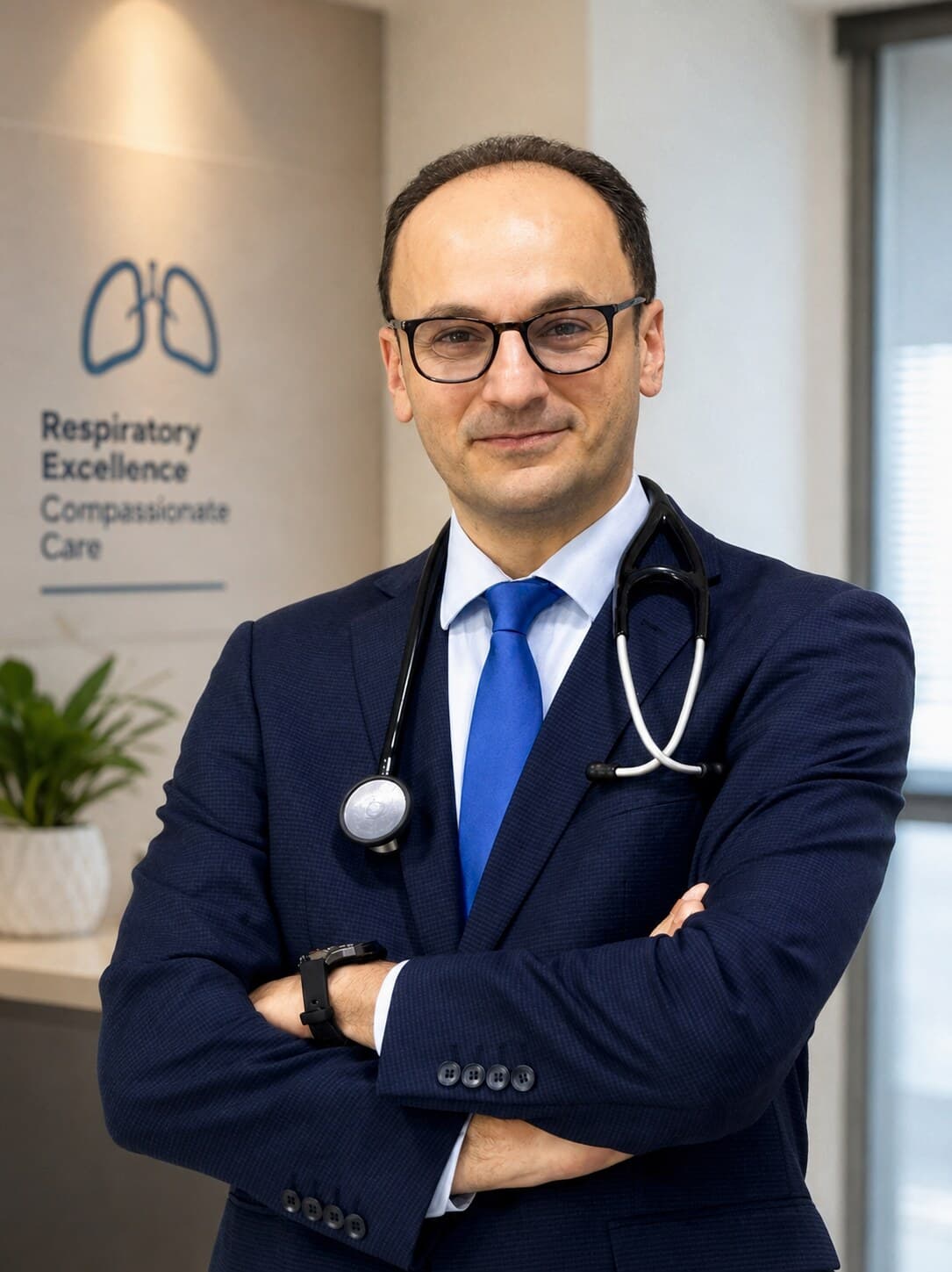
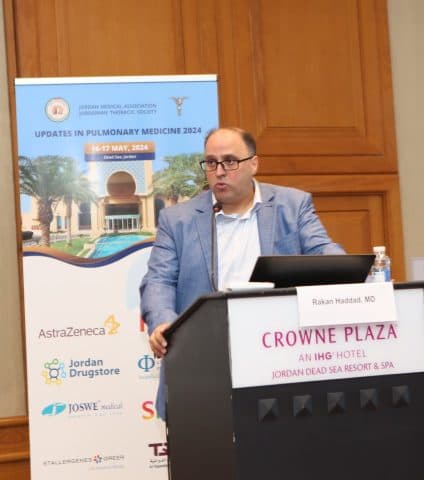
Dr Rakan Haddad is a consultant in pulmonary and sleep medicine, with Jordanian boards in pulmonology and internal medicine and a medical degree from Jordan Uni…
Which doctors are listed for Tussis Treatment in Jordan?
There are currently 2 doctor profiles linked to Tussis Treatment on ClinicsJo. Review the listed services and contact the practice to confirm availability with the doctor and branch you choose.
How can I find an appointment for Tussis Treatment?
Start with an available doctor's profile and use the contact or booking options shown there. Confirm the service, practice location and appointment time with the clinic. If this list is empty, broaden your search using the directory links on this page.
What does Tussis Treatment cost in Jordan?
Ask the practice for the current price and what it includes. A consultation fee shown on a profile is not necessarily the price of a procedure, tests or follow-up. Confirm any additional charges and insurance arrangements before your visit.