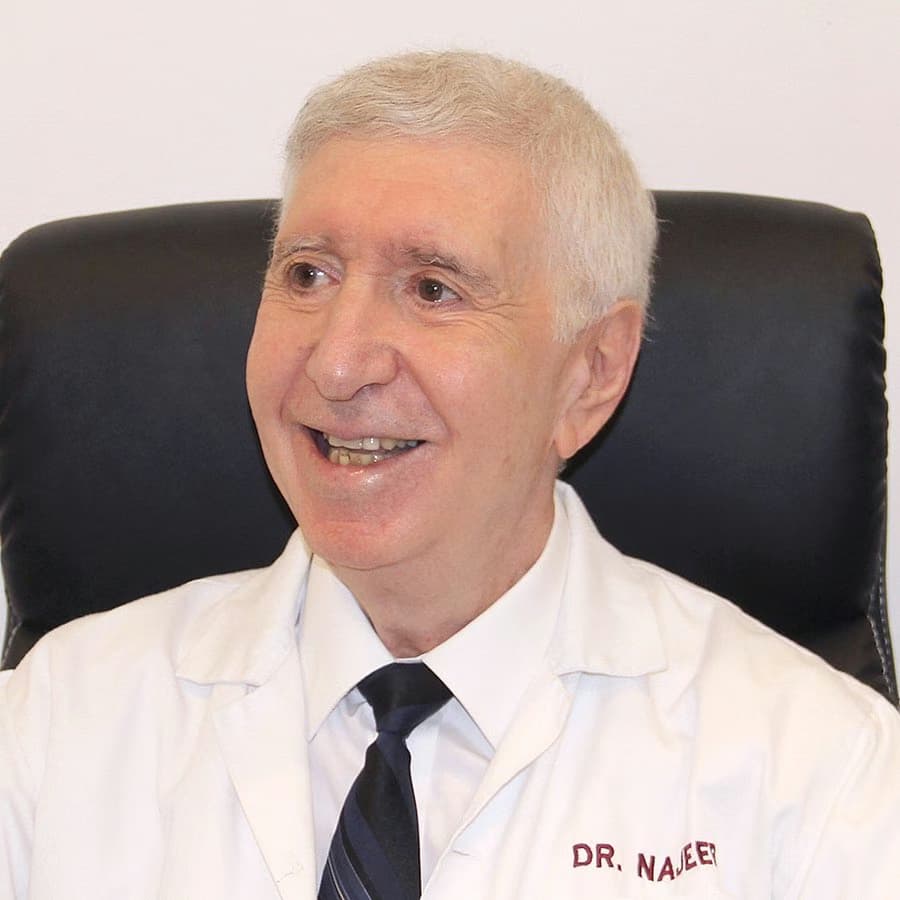
Dr Najeeb Layyous Clinic
Dr Najeeb Layyous practises obstetrics, gynaecology and fertility medicine in Amman. His published qualifications include the Jordanian Board, fellowship of the…
Treatments
Hours not listedInsurance not specified7 views
Trusted medical platform in Jordan

Uterine fibroids are benign tumours arising from the smooth muscle of the uterine wall. They are among the commonest findings in the reproductive years, and many cause no symptoms at all and need no treatment. Treating fibroids therefore is not treating an ultrasound picture; it is treating symptoms: heavy or prolonged menstrual bleeding, the anaemia that follows it, heaviness and pressure in the lower abdomen, urinary frequency, pelvic pain or pain during intercourse, and in some cases difficulty conceiving or recurrent miscarriage. The position of a fibroid matters more than its size. A fibroid growing into the uterine cavity beneath the lining causes heavy bleeding and fertility problems even when small. A fibroid within the muscular wall enlarges the uterus and causes heaviness and pain. An outer fibroid presses on the bladder or bowel and, if it sits on a stalk, can twist and cause sudden pain. Treatment therefore begins with careful mapping of number, position and size using transvaginal or abdominal ultrasound, with magnetic resonance imaging when surgical planning requires it, plus a blood count for anaemia and assessment of the uterine lining when bleeding is abnormal. The goal is then agreed with the patient: controlling bleeding, relieving pressure and bulk, preserving the uterus and fertility, or a definitive solution after childbearing is complete. Simple surveillance is a legitimate option for silent fibroids without symptoms. For bleeding, medical options include non-hormonal medicines that reduce blood loss, hormonal options that regulate the lining including the hormonal intrauterine device, and hormonal medicines that temporarily shrink fibroids, usually for a limited period before surgery or to correct anaemia. Interventional and surgical options are selected according to position and pregnancy plans: hysteroscopic resection for fibroids inside the cavity, laparoscopic or open myomectomy for wall and outer fibroids while preserving the uterus, uterine artery embolisation to reduce the blood supply of the fibroids, and hysterectomy as a definitive answer for a woman who has completed her family and for whom other options have failed. The limits must be stated plainly. Medicines control symptoms rather than dissolving fibroids, and most fibroids resume growth once the medicine stops. Removing a fibroid does not prevent new fibroids from forming later. Uterine artery embolisation is generally not preferred for a woman planning pregnancy. Fibroids are not cancer and in the great majority do not turn into cancer, yet a mass that grows rapidly or appears after menopause needs serious evaluation. No herbal remedy or injection has been shown to dissolve fibroids. Which option suits you is decided by clinical examination and imaging, not by reading.
A pelvic examination and transvaginal or abdominal ultrasound define the number of fibroids, the position and size of each, and their relation to the uterine cavity. Magnetic resonance imaging is requested when planning surgery or when the diagnosis is uncertain, alongside a blood count for anaemia and assessment of the uterine lining if bleeding is abnormal.
The goal is framed explicitly with the patient: controlling bleeding and correcting anaemia, relieving pressure and bulk, preserving fertility for a pregnancy in the near future, or a definitive solution after childbearing is complete. The goal determines the option, not fibroid size alone.
Silent fibroids without symptoms are monitored with periodic examination and ultrasound. For bleeding, options include medicines that reduce blood loss, hormonal options that regulate the lining including the hormonal intrauterine device, or hormonal medicines that shrink fibroids for a limited period before surgery, with iron treatment for anaemia decided clinically.
A fibroid inside the cavity is resected hysteroscopically with no incisions; wall or outer fibroids are removed laparoscopically or by open myomectomy while preserving the uterus; uterine arteries may be embolised by catheter to reduce blood supply; or the uterus is removed as a definitive solution once childbearing is complete. The route depends on position and pregnancy plans.
Success is measured by symptom improvement rather than by the ultrasound alone: menstrual blood loss, haemoglobin level and pressure symptoms. Periodic reviews are arranged because new fibroids may appear, and the timing of pregnancy after myomectomy is discussed according to how deeply the uterine wall was entered.
Before your appointment, record your menstrual pattern precisely: how many days it lasts, how many pads you use each day, whether you pass clots, and whether you feel tired, dizzy or breathless on exertion, which suggest anaemia. Note pressure symptoms too: urinary frequency, lower abdominal heaviness, pain during intercourse, constipation. Bring previous ultrasound reports and images if you have them, your most recent blood tests, and a list of your medications and supplements including blood thinners and any hormonal treatment. Tell the clinician about your plans for pregnancy, because they fundamentally change which options are offered, about previous pelvic surgery, and about any family history of uterine or ovarian tumours. Do not start herbal products or supplements marketed as dissolving fibroids, and do not stop a prescribed medicine without discussing it with your doctor.
After medical treatment, expect several months before judging the result; keep a monthly record of menstrual blood loss for an objective assessment, complete iron treatment for the full duration your doctor set even if bleeding improves, and repeat the haemoglobin test as requested. After hysteroscopic resection you usually return to normal activity within days, with light bleeding or watery discharge for a week or more. After laparoscopic or open myomectomy, avoid heavy lifting and strenuous effort for the number of weeks your surgeon specifies, mobilise early and drink enough fluids to prevent clots and constipation, and ask how long to wait before trying to conceive, because this depends on how deeply the uterine wall was entered. Seek care immediately if you have: **heavy bleeding soaking a pad every hour or more, or passing large clots, dizziness, fainting or a racing pulse, sudden severe pelvic pain which may mean a twisted pedunculated fibroid, a temperature of 38C or above or offensive discharge, inability to pass urine, or pain and swelling in one leg or breathlessness after surgery**. If you become pregnant: **go to obstetric emergency care immediately for vaginal bleeding, regular contractions, persistent abdominal pain, fluid leaking or reduced fetal movements**.
Consultation with imaging usually takes 30 to 45 minutes, while fibroid removal operations usually take 45 minutes to two hours depending on number and position
Dr Najeeb Layyous practises obstetrics, gynaecology and fertility medicine in Amman. His published qualifications include the Jordanian Board, fellowship of the…
Dr Maha Alsaid sees patients for obstetric, gynaecological and infertility care at her Jabal Al-Hussein clinic. Her published services span menstrual and fertil…
There are currently 2 doctor profiles linked to Uterine fibroids treatment on ClinicsJo. Review the listed services and contact the practice to confirm availability with the doctor and branch you choose.
Start with an available doctor's profile and use the contact or booking options shown there. Confirm the service, practice location and appointment time with the clinic. If this list is empty, broaden your search using the directory links on this page.
Ask the practice for the current price and what it includes. A consultation fee shown on a profile is not necessarily the price of a procedure, tests or follow-up. Confirm any additional charges and insurance arrangements before your visit.