Acne is a chronic inflammatory disorder of the hair follicle and its oil gland. It shows up as blackheads and whiteheads, red papules and pustules, and deeper painful nodules or cysts, most often on the face, chest and back. Four factors drive it together: hormonally driven overproduction of sebum, plugging of the follicle opening by sticky keratin cells, overgrowth of bacteria that normally live on the skin inside that blocked follicle, and the inflammation that follows and causes redness, swelling and pain.
Treatment is a stepwise plan chosen after a clinical examination, based on how severe the acne is and which lesions dominate — not on advice read online. Topical agents that unplug the pore and calm inflammation are the backbone of most plans. A time-limited oral course may be added for moderate disease, hormonal therapy may suit selected women after assessment, and oral vitamin A derivatives are reserved for severe or scarring acne; that last option requires baseline laboratory tests, regular monitoring and strict pregnancy prevention, because it causes birth defects.
In-clinic procedures support the medical plan rather than replace it: sterile extraction of blocked pores, superficial chemical peels spaced weeks apart, an anti-inflammatory injection into a large painful nodule, and selected light or laser sessions as adjuncts.
The limits matter as much as the benefits. A good plan controls activity and prevents scarring; it does not remove the underlying tendency, and acne can return after stopping treatment or with hormonal change, so maintenance therapy is usually needed. Improvement is not immediate — expect roughly eight to twelve weeks — and a temporary flare in the first weeks is common. Most importantly, clearing active spots does not erase existing pitted scars or dark marks: scar correction is a separate second stage that begins only once the acne itself is controlled.
Some myths need correcting. Acne is not caused by poor hygiene, and scrubbing or harsh exfoliation makes it worse and leaves pigmentation behind. Squeezing spots is the single biggest cause of permanent pits. Unprescribed lightening blends and herbal mixtures can cause burns and stubborn discolouration. Finally, not every facial bump is acne: keratosis pilaris, rosacea and folliculitis look similar and are treated quite differently, which is why assessment comes first.
2 specialists
Procedure steps
1
Examination, lesion type and severity
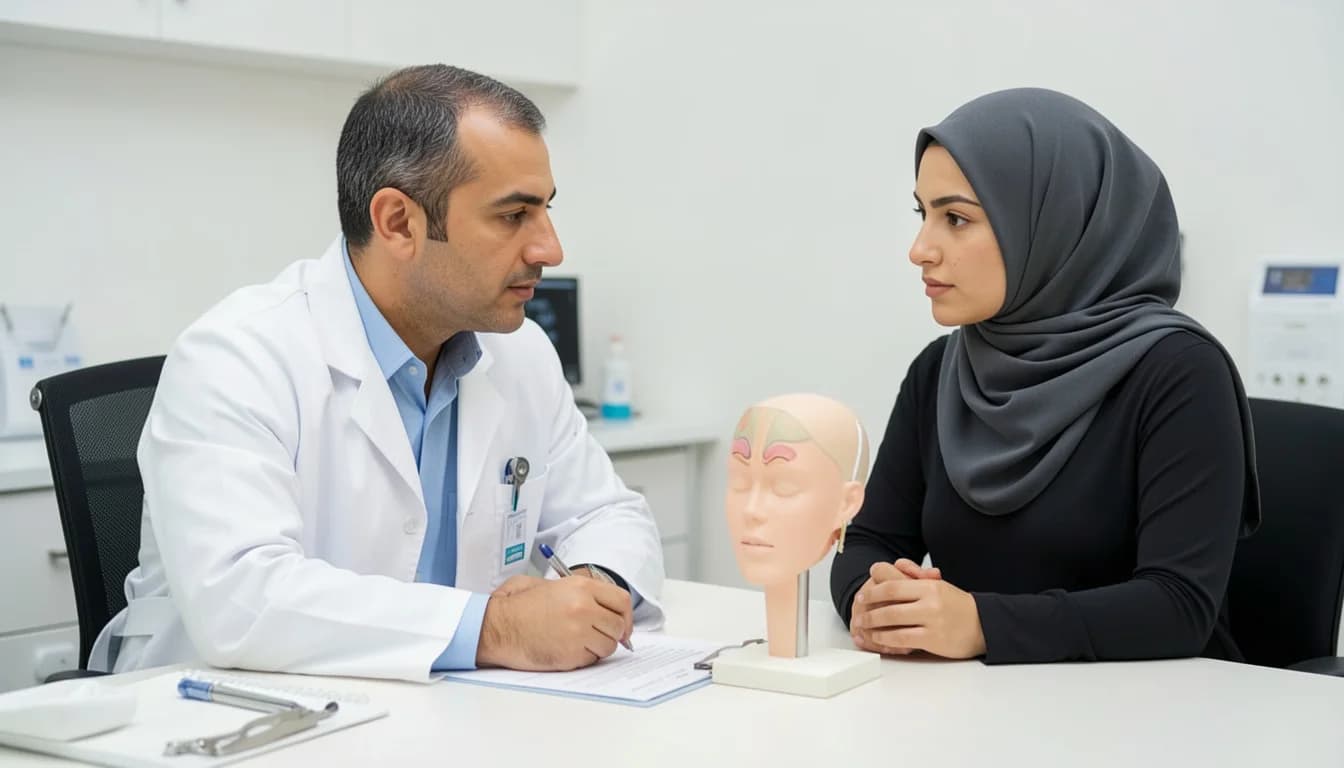
The doctor examines the face, chest and back in good light to identify the dominant lesion type, grade the severity and record existing scars or pigmentation, then asks about duration, previous treatments, medicines and supplements, and — in women — menstrual pattern and hormonal signs that may call for further assessment.
2
Agreeing a stepwise treatment plan
The doctor explains which options fit your case and skin type, how long results realistically take, the side effects to expect, and the supportive measures needed such as sunscreen and moisturiser. If an oral medicine is indicated, the required baseline tests are arranged first and the precautions during treatment are spelled out.
3
Starting treatment and the settling-in period
Topical treatment is introduced gradually — fewer nights and smaller amounts at first — alongside a suitable moisturiser, to limit dryness, flaking and stinging. New spots or increased dryness in the first two weeks are expected and are not a sign of failure, nor a reason to stop before speaking to the doctor.
4
Adjunct procedures in the clinic
Depending on the case, the clinic may add a sterile extraction session for blocked pores, a course of superficial chemical peels spaced weeks apart, or an injection into a large painful nodule to settle it faster and reduce the chance of a scar. These sessions support the medical plan; they do not replace it.
5
Follow-up, maintenance and relapse prevention
The plan is usually reviewed every one to two months to measure progress, adjust strength, switch agents, or stop an oral course at the right time. Treatment then moves to long-term maintenance at the lowest effective level, because abruptly stopping everything is one of the commonest reasons acne comes back.
Before the procedure
Tell the doctor everything you currently put on your face: cleansers, lightening creams, exfoliating products, oils, make-up, and any treatment prescribed for someone else or bought over the counter. List all your oral medicines and supplements, especially gym and protein supplements, since some of them worsen acne. Women should mention menstrual regularity, any increase in facial hair or scalp hair loss, and pregnancy, breastfeeding or plans to conceive, because these change the plan completely. Stop squeezing spots before the visit, and avoid strong peels or waxing in the area for a week beforehand. Photograph your skin in natural light so you can compare progress later, and come without make-up if you can, so the doctor can grade the lesions accurately.
After the procedure
Use the treatment exactly as prescribed; doubling the amount increases irritation without speeding anything up. Moisturise daily and apply a non-greasy sunscreen every morning, because most acne treatments make skin more sun-sensitive and more likely to pigment. Do not squeeze or pick, avoid harsh scrubs and loofahs, and resist changing products every week. Do not stop at the first improvement — continue until your doctor advises otherwise. **Seek medical review immediately if: painful large spots spread rapidly with fever and general fatigue; the face develops crusted, bleeding sores; or the lip or eye swells. If you are on an oral course, seek review immediately for yellowing of the eyes or dark urine, severe joint pain, persistent headache with blurred vision, a clear change in mood or thoughts of self-harm, or painful swallowing with vomiting.** Also see your doctor promptly if lesions are deep and nodular and leaving pits, because delay here costs permanent scarring.
Expected duration
The assessment visit usually takes 15 to 30 minutes and an in-clinic extraction or peel session 20 to 45 minutes; visible improvement typically appears after 8 to 12 weeks of consistent treatment.
Dr Reem Mahmoud Al Awadi is a dermatologist and venereologist with the Jordanian Board in the specialty. At her Shmeisani practice, she assesses skin and hair c…
Dr. Mohammad Helalat is a consultant dermatologist and venereologist practicing at Helalat Clinic in Dabouq. He assesses acne and acne scarring, pigmentation, d…
Which doctors are listed for Acne treatment in Jordan?
There are currently 2 doctor profiles linked to Acne treatment on ClinicsJo. Review the listed services and contact the practice to confirm availability with the doctor and branch you choose.
How can I find an appointment for Acne treatment?
Start with an available doctor's profile and use the contact or booking options shown there. Confirm the service, practice location and appointment time with the clinic. If this list is empty, broaden your search using the directory links on this page.
What does Acne treatment cost in Jordan?
Ask the practice for the current price and what it includes. A consultation fee shown on a profile is not necessarily the price of a procedure, tests or follow-up. Confirm any additional charges and insurance arrangements before your visit.