
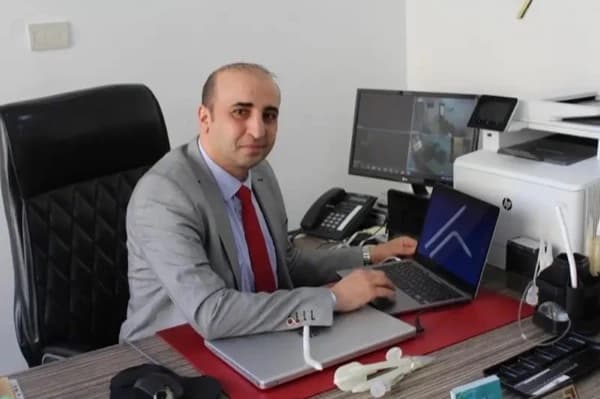
Dr. Amjad Al-Muslimani Clinic
Dr. Amjad Al-Muslimani is a consultant urologist and andrology surgeon in Amman. His clinic website focuses on laser treatment of prostate enlargement, flexible…
Hours not listedInsurance not specified6 views
Trusted medical platform in Jordan

عملية تقشير البروستات بالليزر لعلاج تضخم البروستات (هوليب)
Benign prostatic enlargement is common with age: the gland grows and compresses the urinary channel, producing storage and voiding symptoms — hesitancy and a weak stream, intermittency, a sense of incomplete emptying, and frequent night-time voiding. HoLEP (holmium laser enucleation of the prostate) passes an endoscope through the urinary channel — with no external incisions — and uses the holmium laser to enucleate the enlarged tissue off the gland capsule, after which it is morcellated and suctioned out. What distinguishes it is near-complete removal of the obstructing tissue regardless of gland size, making it a strong option for large prostates that were traditionally treated by open surgery, and it reduces bleeding compared with conventional electro-resection because the laser seals vessels as it works — which makes it feasible for men on blood thinners after careful assessment. A further advantage is that the removed tissue is sent for histological examination. The correct pathway does not begin with surgery: behavioural measures and medication are tried first for an adequate period, and surgery is considered when these fail or when complications exist such as recurrent urinary retention, recurrent urinary infections, bladder stones, impaired kidney function or recurrent bleeding. It is only fair to state what a patient should know before consenting: many men notice **retrograde ejaculation** afterwards (semen passing into the bladder rather than outward). This does not affect sensation or erection but does affect natural fertility. Urinary urgency and burning may also persist for weeks before symptoms settle.
Symptom scoring, urinary flow measurement and post-void residual, urinalysis, renal function and prostate-specific antigen, with imaging to estimate gland size.
Medication and modification of fluids and caffeine are tried for an adequate period; surgery is considered on failure or with recurrent retention, stones or renal impairment.
The endoscope is passed through the urinary channel and the enlarged tissue is enucleated off the capsule with the laser, sealing vessels as it goes, relieving the obstruction.
The enucleated tissue is morcellated inside the bladder, suctioned out and sent for histology, then a temporary urinary catheter is placed with bladder irrigation.
The catheter is removed once the urine clears, usually within one to two days, with follow-up of symptoms and flow measurement and gradual settling expected over weeks.
Tell your surgeon about all medications, especially blood thinners, antiplatelets and prostate drugs, and do not stop anything on your own — some require a specific plan with your cardiologist. Report any current urinary infection, since the procedure is postponed until treated, and any history of urethral stricture or previous prostate surgery. Complete the requested urine and blood tests, renal function and PSA. **Discuss retrograde ejaculation and its effect on fertility explicitly before consenting**, particularly if you plan to father children. Observe the fasting instructions, and arrange an escort and roughly two weeks off strenuous activity.
Drink enough fluids to keep the urine clear unless medically restricted. Expect burning, urgency and intermittent light blood in the urine for weeks, and blood may reappear as scabs separate — common and eased by fluids and rest. Avoid exertion, heavy lifting, cycling, prolonged sitting and constipation, and use a stool softener if needed, since straining increases bleeding. Resume blood thinners only on the schedule the team specifies. Seek care immediately for inability to pass urine, heavy bleeding with clots, fever and chills, severe pain, or pus, rather than waiting for the scheduled visit.
60–120 minutes depending on gland size; catheter usually for one to two days
Dr. Amjad Al-Muslimani is a consultant urologist and andrology surgeon in Amman. His clinic website focuses on laser treatment of prostate enlargement, flexible…
There are currently 1 doctor profiles linked to Holmium Laser Enucleation of the Prostate (HoLEP) on ClinicsJo. Review the listed services and contact the practice to confirm availability with the doctor and branch you choose.
Start with an available doctor's profile and use the contact or booking options shown there. Confirm the service, practice location and appointment time with the clinic. If this list is empty, broaden your search using the directory links on this page.
Ask the practice for the current price and what it includes. A consultation fee shown on a profile is not necessarily the price of a procedure, tests or follow-up. Confirm any additional charges and insurance arrangements before your visit.