

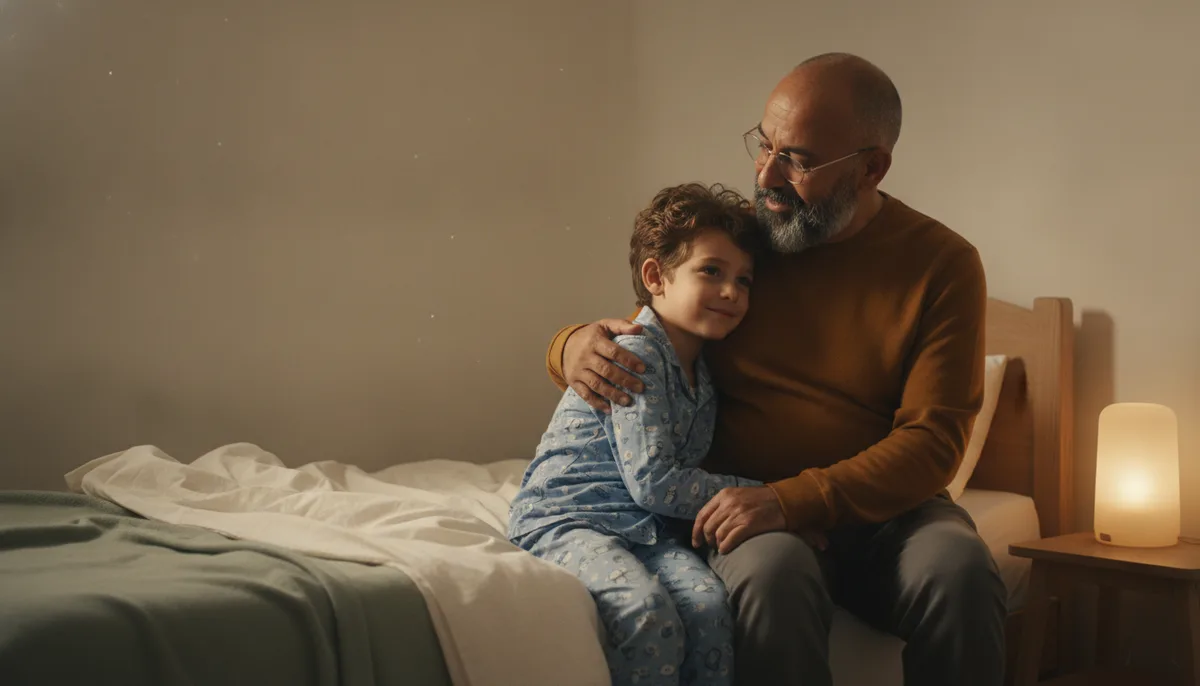
Bedwetting in children is common. Many children under the age of five wet their bed at night, and most outgrow it over time [1]. Punishment and repeatedly waking the child are not solutions. It becomes a concern if it continues despite home measures, returns after more than 6 months of dryness [1], or is accompanied by symptoms such as severe thirst or pain when urinating.
Many parents worry when their child wakes up wet again and again, and wonder whether this is normal or a sign of illness. Bedwetting in children is common and can cause embarrassment for the child and the family, but in most cases it is temporary and improves with proper understanding and patience. This article explains the causes, home steps and medical treatment, when a child needs to see a doctor, and how to find one in Jordan.
What is bedwetting in children, and is it common?
It means a child urinates involuntarily during sleep. Medically, this is called nocturnal enuresis. The UK's National Health Service (NHS) notes that it is common, often runs in families, and that most children and teenagers outgrow it over time [1].
The child does not do this on purpose or out of laziness. The child does not feel the need to urinate during sleep, or the body produces a large amount of urine at night, or stress affects the child, as we explain later. To learn about the condition in a brief page, you can visit the page on bedwetting in children.
When is bedwetting in children normal?
The NHS confirms that nighttime bedwetting in young children is normal, that many children under the age of five wet the bed, and that learning to stay dry through the night can take time [1]. MedlinePlus notes that children grow and mature at very different rates, and that it is difficult to define what is "normal" precisely [2].
So there is no specific day when the problem suddenly becomes a disease. More important than the child's age in numbers is the full picture, which includes:
- Does the problem upset the child or affect their self-confidence and participation in sleepovers and trips?
- Did it start suddenly after a period of dryness?
- Are there other symptoms during the day?
- Does it continue despite home measures?
If the answer is "yes" to any of these, it is appropriate to take the child to a doctor rather than wait.
What are the causes of bedwetting in children?
There is no single cause. The NHS lists among the causes: not feeling the need to urinate during sleep, producing a large amount of urine at night, and stress at home or school. It may also be linked to an underlying health condition such as diabetes or constipation [1]. MedlinePlus refers to educational materials from the American Academy of Pediatrics that explain common causes and what families can do [2].
| Possible cause | What it means | What to do? |
|---|---|---|
| Not waking when the bladder is full | The child does not feel the need to urinate while asleep [1] | A bedtime routine; an alarm may help if recommended by the doctor |
| Excess nighttime urine production | The body produces more urine than the bladder can hold at night [1] | Medical evaluation by a doctor, who may prescribe a medicine that reduces night-time urine production |
| Stress | Pressures at home or school [1] | Calm conversation and emotional support; see a doctor if the pressures persist |
| Underlying health condition | Such as diabetes or constipation [1] | Medical examination and treatment of the cause |
What is the link between constipation and bedwetting in children?
The NHS lists constipation among the health conditions that may cause nighttime bedwetting [1]. In practical terms, a bowel full of stool may press on the adjacent bladder, reducing its ability to hold urine and irritating it. This is a general explanation of the mechanism, not a specific figure.
For this reason, a doctor usually asks about bowel habits. Useful questions for you to observe include:
- Does your child have bowel movements regularly, or do days pass without one?
- Is the stool hard or painful?
- Does their underwear sometimes get soiled?
Tell the doctor these details, as treating constipation may be an essential part of a plan to improve urination. Do not give your child a laxative or any medicine without consulting a doctor or pharmacist.
What can the family do at home?
Home measures are the first step, and they often reduce the emotional pressure on the child even if they do not solve the problem immediately. The NHS recommends the following [1]:
What is recommended
- Giving the child enough water during the day.
- Encouraging them to use the toilet regularly, about 4 to 7 times a day, including right before bed.
- Agreeing on rewards for positive behavior, such as a sticker for each time they use the toilet before bed.
- Using waterproof covers for the mattress and blanket.
- Making it easy for them to reach the toilet at night.
What is recommended to avoid
- Punishing or scolding the child, as this is not their fault and may make the problem worse.
- Caffeinated drinks such as cola, tea and coffee, as they increase urine production.
- Regularly waking the child or carrying them to the toilet at night, as this does not help in the long term.
A calm word of encouragement in the morning, and changing clothes and bedding without a hurtful comment, help protect the child's self-confidence. Avoid comparing them with their siblings or other family members.
What are the treatment options for bedwetting in children?
If you have tried home measures and the bedwetting continues, consult a doctor. The NHS states that options include a bedwetting alarm and a medicine that reduces the amount of urine the child produces at night. The doctor monitors how well the treatment works and provides support to the family if they find it difficult to cope. If these methods do not succeed, the child may be referred to a specialist [1].
Bedwetting alarm
A device that sounds an alarm when the bed or underwear becomes wet, and that gradually helps the child notice signals from the bladder. It requires patience and family participation. The doctor or nurse will explain how to use it and when to expect improvement.
Medication, including desmopressin
One well-known medicine for this purpose is desmopressin, which reduces night-time urine production. Parents should not start, stop or change it on their own. The usual dose is determined by the doctor, who will explain the conditions of use and how to manage fluid intake in the evening. MedlinePlus refers to educational materials on medicines for nighttime bedwetting from the National Kidney Foundation [2]. In Jordan, medicines and their public prices are regulated by the Jordan Food and Drug Administration (JFDA), so buy the medicine from a licensed pharmacy and with a doctor's prescription.
To read more about the treatment plan without blame, you can read the article Bedwetting in Children: Causes and Treatment Plan.
When is bedwetting in children concerning?
See a doctor in either of the two situations the NHS mentions [1]:
- You have tried home measures and the child continues to wet the bed.
- The child has returned to nighttime bedwetting after remaining dry for more than 6 months.
The second situation is called secondary bedwetting, and it deserves evaluation because it sometimes has a medical or psychological cause behind it.
Causes doctors look for when bedwetting returns
- Diabetes: The NHS includes it among the conditions linked to nighttime bedwetting [1]. Watch for severe thirst, frequent urination during the day, weight loss and tiredness. Read about type 1 diabetes in children.
- Urinary tract infection: It may appear as burning or pain when urinating, frequent trips to the toilet, fever, or cloudy or strong-smelling urine. The doctor usually orders a urinalysis, and may add a urine culture. For more information about pain when urinating, see What is dysuria and what are its causes?
- Stress: The NHS lists stress at home or school among the causes [1]. Gently ask about recent changes, such as a new school, conflicts, the loss of a loved one, or a new baby.
- Constipation: It may be a cause or a contributing factor, as mentioned above [1].
When should you go to the emergency room?
Call 911 or go to the nearest emergency department if your child shows any of the following:
- Severe thirst with vomiting, abdominal pain or rapid breathing.
- Extreme drowsiness, difficulty waking up or confusion.
- High fever with severe back or flank pain and shivering.
- Inability to urinate with severe pain.
- Any situation in which you feel your child is very ill.
How do you find a pediatrician or the right clinic in Jordan?
Start with a pediatrician, who assesses the child's general condition, bowel and urinary habits, and growth, and determines whether tests or a pediatric urology specialist are needed. Browse pediatricians in Jordan, then narrow your search by governorate, such as pediatricians in Amman, pediatricians in Irbid, or pediatricians in Zarqa.
There are also pages that list clinics that assess the condition, such as a guide to clinics assessing enuresis in children. For those living in the capital, there is a page on pediatric urology clinics in Amman. These pages help you reach clinics only, and do not imply a medical ranking of doctors or a guarantee of outcome.
What to check in the profile?
- The specialty (pediatrics or pediatric urology), governorate and area.
- Working hours and how to contact or book, if available in the profile.
- The services listed and whether they are suitable for your child's age.
Useful questions for the doctor
- What is the likely cause in my child? Do we need a urine test or other tests?
- Do constipation or fluid intake play a role in their condition?
- Is a bedwetting alarm or medication more suitable for them? How long does improvement usually take?
- When should we follow up, and what signs call for an earlier review?
- How do we talk with our child so they do not feel guilty?
In some areas, Ministry of Health primary health centers and mother and child health centers are available, and you can ask them for appropriate guidance.
How can I support my child emotionally?
Emotional support is part of treatment. Remind your child that the problem is common, that it is not their fault, and that you are working together to solve it. The NHS confirms that punishment is not helpful and may make the problem worse [1].
- Involve them in changing the bedding without it being a punishment.
- Celebrate dry nights calmly and without exaggeration, and do not comment on wet nights.
- Speak with the teacher or trip supervisor when needed, and do so confidentially in a way that protects their dignity.
- Seek help from a specialist if signs of persistent sadness, withdrawal or severe anxiety appear.
If you have other questions about growth and behavior, consulting a pediatrician is the appropriate starting point. MedlinePlus notes that behavioral problems may increase over time, and that seeking help early is important [2].
This article is for health education and does not replace a doctor's examination. Do not start, stop or change the dose of any medicine for your child without consulting a doctor or pharmacist, as children's doses are determined by weight and by prescription or pharmacist guidance.
Frequently asked questions
Is bedwetting in children common?
Yes, it is common. Many children under the age of five wet their bed at night, and most outgrow it over time. It can also run in the same family. If it continues despite home measures or upsets the child, it is appropriate to take the child to a pediatrician for an assessment.
Should I punish my child or wake them at night to use the toilet?
No. Punishment does not help and may make the problem worse, as the child does not wet the bed on purpose. Waking them or regularly carrying them to the toilet at night does not help in the long term. The best approach is a clear bedtime routine, positive encouragement, and seeing a doctor if the problem continues.
Is there a link between constipation and bedwetting?
Yes, constipation may be one of the conditions linked to nighttime bedwetting. For this reason, the doctor asks about the child's bowel habits. If they have difficulty passing stool or go several days without a bowel movement, tell the doctor, and do not give them a laxative without consulting a doctor or pharmacist.
When should I see a doctor about my child wetting the bed?
See a doctor if you have tried home measures and the bedwetting continues, or if the child has started wetting the bed again after being dry for more than 6 months. Also see a doctor if severe thirst, pain when urinating, fever, weight loss or a clear change in the child's behavior appears.
Is there medication to treat nighttime bedwetting?
Yes. A doctor may prescribe a medicine that reduces the amount of urine the child produces at night, such as desmopressin. Parents should not start or stop the medicine on their own. The doctor determines the appropriate dose and duration of use and explains fluid management. The benefit and follow-up are assessed after treatment begins.
Can sudden bedwetting indicate an illness?
Sometimes. If a child starts wetting the bed again after a long dry period, the cause may be stress, constipation, a urinary tract infection or diabetes. This requires a doctor's assessment and possibly a urine test. If vomiting, severe thirst and drowsiness appear, go to the emergency department or call 911.
Sources and references
- Bedwetting in children — NHS (UK National Health Service). Accessed: 2026-10-26.
- Child Development: MedlinePlus — MedlinePlus — U.S. National Library of Medicine. Accessed: 2026-10-26.