
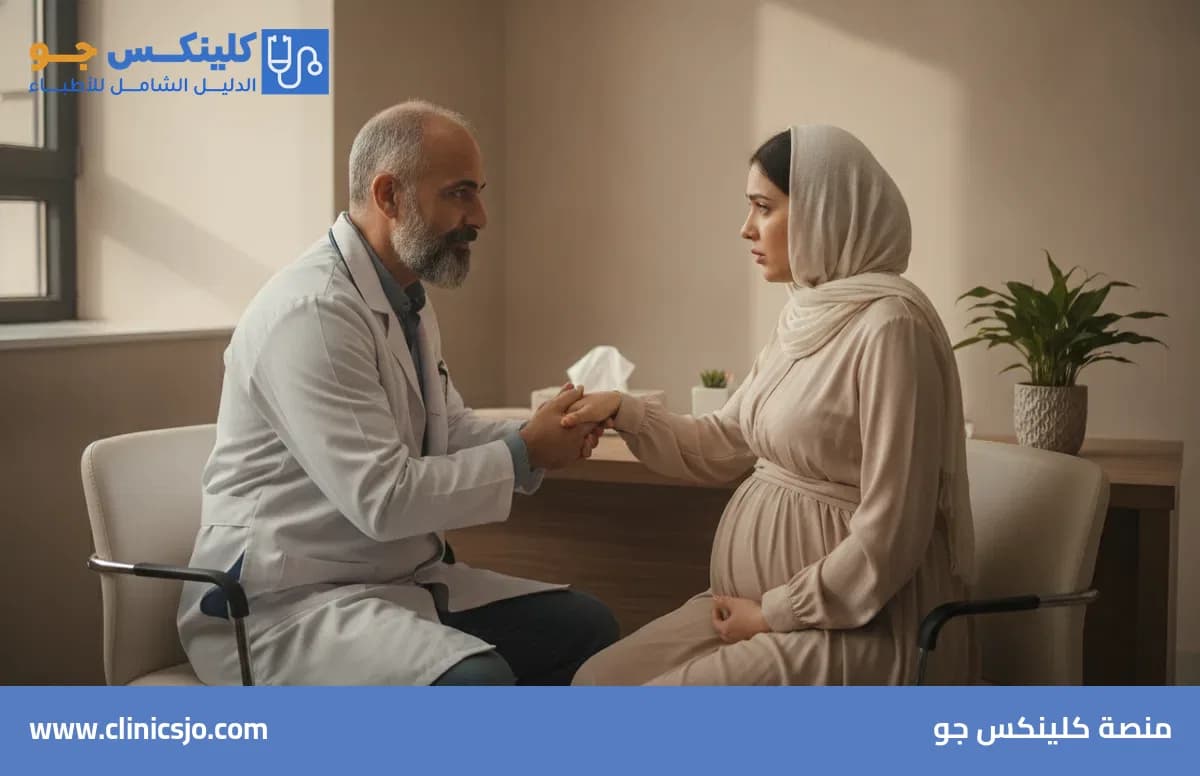

Bleeding in early pregnancy is not always dangerous. It can be light spotting caused by implantation of the embryo or a change in the cervix, but it can sometimes indicate a miscarriage or an ectopic pregnancy. Any bleeding during pregnancy calls for consultation with a specialist [1]. If it is accompanied by severe pain, dizziness, or heavy bleeding that soaks through a pad, go immediately to the nearest emergency department or call 911.
What is bleeding in early pregnancy, and is it always dangerous?
Bleeding in early pregnancy worries every woman who notices it, and it is a symptom that deserves attention. The UK's National Health Service (NHS) notes that vaginal bleeding during pregnancy is not always dangerous, but it sometimes requires urgent treatment. That is why it is important to get advice from a health professional [1].
Bleeding appears in different forms, and describing it accurately to your doctor helps greatly in identifying the cause:
- Spotting: pink, red, or brown marks on underwear or tissue [1].
- Light bleeding: larger areas of pink, red, or brown blood that may require a sanitary pad [1].
- Heavy bleeding: bright red blood leaking through a pad, which may be accompanied by clots or lumps [1].
The bleeding may be continuous or may come and go [1]. MedlinePlus explains that symptoms such as nausea, back pain, and fatigue are common in pregnancy, whereas vaginal bleeding may be a sign of a problem and should be reported to your doctor [3]. To understand what is expected at each stage, you can review the stages of pregnancy guide: physical and psychological changes.
What are the common causes of bleeding in early pregnancy?
Bleeding during pregnancy has many possible causes, which according to the NHS include [1]:
- Implantation bleeding: occurs early in pregnancy when the embryo implants in the uterus.
- Changes in the blood vessels of the cervix: these may cause bleeding after intercourse, for example.
- Leakage of blood from inside the uterus.
- Infections: such as urinary tract infections or sexually transmitted infections.
- Miscarriage.
- Ectopic pregnancy.
- Molar pregnancy (hydatidiform mole).
- Placental problems: such as placenta praevia.
- "The show": the loss of the mucus plug that seals the cervix, which may be accompanied by blood and may signal the start of labour.
Some of these causes, such as placental problems and the show, are usually associated with later stages of pregnancy rather than the beginning. In some cases, the cause of bleeding cannot be determined at all [1].
If bleeding occurs without a confirmed pregnancy, see our article on abnormal uterine bleeding: causes, diagnosis, and treatment or the abnormal uterine bleeding page in the conditions directory.
Is implantation bleeding normal, and how can I tell it apart from other bleeding?
Implantation bleeding is mentioned among the causes of bleeding in early pregnancy. It occurs when the embryo implants in the uterus [1]. It is usually light spotting, but you cannot be certain that bleeding is implantation bleeding without a medical evaluation, because other causes may begin in the same way.
Do not rely on guesswork. Even light bleeding requires contacting your doctor or hospital the same day if it is painless or is accompanied by mild pain that does not stop you from carrying out your daily activities, or if it is accompanied by diarrhoea, pain, or pressure when urinating or passing stools [1].
Information that helps your doctor
- The colour of the blood (pink, red, or brown) and whether it is continuous or intermittent.
- The number of pads used and how full they are (use a sanitary pad to estimate the amount).
- The presence of pain, its location (lower abdomen, one side, or shoulder), and its severity.
- The date of your last menstrual period, and any previous pregnancy or bleeding.
Does bleeding with pain mean a miscarriage?
Miscarriage is one of the possible causes of bleeding in early pregnancy [1]. It is usually suspected when bleeding increases or is accompanied by pain or cramping in the lower abdomen. However, diagnosis is not based on symptoms alone; ultrasound scans and blood tests are what settle the matter [1].
Bleeding may be caused by another cause while the pregnancy is healthy. The NHS notes that you may not need treatment if tests show that the bleeding is not serious and that the pregnancy is healthy [1].
If pregnancy loss is confirmed, it is not your fault, and feelings of grief are normal. The NHS describes pregnancy loss as potentially devastating, and notes that many women feel grief similar to the loss of a family member. These feelings may last for months and usually improve over time [2]. Give yourself and your partner time to grieve, and do not hesitate to seek emotional support or specialist counselling if you find it difficult to accept the loss [2].
Ectopic pregnancy: when is bleeding an emergency sign?
An ectopic pregnancy (Ectopic pregnancy) is when a fertilised egg implants outside the uterus, most often in one of the fallopian tubes. The egg cannot develop into a baby there, and your health may be put at risk if the pregnancy continues [2]. This pregnancy cannot be saved, and it usually needs to be removed with medication or surgery [2]. In Britain, it is estimated that about 1 in every 90 pregnancies is ectopic [2].
Symptoms
An ectopic pregnancy may cause no symptoms and may be discovered during a routine ultrasound scan. When symptoms do appear, they usually begin between weeks 4 and 12 of pregnancy [2]. They may include some of the following [2]:
- Missed period and other signs of pregnancy.
- Pain in the lower abdomen on one side.
- Vaginal bleeding or brown watery discharge.
- Pain in the tip of the shoulder.
- Discomfort when urinating or passing stools.
These symptoms are not conclusive, as they may be caused by other problems such as a stomach infection [2]. However, if more than one symptom occurs and pregnancy is possible, seek medical advice immediately, even if a pregnancy test is negative [2].
Factors that increase the likelihood
- Pelvic inflammatory disease (PID), usually caused by a sexually transmitted infection.
- A previous ectopic pregnancy, which has a recurrence rate of about 10%.
- Previous surgery on the fallopian tubes.
- Fertility treatments such as IVF.
- Pregnancy occurring while an intrauterine device (IUD) is in place.
- Smoking, and being over 35 years old.
All of the above is sourced from [2]. An ectopic pregnancy cannot always be prevented, but using a condom when you do not wish to become pregnant protects against sexually transmitted infections, and quitting smoking reduces the risk [2]. You will find more detail in our article ectopic pregnancy: early symptoms and when pain is an emergency and on the ectopic pregnancy page.
When is bleeding in early pregnancy dangerous? When should I go to the emergency department?
The following table summarises the levels of action according to NHS guidelines, adapted to suit Jordan, where the emergency number is 911:
| Situation | Appropriate action |
|---|---|
| Spotting or light bleeding with mild pain or no pain, or with diarrhoea, or pain or pressure when urinating or passing stools [1] | Call your doctor or maternity hospital and contact them the same day to request urgent help. |
| Bleeding with severe abdominal pain that prevents you from carrying out your activities, shoulder pain, nausea, dizziness, or fainting, or heavy bleeding that quickly fills a pad [1] | Call 911 or go immediately to the nearest emergency department. |
| Sudden, severe, acute abdominal pain with severe dizziness or fainting, nausea, and pallor [2] | Immediate emergency. It may indicate a ruptured fallopian tube. |
A ruptured tube is a serious condition and requires surgery as soon as possible to repair it. Rupture can be life-threatening, but it is rare and treatable if managed quickly [2]. Do not drive yourself if you feel dizzy; ask someone to accompany you or call an ambulance.
What tests should I expect when visiting the doctor?
The doctor will start by asking about your health, your symptoms, and the gestational age in weeks, and may ask about any previous bleeding or pregnancy. It is advisable to bring your pregnancy file or medical papers with you if you have them [1]. Some tests may then be carried out [1]:
- A pelvic examination to inspect the area.
- An ultrasound scan, either through the abdomen or the vagina.
- Blood tests.
- A urine sample test.
When an ectopic pregnancy is suspected, a pregnancy test is usually requested, and the patient may be referred for specialist assessment including an ultrasound and blood tests to confirm the diagnosis [2]. Some tests may be repeated after a few days to monitor changes, so do not worry if you are asked to return.
How is bleeding in early pregnancy treated?
Treatment depends on the cause and may also depend on the gestational age [1]. You may be offered closer monitoring of your health and your baby's health, which may include hospital admission. You may not need treatment if the bleeding is not serious and the pregnancy is healthy. If treatment is necessary, it may be medication or surgery [1].
In an ectopic pregnancy there are three main options [2]:
- Monitoring: close follow-up, then resorting to one of the other two treatments if the egg does not dissolve on its own.
- Medication: a methotrexate injection that stops the pregnancy from growing.
- Surgery: keyhole (laparoscopic) surgery under general anaesthesia to remove the egg, usually together with the affected tube.
Your doctor will explain the benefits and risks of each option. Anti-D injection (Anti-D) is usually offered if the pregnancy is 12 weeks or more at diagnosis, your blood group is Rh-negative, and you are undergoing medical or surgical treatment [2]. Some treatments may reduce the chances of a natural pregnancy later, but most women are able to become pregnant again [2].
Decisions about medications are determined by your doctor only. Do not start, stop, or change any medication on your own, including supplements and hormonal medications. Ask your doctor or pharmacist first.
After an ectopic pregnancy
It is usually advised to wait at least two menstrual cycles after treatment before trying to conceive again. After methotrexate treatment, it is recommended to wait at least 3 months because the drug may harm a foetus [2]. If a new pregnancy occurs, tell your doctor early so that an early ultrasound scan can be arranged [2].
Can risks be reduced?
Not all pregnancy problems can be prevented, but MedlinePlus notes that regular early antenatal care helps reduce risks. Improving lifestyle before pregnancy, such as reaching a healthy weight, avoiding smoking, and controlling chronic diseases, may also lower the risk of some problems [3]. Factors that increase the likelihood of problems include a condition present before pregnancy, carrying more than one baby, a problem in a previous pregnancy, or being over 35 years old [3]. If you have gestational diabetes or a chronic illness, see the gestational diabetes page to learn about the follow-up you will need.
How do I find a suitable obstetrics and gynaecology doctor in Jordan?
Start from the obstetrics and gynaecology doctors in Jordan page, then narrow your search by governorate, such as obstetrics and gynaecology in Amman, Irbid, Zarqa, or Balqa. The directory also includes pages for other governorates.
When reading a doctor's or clinic's profile, pay attention to:
- The specialty (obstetrics and gynaecology) and the experience listed in the profile.
- The clinic's location and how easily you can reach it from your home.
- Working hours, and whether a contact or booking method is listed in the profile.
- Whether the clinic has an ultrasound machine or arrangements for one to be performed.
Useful questions to ask at the appointment:
- What is the most likely cause of bleeding in my case, and what tests are required?
- When will the ultrasound or blood test need to be repeated?
- What signs require going to the emergency department before the next appointment?
- Do I need an Anti-D injection based on my blood group?
Routine pregnancy follow-up is also available at the Ministry of Health's maternal and child health centres in the governorates. Remember that the ClinicsJo directory helps you find doctors and contact them, and does not provide medical advice. Do not wait for an appointment if warning signs from the table above appear.
Quick summary
- Bleeding in early pregnancy always requires medical consultation, even though it is often light [1].
- Severe pain, dizziness, fainting, shoulder pain, or heavy bleeding mean you should go immediately to the emergency department or call 911 [1].
- An ectopic pregnancy can be life-threatening and requires early diagnosis [2].
- Regular antenatal care and telling your doctor about all your symptoms help detect problems early [3].
This article is for general health education and does not replace your doctor's assessment of your condition.
Frequently asked questions
Is bleeding in early pregnancy normal?
It is not always serious. It may be light spotting caused by implantation of the embryo or a change in the cervix. However, it should not be assumed to be normal without an evaluation, as it may also indicate a miscarriage or an ectopic pregnancy. Contact your doctor the same day, even if the bleeding is light.
How can I tell implantation bleeding apart from a miscarriage?
Symptoms alone cannot reliably tell them apart. Implantation bleeding is usually light in early pregnancy, whereas a miscarriage is suspected when bleeding increases or is accompanied by pain or cramping. Your doctor will settle the matter through examination, ultrasound, and blood tests, so do not guess and see your doctor.
When should I go to the emergency department because of bleeding during pregnancy?
Go immediately to the nearest emergency department or call 911 if the bleeding is accompanied by severe abdominal pain, shoulder pain, dizziness, nausea, or fainting, or if the bleeding is heavy and quickly fills a pad. These signs may mean that urgent treatment is needed.
Can an ectopic pregnancy occur without symptoms?
Yes, it may cause no symptoms and is sometimes discovered during a routine ultrasound scan. When symptoms do appear, they include pain on one side of the lower abdomen, bleeding or brown discharge, and pain in the tip of the shoulder. If these appear and pregnancy is possible, seek medical advice immediately.
What tests will the doctor perform for bleeding in early pregnancy?
The doctor will ask about your symptoms, gestational age, and history of pregnancy and bleeding, then may perform a pelvic examination, an ultrasound through the abdomen or vagina, blood tests, and a urine test. Some tests may be repeated later. Bring your pregnancy file and medical papers if you have them.
Can I get pregnant again after an ectopic pregnancy?
In most cases, yes, even if one of the tubes has been removed, and fertility treatment may sometimes be needed. It is usually advised to wait at least two menstrual cycles, and at least three months after methotrexate treatment. If a new pregnancy occurs, tell your doctor early so that early tests can be done.
Sources and references
- Vaginal bleeding in pregnancy — NHS (UK National Health Service). Accessed: 2026-10-26.
- Ectopic pregnancy — NHS (UK National Health Service). Accessed: 2026-10-26.
- Health Problems in Pregnancy — MedlinePlus — U.S. National Library of Medicine. Accessed: 2026-10-26.

