
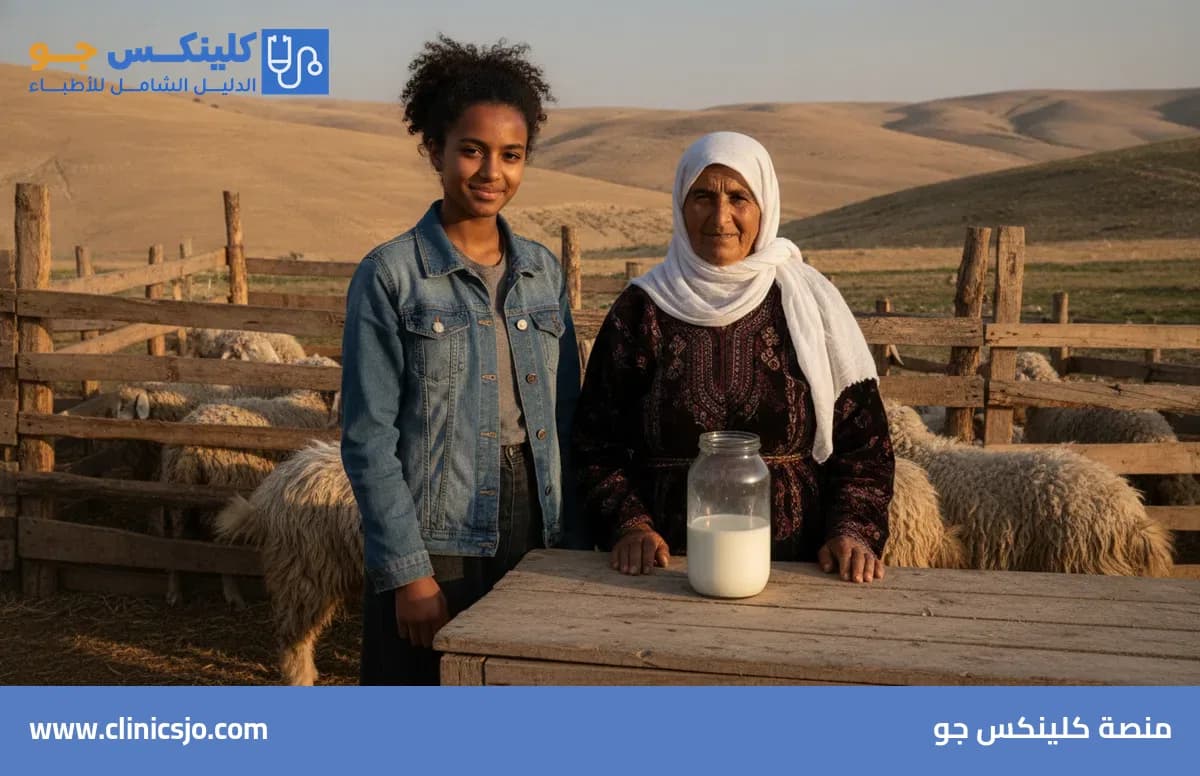

Malta fever (brucellosis) is a bacterial infection that people usually catch by drinking unpasteurized milk or eating fresh cheeses made from it, or by contact with infected animals such as sheep and goats [1]. It causes undulating fever, sweating and joint pain, and is treated with antibiotics usually taken for about six weeks under a doctor's supervision [2]. It is mainly prevented by using pasteurized dairy products.
Malta fever sometimes starts like a passing cold, then turns into fever, sweating and joint pain that can last for weeks. In this article we explain how the infection spreads, its symptoms, how it is diagnosed and treated, how to protect your family, and when you should see a doctor.
What is Malta fever, and why does it matter to readers in Jordan?
It is a bacterial disease caused by types of Brucella bacteria. It mainly affects cattle, pigs, goats, sheep and dogs [1]. It is also known by other names, including Malta fever, undulant fever and Mediterranean fever [2].
The type that most often causes human infection worldwide is Brucella melitensis [1]. MedlinePlus lists Jordan among the countries where Brucella bacteria are found [2].
The World Health Organization describes the disease as one of the most widespread zoonoses (diseases transmitted from animals to humans). It attributes its continued health impact partly to the expansion of animal husbandry, urbanization, and weak hygiene measures in animal rearing and food handling [1]. It affects both sexes and all ages [1]. You can read a simple explanation of high body temperature in the Fever glossary.
How is it transmitted? Unpasteurized milk and cheese, and contact with livestock
The disease passes from animals to humans in three general ways: direct contact with infected animals, eating or drinking contaminated animal products, and inhaling bacteria suspended in the air [1].
Unpasteurized milk and cheese
Most cases result from drinking milk or eating cheese that is unpasteurized, from infected sheep or goats [1]. In the general population, most cases come from raw milk or its products, such as fresh cheese, and most of these are from sheep and goat products [1].
In practice, this includes "fresh" milk that has not been boiled or pasteurized, and the fresh white cheese and laban made from it. This does not mean that all local milk is dangerous, but the bacteria cannot be seen, smelled or detected by taste, so milk safety cannot be judged by looking at it.
Contact with animals and meat
The risk increases for people who work with livestock and are exposed to their blood, placentas, fetuses and uterine discharges. The most affected include farmers, butchers, hunters, veterinarians and laboratory workers [1]. MedlinePlus adds slaughterhouse workers, and notes that infection can spread from the meat of an infected animal or from its placenta [2].
Human-to-human transmission is very rare [1]. Therefore, a patient does not pose a risk to their family through normal contact, but those who shared the same food may have been exposed to the same source.
| Route of exposure | Common example | Preventive measure |
|---|---|---|
| Drinking raw milk | Fresh milk from a farm or herder, without boiling or pasteurization | Choose pasteurized milk, or boil milk thoroughly before drinking |
| Cheeses and raw-milk products | Fresh white cheese or laban made from unpasteurized milk | Choose pasteurized products from known sources |
| Contact with births and their byproducts | Assisting a ewe or goat in giving birth, or handling the placenta | Gloves, protective clothing and eye protection, and proper disposal of waste |
| Working in slaughterhouses and laboratories | Handling meat, organs and samples | Protective equipment and covering skin wounds |
What are the symptoms of Malta fever?
The incubation period varies widely, from one week to two months, and is usually between two and four weeks [1]. This means symptoms may appear weeks after eating the suspected cheese or milk, so patients often do not connect the two.
[1]. The list of symptoms in the acute form includes [2]:
- Fever, chills and excessive sweating
- Joint and muscle pain, and back pain
- Headache, exhaustion and weakness
- Loss of appetite and abdominal pain
- Swollen glands and weight loss
The fever often peaks in recurring spikes in the afternoon, which is where the name undulant fever comes from, as the temperature rises and falls in waves [2]. To learn about causes of high fever in general, you can visit the Fever symptom page.
Why is diagnosis delayed?
The disease can appear in atypical forms, and in many patients the symptoms are mild, so the doctor may not consider it [1]. It can become chronic and last for years, and its symptoms sometimes resemble those of tuberculosis [2]. Therefore, it is important to tell your doctor everything related to milk, cheese and contact with animals.
How is the disease diagnosed?
The doctor will examine you and ask about your symptoms, your contact with animals, or your consumption of unpasteurized dairy products [2]. The following tests may be requested [2]:
- Blood test for Brucella
- Blood culture
- Bone marrow culture or urine culture
- Cerebrospinal fluid culture when the nervous system is suspected to be involved
- Biopsy and culture of the affected organ
Many diseases cause persistent fever, including typhoid fever, so doctors rely on tests rather than symptoms alone. If the fever lasts without a clear cause, see the persistent or chronic fever evaluation page.
Tell your doctor the source of the milk or cheese and who shared your food, as this may help in assessing the need to test contacts and notify health authorities. The World Health Organization classifies the disease as notifiable in most countries [1], and your doctor will guide you on the reporting procedures in place.
Treating Malta fever: what do the antibiotics include?
Treatment relies on antibiotics to clear the infection and prevent its return, including doxycycline, streptomycin, gentamicin and rifampin [2]. Medications are usually taken for about six weeks, and the duration is longer if complications occur [2].
The World Health Organization describes two main regimens that combine two drugs [1]:
| Regimen | The two drugs | Duration according to the WHO |
|---|---|---|
| First | Doxycycline + streptomycin | 45 days for doxycycline and 15 days for streptomycin |
| Main alternative | Doxycycline + rifampicin | 45 days for both drugs |
The organization notes that gentamicin may replace streptomycin for 7 to 10 days, although no study has directly compared the two regimens [1]. In one of these regimens, the doxycycline dose is stated as 100 mg twice daily [1]. However, the usual dose determined by your doctor or pharmacist may vary according to your condition, age, and kidney and liver function.
Important medication warnings
- Do not start, stop or change the dose of an antibiotic on your own, and do not use leftover medicines from a previous illness.
- Do not stop the medication just because you feel better. The long course is part of the treatment, and the aim is to prevent the disease from returning.
- Tell your doctor if you are pregnant or breastfeeding, or if you have a drug allergy.
For pregnant women, newborns and children under eight, the optimal treatment has not yet been established. The organization lists options for children, including co-trimoxazole with one of the aminoglycosides or with rifampicin [1]. Children's doses should always be "based on weight and prescribed by a doctor or as directed by a pharmacist." If your child develops a fever, see the pediatric fever page.
Can Malta fever come back after recovery? Complications and follow-up
Symptoms may come and go for years, and the infection can return after a long period without symptoms [2]. Therefore, do not rely only on the fever going away. Complete the full treatment plan and attend your follow-up appointments as scheduled.
Problems that may result from the disease include [2]:
- Inflammation and damage to bones and joints
- Inflammation of the brain (encephalitis)
- Inflammation of the lining and valves of the heart (infective endocarditis)
- Inflammation of the membranes covering the brain and spinal cord (meningitis)
See your doctor if your symptoms worsen or do not improve with treatment, or if new symptoms appear after treatment ends [2].
How do I protect my family from Malta fever?
The most important way to reduce the risk is to consume only pasteurized dairy products, such as milk and cheese [2]. The World Health Organization confirms that pasteurizing milk, whether for drinking or for making cheese and its products, is an important step in preventing transmission of the infection from animals to humans [1].
- Choose pasteurized milk and dairy products from a known source.
- If pasteurized milk is not available, boil milk thoroughly before drinking it or before making laban and cheese from it.
- Avoid fresh cheese and laban from unknown sources, especially for pregnant women, children, older adults and people with weakened immune systems.
- Do not give raw milk to children.
People who work with animals and meat should wear eye protection, protective clothing and cover any skin wounds [2]. It is also important to handle and dispose of placentas, birth remains, animal carcasses and their internal organs properly [1].
Vaccination of cattle, goats and sheep is recommended in endemic areas with high prevalence [1]. A vaccine exists for cattle, but there is no vaccine for humans [2]. So do not rely on vaccination, but on safe food and healthy habits.
For more on food safety, you can read our article on Campylobacter infection. If you are looking for milk alternatives for other reasons, see the article on lactose intolerance and milk allergy.
When should I see a doctor, and when should I go to the emergency room?
See a doctor if
- You have symptoms similar to those described, especially after eating unpasteurized milk or cheese or after contact with animals.
- Fever, night sweats or joint pain persist for more than a few days.
- Your symptoms worsen or do not improve with treatment, or new symptoms appear after it ends [2].
Go to the nearest emergency department or call 911 if
- Fever is accompanied by severe headache with stiff neck, confusion or convulsions, as these may indicate meningitis or encephalitis [2].
- You develop chest pain, shortness of breath or severe palpitations, as these may be related to heart inflammation [2].
- Your general condition deteriorates rapidly, or you cannot drink or wake up normally.
How do I find the right doctor in Jordan?
The condition is usually assessed by an internist or an infectious disease specialist, and many people start with a health center or a general practitioner who refers them when needed. Browse infectious disease doctors in Jordan in the ClinicsJo directory, or choose your governorate:
- Infectious diseases in Amman
- Infectious diseases in Irbid
- Infectious diseases in Zarqa
- Infectious diseases in Balqa
- Infectious diseases in Mafraq
- Infectious diseases in Karak
What to check in the profile
- The specialty (infectious diseases or internal medicine) and the stated years of experience.
- The clinic location, working hours, and the contact or booking methods available in the profile.
- The services listed, such as evaluation of persistent fever and laboratory tests.
Questions to ask your doctor
- Which tests are needed to confirm the diagnosis, and when will the results be available?
- How long is the treatment, and what side effects are expected from the medications?
- When is the follow-up, and what signs require an early visit?
- Do family members who shared my milk or cheese need to be assessed?
The directory presents information about doctors and clinics to help you choose, and it does not provide online medical consultations or prescribe medications. This article does not replace your doctor's assessment of your condition.
Frequently asked questions
Is Malta fever contagious from person to person?
Transmission from one person to another is very rare, so a patient does not pose a risk to their family through normal contact. However, people who consumed the same milk or cheese may have been exposed to the same source, so it is wise to tell your doctor so they can decide whether those people need an assessment.
Does boiling kill Malta fever bacteria in milk?
Pasteurization is an important step in preventing transmission through milk. If pasteurized milk is not available, boiling milk thoroughly before drinking it or before making laban and cheese from it is a reasonable preventive measure. Raw milk and fresh cheese made from milk that has not been heat-treated remain a source of risk.
What are the first symptoms of Malta fever?
It often begins with flu-like symptoms: fever, chills, sweating, weakness, headache, and joint and muscle pain, along with loss of appetite and weight. Fever spikes may recur in the afternoon. Symptoms may appear two to four weeks after exposure, which makes them hard to link to food.
How long does treatment for Malta fever last?
Patients usually need antibiotics for about six weeks, and the duration may be longer if complications occur. Treatment plans typically use two drugs together. Your doctor determines the medications, doses and duration, and you must not stop the medication when you feel better or change it without consulting them.
Can Malta fever return after treatment?
Yes. Symptoms may come and go for years, and the infection can return after a long period without symptoms. It is therefore important to complete the full course of treatment, keep follow-up appointments, and see your doctor if fever, joint pain returns or new symptoms appear.
Is there a vaccine for Malta fever?
A vaccine exists for cattle, and the World Health Organization recommends vaccinating cattle, goats and sheep in endemic areas, but there is no vaccine for humans. Prevention relies on drinking pasteurized milk, eating pasteurized cheese, and protecting workers who handle animals and meat.
Sources and references
- Brucellosis — World Health Organization. Accessed: 2026-10-26.
- Brucellosis: MedlinePlus Medical Encyclopedia — MedlinePlus — U.S. National Library of Medicine. Accessed: 2026-10-26.