

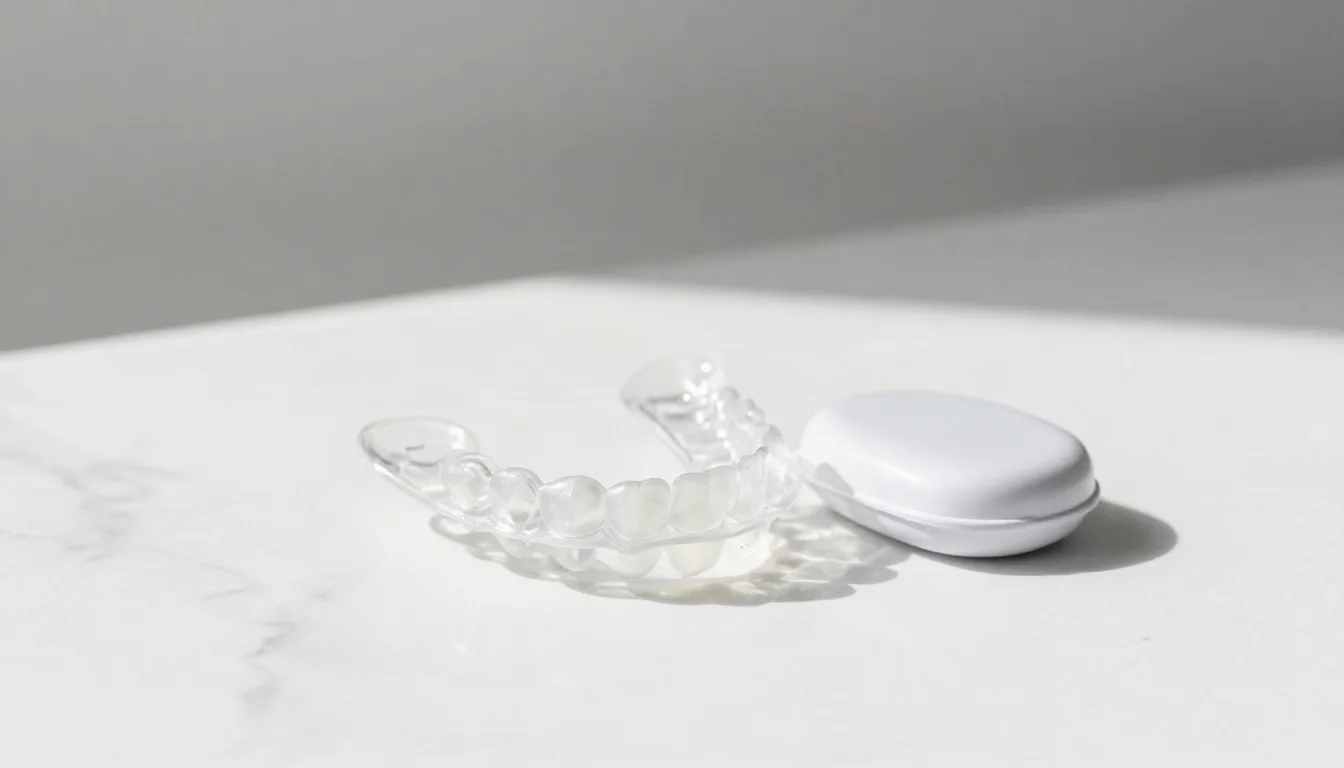
Clear aligners have transformed orthodontics. After decades of visible metal braces, patients — adults in particular — can now straighten their teeth almost invisibly with a series of custom-made transparent trays. In this guide, the ClinicsJo Editorial Team explains what Invisalign is, who it suits, and how it compares to conventional braces.
What Are Clear Aligners?
Clear aligners (commercially known as Invisalign, with similar systems from ClearCorrect, Spark, and others) are a treatment system using a sequence of trays made from flexible, transparent medical-grade plastic. Each tray moves the teeth by roughly 0.25 mm and is replaced every 1–2 weeks with the next in the series.
Clear Aligners vs Metal Braces
Both correct orthodontic problems, but key differences include:
- Appearance: aligners are nearly invisible; metal braces are visible.
- Comfort: aligners have no wires or sharp edges and cause less irritation.
- Removability: aligners are fully removable for eating and brushing; metal braces are fixed.
- Office visits: aligners need a checkup every 6–8 weeks vs every 3–4 weeks for metal braces.
- Cost: aligners are typically more expensive.
- Severe cases: metal braces still outperform aligners for very complex movements.
Who Is a Candidate for Clear Aligners?
Invisalign suits most mild to moderate orthodontic cases, including:
- Crowded or widely spaced teeth.
- Mild deep bite or open bite.
- Minor midline shift.
- Relapse after previous orthodontic treatment.
For very severe cases (large jaw discrepancy, heavily rotated teeth), an orthodontist may prefer metal braces or a hybrid approach.
How Does Treatment Work? Step by Step
- Initial exam and diagnosis: the orthodontist examines your teeth and takes photos, panoramic X-rays, and a 3D intraoral scan.
- Digital planning: using specialized software, the dentist plans the path each tooth will travel from start to finish. You can preview a simulation of the final result before starting.
- Aligner fabrication: the plan is sent to the lab and your aligners are manufactured — sometimes 20–40 trays for a moderate case.
- Daily wear: wear each tray 20–22 hours daily, removing only to eat and brush.
- Switch to the next tray: every 1–2 weeks.
- Monitoring visits: every 6–8 weeks at the clinic.
- Retainer: essential after treatment — typically a clear removable retainer or a fixed lingual wire.
How Long Does Treatment Take?
Duration ranges from 6 to 24 months depending on severity:
- Simple cases: 6–9 months (Invisalign Express or Lite).
- Moderate cases: 9–18 months.
- Complex cases: 18–24 months or more.
How Much Does Invisalign Cost in Jordan?
Prices vary by case complexity, number of trays, and clinician experience:
- Invisalign Express (simple cases): JOD 1,200–2,000.
- Invisalign Lite: JOD 2,000–3,000.
- Invisalign Comprehensive (full cases): JOD 3,000–5,000.
Many clinics in Amman offer interest-free monthly installment plans.
Medical tip: Wearing your aligners 20–22 hours daily is the single biggest predictor of success. Even 1–2 hours of non-compliance per day can extend treatment by months.
Are There Side Effects?
The most common — and mildest — include:
- Mild pressure or soreness for the first 2–3 days of each new tray.
- Slight speech changes during the first week, which resolve quickly.
- Temporary increase in saliva production.
- Mild gum inflammation if aligners aren't cleaned properly.
When to See an Orthodontist
If you notice crowded teeth, an uneven bite, wide gaps, or jaw pain, a consultation with an orthodontist will determine whether you're a candidate for Invisalign or whether conventional braces are a better fit. The earlier you start, the wider your options and the shorter your treatment.

