

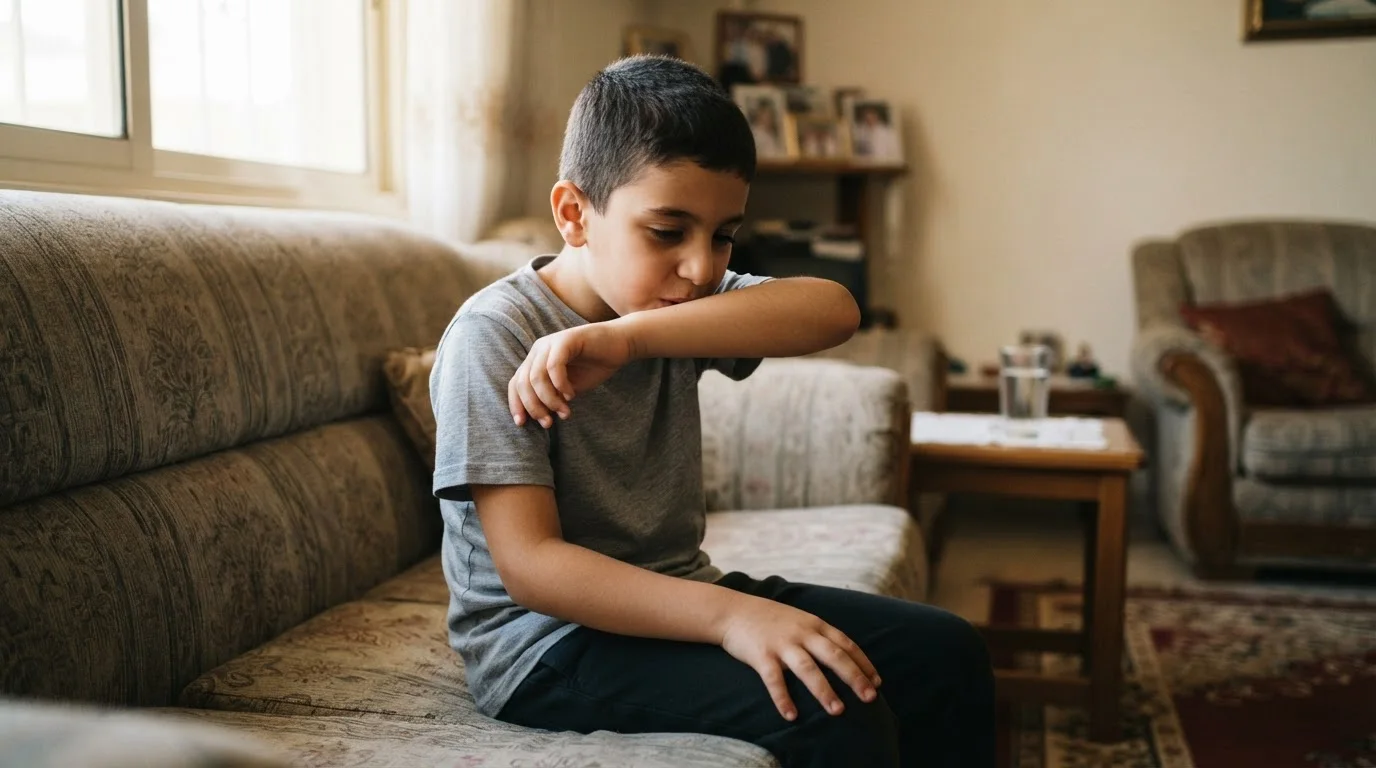
Cough is a natural defense that clears the airway of mucus and irritants. But persistent or severe cough in children may signal a problem needing treatment. The ClinicsJo Editorial Team reviews types, causes, and treatment.
Types of Cough
1. Dry Cough
Without phlegm. Common in:
- Nose and throat infections (common cold).
- Asthma.
- Allergies.
- Sore throat.
- GERD.
2. Wet (Productive) Cough
With phlegm. Common in:
- Bronchitis.
- Pneumonia.
- Sinus infections (postnasal drip).
- Pertussis (whooping cough).
3. Barking Cough
Sounds like a barking dog. A sign of croup, caused by parainfluenza virus. Additional symptoms:
- Hoarse voice.
- Stridor on inhalation.
- Worse at night.
4. Paroxysmal Cough
Coughing bouts without breath in between. Sign of whooping cough, despite vaccination.
5. Chronic Cough (>4 weeks)
Possible causes:
- Asthma.
- Chronic sinusitis.
- GERD.
- Chronic infection (TB).
- Foreign body in airway.
- Cystic fibrosis (rare).
Common Causes by Age
Infants <3 Months
- Any cough needs medical evaluation.
- Bronchiolitis (RSV).
- Whooping cough.
3–12 Months
- Viral infections.
- Bronchiolitis.
- Pneumonia.
1–5 Years
- Common colds (6–10 yearly is normal).
- Asthma.
- Croup.
- Foreign body.
5+ Years
- Asthma.
- Allergies.
- Sinusitis.
- Psychological tic cough.
When Cough Requires an ER Visit
- Clear breathing difficulty.
- Very rapid breathing (>60 in infants, >40 in older kids).
- Bluish lips or nails.
- Chest wall retraction between ribs.
- Loud audible wheezing without a stethoscope.
- Coughing up blood or bloody vomit.
- Sudden choking (possible inhaled foreign body).
- Fever >39°C with cough.
- Infant <3 months with any cough.
- Barking cough with difficulty speaking and swallowing.
- Child lethargic and not playing.
Possible Tests
- Comprehensive clinical exam.
- Pulse oximetry.
- Chest X-ray if pneumonia is suspected.
- Throat swab for pertussis or influenza.
- Blood tests.
- Pulmonary function tests (for asthma in older kids).
Home Care
1. Fluids
Warm fluids loosen mucus and soothe the throat. Water, chicken soup, warm lemonade.
2. Honey (>1 year only)
A teaspoon before bed. Research shows it's more effective than some cough medicines. Forbidden for infants <1 year due to botulism risk.
3. Elevate the Head of the Bed
An extra pillow or tilting the mattress (infants aren't put on pillows — tilt the mattress).
4. Humidifier
Humidified air soothes mucus and throat. A warm bath with steam also helps.
5. Suction Mucus for Infants
Saline drops and a nasal suction bulb.
6. Avoid Irritants
Smoking, perfumes, dust.
Cough Medications
For Children <6 Years
Don't give OTC cough medicines — efficacy is limited and side effects exist. American medical organizations don't recommend them.
For Children 6+ Years
- Cough suppressants (dextromethorphan) for tiring dry coughs.
- Expectorants (guaifenesin) for wet coughs.
- Antihistamines for allergic coughs.
When Are Antibiotics Needed?
90% of coughs are viral and don't need antibiotics. They're needed in:
- Bacterial pneumonia.
- Pertussis.
- Bacterial tonsillitis.
Asthma in Children
Persistent cough with wheezing or shortness of breath may be asthma. Warning signs:
- Recurrent nighttime cough.
- Cough with exercise.
- Cough with weather or perfume change.
- Chest wheezing.
- Family history.
- Eczema or allergic rhinitis.
Diagnosis requires pulmonary function tests + bronchodilator response. Treatment: inhaled bronchodilators and steroids.
Medical alert: A cough that improves during the day and worsens at night is a classic asthma sign. Discuss this with the pediatrician — untreated asthma can affect lung growth.
Croup
Barking cough + inspiratory stridor. First aid:
- Cool moist air (open the fridge or take the child outside at night).
- Hot steam in the bathroom.
- If severe: see a doctor for dexamethasone (oral steroid).
- In severe cases: nebulized epinephrine.
Prevention
- Frequent hand washing.
- Vaccinations (flu, pertussis, Hib, pneumococcal).
- Breastfeeding.
- Avoid secondhand smoke.
- Home ventilation.
- Limit crowds in virus season.
- Healthy nutrition and vitamin D.
For accurate evaluation of your child's persistent cough, book an appointment with a pediatrician on ClinicsJo.