

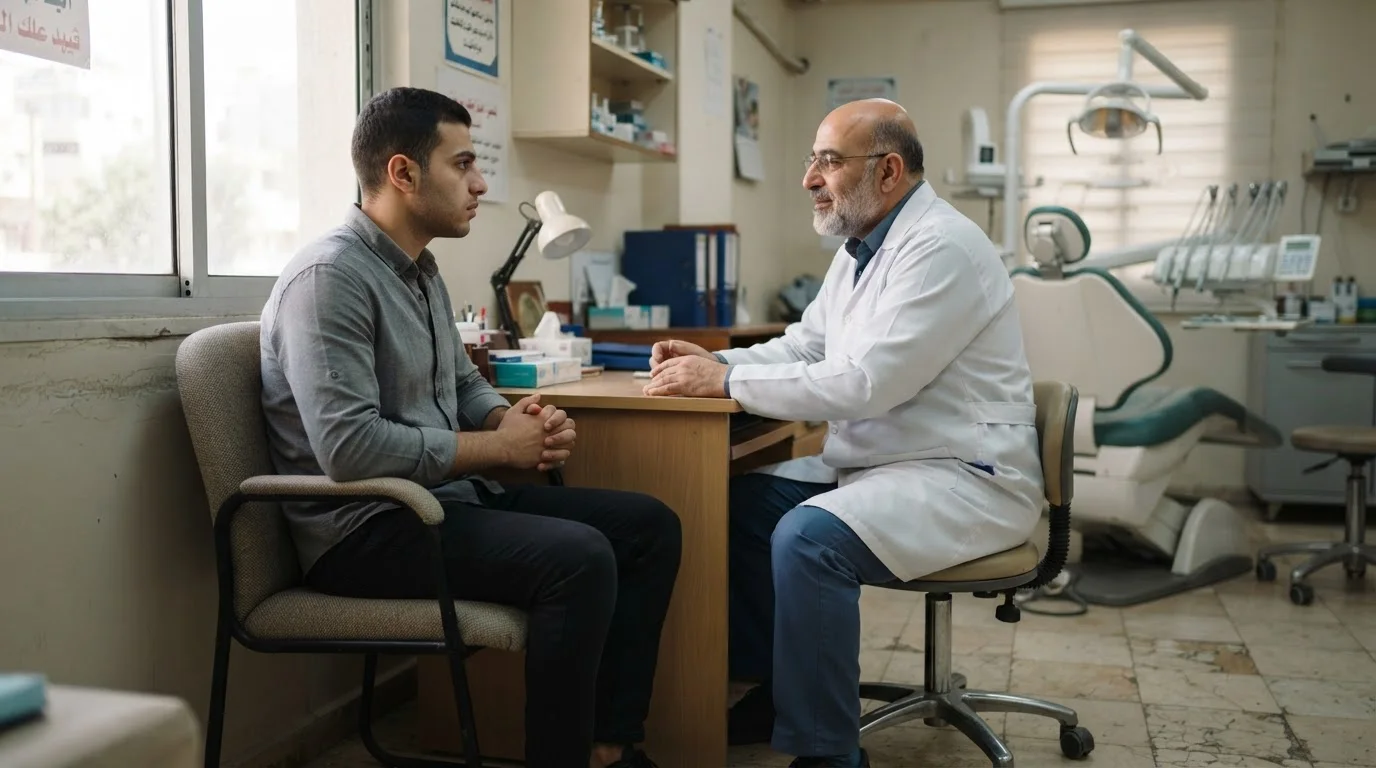
An estimated 36% of adults experience some anxiety about dental visits, and about 12% suffer from true phobia that prevents them from getting necessary care. This fear is not a flaw or weakness — it's a medically recognized condition with effective solutions. The ClinicsJo Editorial Team explains how to overcome it and what sedation options are available.
Anxiety vs Phobia
- Dental anxiety: normal tension; the patient can still complete the session.
- Dental phobia (odontophobia): intense fear that prevents visits entirely, sometimes with physical symptoms (sweating, palpitations, nausea).
Causes of Dental Phobia
- A bad childhood experience (pain or an unkind dentist).
- Fear of needles.
- General fear of pain.
- Fear of losing control (lying back with mouth open).
- Embarrassment about teeth or breath.
- Scary stories from relatives or social media.
- Sensitivity to clinic sounds or smells.
- General anxiety disorders.
Strategies to Overcome Fear
Choose the Right Clinic
- A clinic that markets itself as "anxiety-friendly."
- A dentist with experience treating fearful patients.
- A calming environment, soft music, friendly lighting.
Before the Appointment
- Visit the clinic beforehand just to get familiar with it.
- Communicate openly with the dentist about your fears.
- Ask for a detailed explanation of the procedure beforehand.
- Agree on a "stop" signal during the session (raised hand).
- Avoid caffeine for 4 hours before.
- Bring headphones to listen to music during the visit.
During the Appointment
- Practice 4-7-8 breathing (4s in, 7s hold, 8s out).
- Ask the dentist to narrate each step before doing it.
- Split the work into shorter sessions instead of one long one.
Sedation Options
1. Local Anesthesia (Standard Injection)
The foundation of all dental treatment. Lidocaine or articaine. A topical numbing gel can be applied first to ease the injection. Modern injections are barely felt.
2. Laughing Gas (Nitrous Oxide / N₂O)
Inhaled through a nasal mask throughout the session. Produces relaxation and lightness without loss of consciousness. Effects clear within 5 minutes after the gas is stopped. You can usually drive home. Safe for kids and adults.
3. Oral Sedation
A pill taken 1 hour before the appointment (e.g., diazepam or midazolam). Produces drowsiness and calm — the patient is conscious but very relaxed. Requires a driver afterwards.
4. IV Sedation
Drugs injected intravenously under an anesthesiologist's supervision. The patient is technically conscious but usually has no memory of the procedure. Suitable for long or complex cases.
5. General Anesthesia
The patient is fully asleep in a hospital setting. Suitable for uncooperative children, patients with intellectual disabilities, and major multi-procedure surgeries.
Medical tip: Don't be embarrassed to tell your dentist you're afraid. A good dentist will adapt the entire session to your comfort and offer an option that may change your relationship with the dentist forever.
When Is Psychotherapy Needed?
If phobia has prevented any visit for years despite sedation attempts, consider:
- Cognitive Behavioral Therapy (CBT).
- Graduated exposure techniques.
- Short-term anti-anxiety medication.
Sedation Costs in Jordan
- Local anesthesia: included in the procedure fee.
- Laughing gas: JOD 30–60 per session.
- Oral sedation: JOD 50–100.
- IV sedation: JOD 200–400.
- General anesthesia in hospital: JOD 400–800 depending on the facility.
Don't let fear postpone your oral health. Book a consultation with an empathetic dentist on ClinicsJo and tell them you need special handling.