
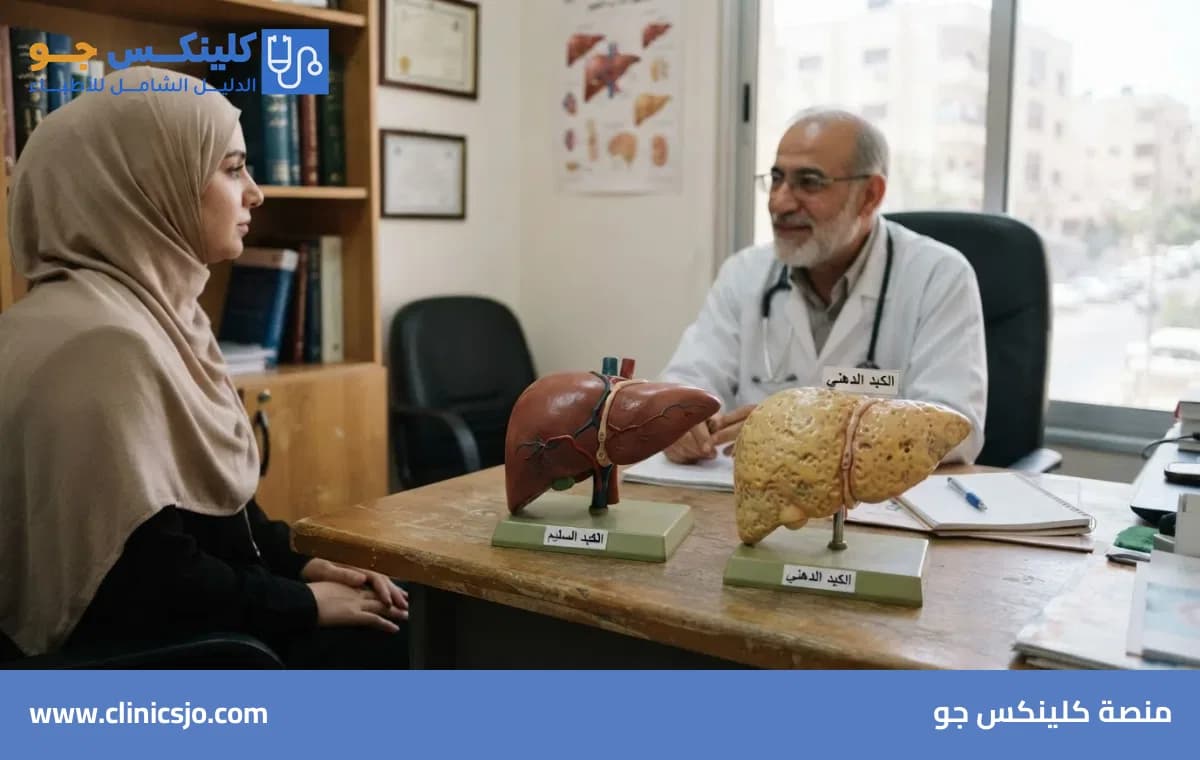
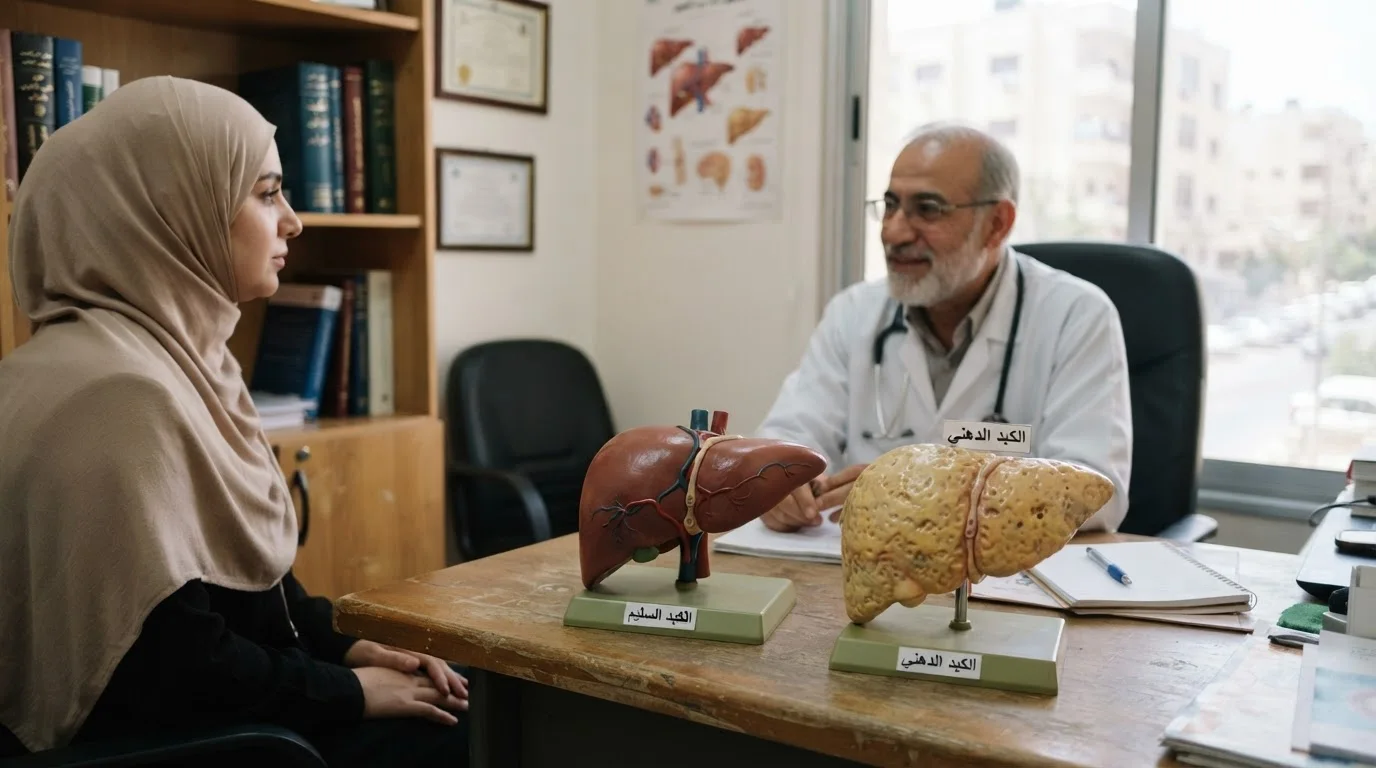
Fatty liver disease has spread strikingly in recent decades, becoming one of the most common liver diseases in Jordan and worldwide, tied to modern lifestyles, obesity, and excess sugar. Worryingly, it is a "silent disease" that rarely causes early symptoms, progressing quietly to advanced stages. The ClinicsJo Editorial Team offers a complete guide.
What Is Fatty Liver?
Fatty liver is an excess buildup of fat inside liver cells. The most common form is non-alcoholic fatty liver disease, linked to obesity, diabetes, and metabolic syndrome; another form is alcohol-related. It starts as simple, reversible fat accumulation but can progress to inflammation, then fibrosis and cirrhosis if neglected for years.
Causes
- Obesity, especially belly fat.
- Type 2 diabetes and insulin resistance.
- High triglycerides and cholesterol.
- Excess sugars and refined carbohydrates.
- Physical inactivity.
- Certain drugs and genetic factors.
Symptoms
There are usually no symptoms, and it is often found incidentally. Sometimes there may be:
- Fatigue.
- Mild heaviness in the upper-right abdomen.
- Slightly elevated liver enzymes.
Obvious symptoms (jaundice, abdominal swelling) appear only in advanced fibrosis.
Stages of the Disease
- Simple steatosis: fat without much inflammation, reversible.
- Steatohepatitis: inflammation and cell damage.
- Fibrosis: scar tissue reducing function.
- Cirrhosis: the serious advanced stage with risk of liver failure and cancer.
How Is It Diagnosed?
- Abdominal ultrasound: the first test to detect fat.
- Liver enzyme and function tests.
- FibroScan to measure fibrosis.
- Biopsy in selected cases.
Treatment
- Gradual weight loss: losing 7–10% of weight can largely reverse the disease.
- Healthy diet: fewer sugars, refined starches, and trans fats; more vegetables, protein, and healthy fats.
- Regular physical activity.
- Controlling diabetes, cholesterol, and blood pressure.
- Avoiding alcohol and liver-harming drugs.
Medical tip: the liver can recover remarkably in early stages. Moderate, sustained weight loss can clear the fat entirely and reverse inflammation before it becomes permanent fibrosis.
Complications of Neglect
If untreated, it can progress to steatohepatitis, fibrosis, cirrhosis, and liver failure, and independently raises the risk of heart disease and diabetes.
When to See a Doctor
See a doctor if tests show elevated liver enzymes, or if you have obesity, diabetes, or high cholesterol. Periodic screening catches the disease in a reversible stage.
Frequently Asked Questions
Is fatty liver dangerous?
Most cases are mild and reversible, but years of neglect can lead to dangerous fibrosis and cirrhosis.
Do herbs treat fatty liver?
There is no strong evidence for "liver-cleansing" herbs, and some can harm. The proven treatment is lifestyle.
Do thin people get it?
Yes, though less commonly, especially with insulin resistance or high cholesterol.
To assess your liver and plan treatment, book with a gastroenterologist on ClinicsJo.