

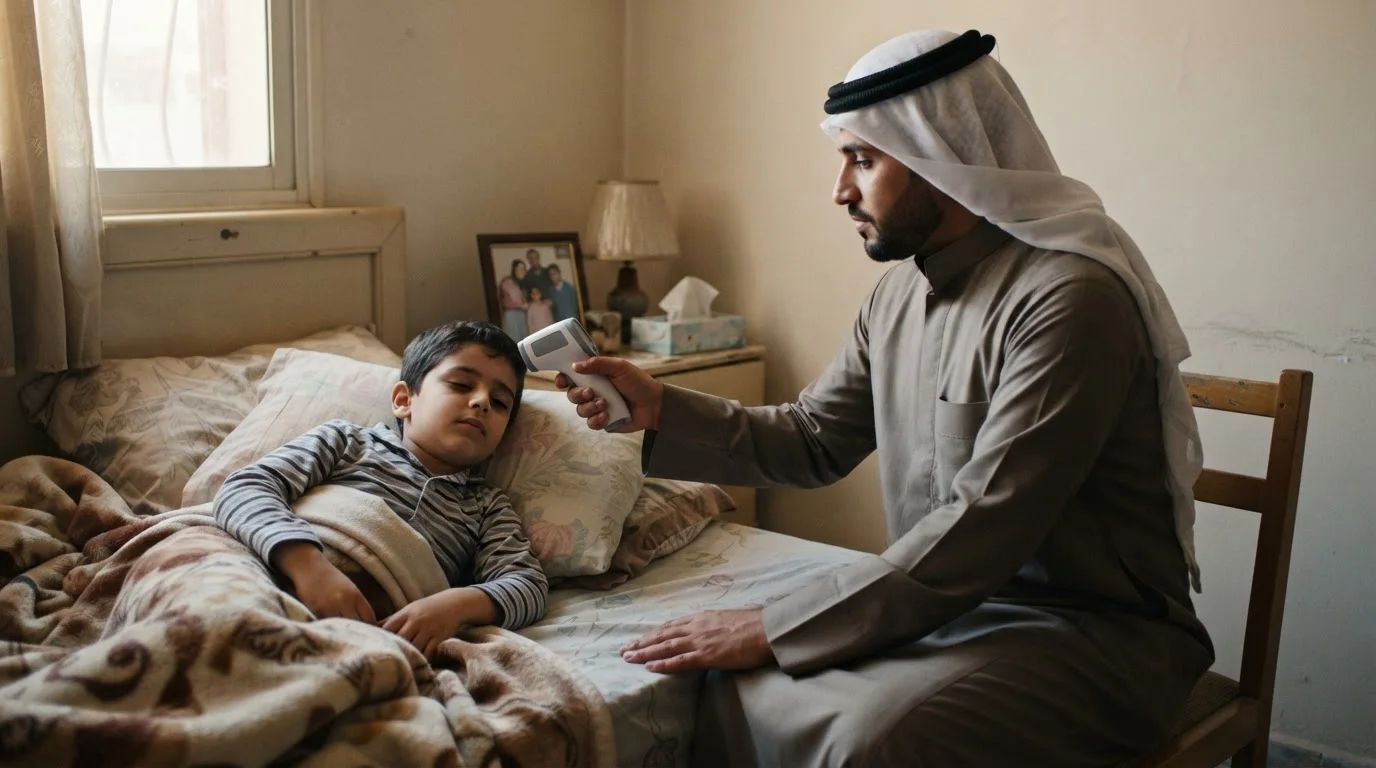
Fever is one of parents' biggest concerns, accounting for 30% of pediatric ER visits. But what's important to know is that fever itself is not a disease — it's a natural defensive response of the child's body to infection. The ClinicsJo Editorial Team reviews what parents need to know.
Defining Fever
Depends on measurement site:
- Rectal (most accurate): ≥38°C.
- Oral: ≥37.8°C.
- Axillary (least accurate): ≥37.5°C.
- Ear: ≥38°C.
- Forehead: ≥38°C.
How to Measure Temperature Accurately
Digital Thermometer (Best)
- Infants and children <3 years: rectal for accuracy.
- Children >4 years: orally.
- Axillary: quick but less accurate (add 0.5°C).
Ear Thermometer (Tympanic)
For children >6 months. Position the probe correctly.
Forehead (Infrared) Thermometer
Fast and non-disturbing, but less accurate, especially with sweating.
Common Causes of Fever
- Viral infections (common cold, flu) — most common.
- Bacterial infections (tonsillitis, ear, urinary).
- Gastroenteritis.
- Vaccinations.
- Teething (mild only, not >38.5°C).
- Heatstroke.
- Systemic illnesses (rare).
When Fever Requires an Immediate ER Visit
- Infant <3 months with any fever ≥38°C.
- 3–6-month-old with fever ≥39°C.
- Fever ≥40°C at any age.
- Febrile seizures.
- Breathing difficulty or rapid breathing.
- Rash with fever (especially spots that don't fade with pressure).
- Neck stiffness.
- Severe dizziness or fainting.
- Lethargy or severe drowsiness.
- Persistent vomiting or severe diarrhea.
- No urination for more than 8 hours (dehydration).
- Severe abdominal pain.
- Fever lasting >5 days.
- Child has a chronic disease (diabetes, heart, weak immunity).
Febrile Seizures
Occur in 2–5% of children between 6 months and 5 years. Triggered by rapid temperature rise (not the height itself). Most are simple:
- Last <5 minutes.
- Child loses consciousness and the entire body shakes.
- Wakes up confused.
What to Do During a Seizure
- Stay calm.
- Place the child on their side on a safe surface.
- Remove anything around that could cause harm.
- Loosen clothing.
- Never put anything in the mouth.
- Don't try to stop the movement.
- Time the seizure.
- Call emergency services if it lasts >5 minutes or recurs.
Home Treatment of Fever
1. Antipyretics
Given for fever >38.5°C or if the child is uncomfortable:
Paracetamol (Acetaminophen / Tempra / Tylenol)
- Dose: 10–15 mg/kg every 4–6 hours.
- Maximum: 4 doses in 24 hours.
- Safe from age 1 month.
- Available as syrup and suppositories.
Ibuprofen (Brufen / Advil / Nurofen)
- Dose: 5–10 mg/kg every 6–8 hours.
- Maximum: 3–4 doses in 24 hours.
- Not given to infants <6 months.
- Avoid in dehydration or kidney problems.
Medical warning: Never give your child aspirin — it causes the fatal Reye's syndrome in children. Also avoid alternating paracetamol and ibuprofen every 2 hours; recent research doesn't support this practice and may risk overdose.
2. Cooling the Child (For High Fever)
- Compresses with lukewarm (not cold) water on forehead, neck, and armpits.
- Light cotton clothing.
- Moderate room temperature (22–24°C).
- Do not bathe with cold water or alcohol — raises internal temperature.
3. Fluid Replacement
- Infants: breast milk or formula more than usual.
- Older children: water, natural juices, soup, oral rehydration solutions.
- Don't force food, but fluids are essential.
4. Rest
Let the child rest in a comfortable bed with good ventilation.
Common Mistakes
- Giving higher doses than allowed "to drop fever fast."
- Using alcohol compresses.
- Covering with thick blankets.
- Bathing in cold water.
- Giving antibiotics without consultation (viral fever doesn't respond).
- Panicking over mild fever (38.5°C isn't usually dangerous).
- Giving ibuprofen to a vomiting child (irritates the stomach).
When Are Antibiotics Needed?
Antibiotics treat bacteria only, not viruses (90% of pediatric fevers). They're needed in:
- Bacterial tonsillitis (strep throat).
- Bacterial ear infections.
- Urinary tract infections.
- Bacterial pneumonia.
- Brucellosis — common in Jordan from unpasteurized dairy.
General Rule for Parents
Watch your child more than the thermometer. A child with 39°C playing and eating is in much better shape than a child with 38°C who is lethargic and withdrawn. Your child's overall behavior, activity, fluid intake, and breathing matter more than the number on the thermometer.
If you're worried about your child, book an appointment with a pediatrician on ClinicsJo or go to the hospital ER.