

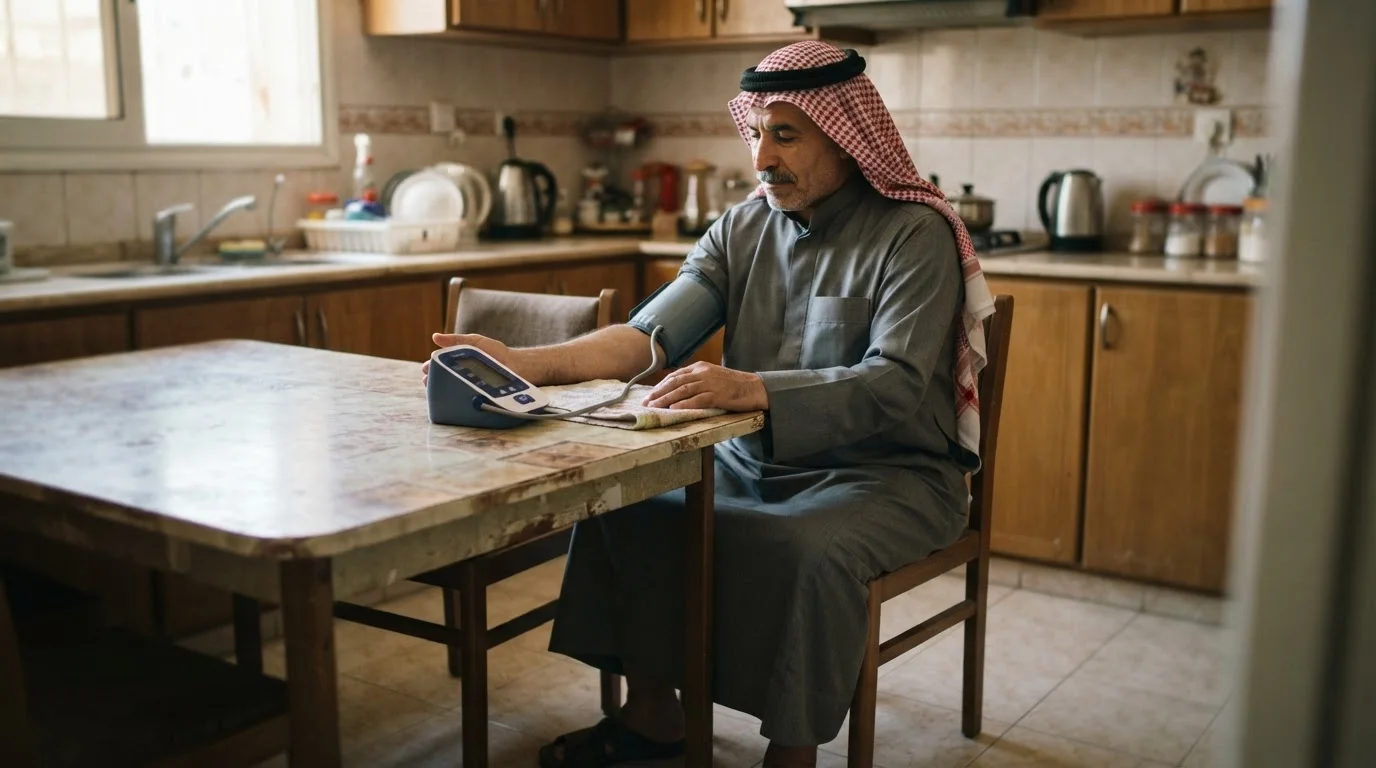
High blood pressure is called the "silent killer" because it may produce no symptoms for years while damaging blood vessels, heart, kidneys, and brain. It affects 30% of Jordanian adults — most don't know. The ClinicsJo Editorial Team reviews what every adult should know.
What Is Blood Pressure?
Blood pressure is the force blood exerts on artery walls. Measured by two numbers:
- Systolic (top): force during heart contraction.
- Diastolic (bottom): force during heart relaxation.
Modern Classification (AHA 2017)
| Category | Systolic | Diastolic |
|---|---|---|
| Normal | <120 | <80 |
| Elevated | 120–129 | <80 |
| Stage 1 | 130–139 | 80–89 |
| Stage 2 | ≥140 | ≥90 |
| Crisis | >180 | >120 |
Causes and Risk Factors
Non-Modifiable
- Advancing age.
- Family history.
- Sex (men >45, women >55).
- Ethnicity.
Modifiable
- Obesity.
- Excess salt.
- Physical inactivity.
- Smoking.
- Excess alcohol.
- Chronic stress.
- Diabetes.
- Sleep disorders.
- Kidney disease.
- Medications: NSAIDs, birth control, steroids.
Symptoms (When Present)
Most patients feel nothing. In severe cases:
- Severe headache, especially morning.
- Dizziness.
- Tinnitus.
- Blurred vision.
- Palpitations.
- Recurrent nosebleeds.
- Unexplained fatigue.
When to Go to the ER
Hypertensive crisis (>180/120):
- Chest pain.
- Severe shortness of breath.
- Face or arm numbness.
- Speech difficulty.
- Blood in urine.
- Severe headache with nausea.
Long-Term Complications
- Stroke (4–7x risk).
- Heart attack.
- Heart failure.
- Kidney failure.
- Aortic aneurysm.
- Retinopathy.
- Vascular dementia.
- Erectile dysfunction.
How Is It Diagnosed?
- Office measurement (3 times in separate visits).
- Daily home measurement morning and evening for a week.
- 24-hour ambulatory monitoring (ABPM) when in doubt.
- Tests: kidney function, electrolytes, cholesterol, glucose, urine.
- ECG.
- Echo in select cases.
Lifestyle Changes (Foundation)
1. DASH Diet
- Plenty of vegetables and fruits.
- Low-fat dairy.
- Whole grains.
- Lean protein.
- Nuts and seeds.
- Reduce red meat, sugars, and saturated fats.
2. Reduce Salt
- Maximum: 2,300 mg/day (one teaspoon).
- For patients: <1,500 mg.
- Read food labels (canned items are high in sodium).
- Reduce cheese, pickles, processed meats.
- Don't keep a salt shaker on the table.
3. Exercise
150 minutes weekly of moderate activity (brisk walking, swimming, cycling) lowers BP by 5–8 mmHg.
4. Weight Loss
Every kilogram lost lowers BP by ~1 mmHg. Losing 10 kg can sometimes obviate medication.
5. Quit Smoking
Each cigarette raises BP by 5–10 mmHg for 15–30 minutes.
6. Reduce Alcohol
7. Stress Management
Meditation, yoga, deep breathing, 7–8 hours sleep.
8. Increase Potassium
Banana, potato, tomato, spinach — counteracts sodium.
Medications
Usually started when BP >140/90 despite lifestyle changes, or immediately for those with comorbidities. Classes:
1. Diuretics
- Hydrochlorothiazide.
- Furosemide (Lasix).
- Spironolactone.
2. ACE Inhibitors
- Enalapril, lisinopril, ramipril.
- Side effects: dry cough.
3. Angiotensin Receptor Blockers (ARB)
- Losartan, valsartan, olmesartan.
- ACE alternative when cough occurs.
4. Calcium Channel Blockers
- Amlodipine, nifedipine, diltiazem.
- Side effects: foot swelling.
5. Beta-Blockers
- Bisoprolol, metoprolol, atenolol.
- Slow the pulse.
6. Others
- Methyldopa (pregnancy-safe).
- Hydralazine.
- Clonidine.
Medical warning: Never stop BP medication on your own — even if you feel better. Abrupt discontinuation can cause severe rises leading to stroke.
Correct Home Measurement
- Use a validated arm device (not wrist).
- Sit comfortably for 5 minutes before measuring.
- Feet on floor, arm supported at heart level.
- Don't talk during measurement.
- Two consecutive readings 2 minutes apart — take the average.
- Log with date and time.
- Bring the log to your doctor.
Blood Pressure in Pregnancy
May signal preeclampsia, a dangerous condition. Requires:
- Close monitoring.
- Urine protein testing.
- Only safe medications (methyldopa, labetalol, nifedipine).
- Urgent delivery in severe cases.
If you suspect high blood pressure, book an appointment with a cardiologist or internist on ClinicsJo.