
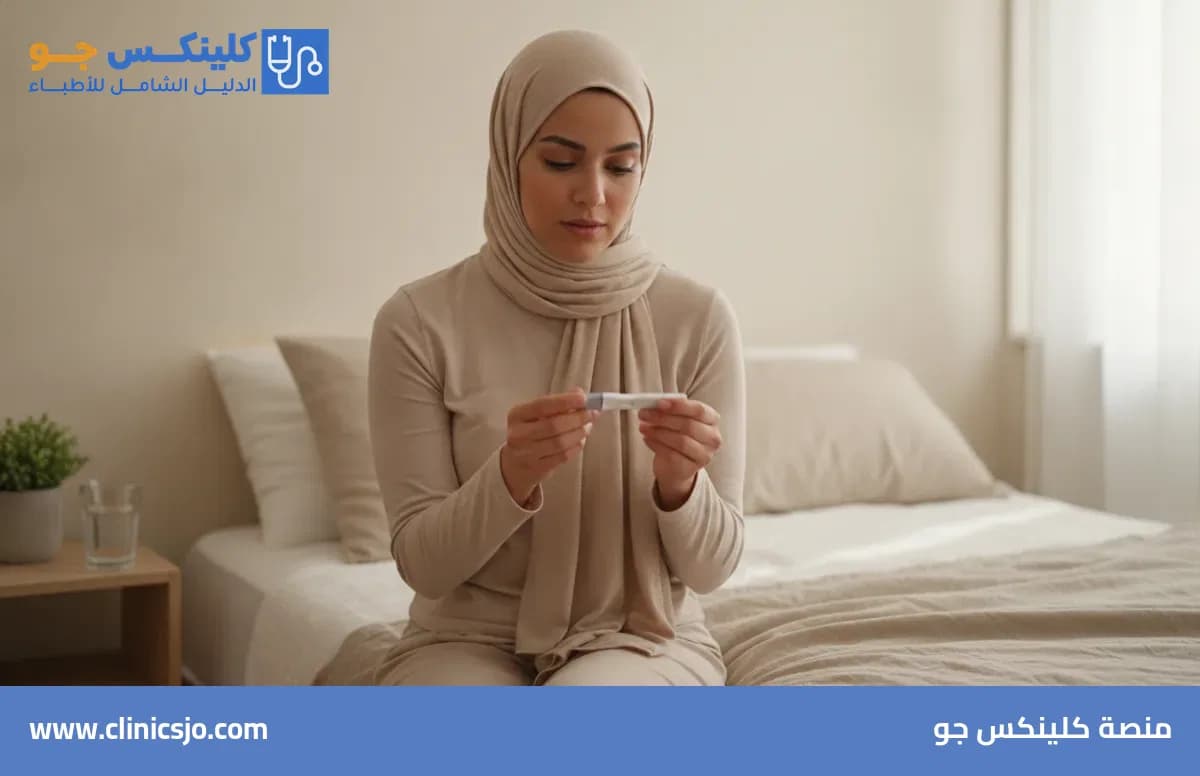

A home pregnancy test is reliable in most cases if it is taken from the first day your period is late and the package instructions are followed precisely. A positive result is almost always accurate, while a negative result is less certain. If doubts remain, retest after a few days, and see your doctor if your period does not arrive or you experience pain or bleeding. [1]
When should you take a home pregnancy test to get a reliable result?
Most tests are more reliable starting from the first day your expected period is late. [1] Some highly sensitive tests may detect pregnancy before a period is missed, but testing too early is the most common cause of a false negative result.
If your periods are irregular and you do not know when your period is due, take the test at least 21 days after your last sexual intercourse without protection. [1]
Why does rushing not help?
The test detects a hormone that begins to be produced about 6 days after fertilization. [1] The amount of this hormone in urine needs time to rise enough for the strip to detect it. Therefore, a pregnancy may be present while the result is negative because not enough time has passed yet.
How does a home pregnancy test work?
All pregnancy tests detect the pregnancy hormone (hCG, or human chorionic gonadotropin). [1] Most kits contain one or two long strips, which you urinate on or dip into a urine sample, and the result appears on the strip within minutes. [1]
Tests differ slightly from brand to brand, so always read the enclosed leaflet. Tests are available at pharmacies and can be performed privately at home with a quick result. [1]
Steps for performing a home pregnancy test correctly
- Check the expiry date and the integrity of the package before opening it.
- Read the instructions in full, as the result will be accurate only if they are followed. [1]
- Collect the urine or urinate on the strip as the package describes.
- Place the strip on a flat surface and wait the exact time written.
- Read the result within the specified time, and do not rely on the appearance of the strip after hours have passed.
Should the test be done on a morning urine sample?
Morning urine is more concentrated, which is why some kits recommend it for very early testing. However, the UK National Health Service (NHS) explains that the sample can be taken at any time of the day and does not have to be in the morning. [1] It is best to follow the instructions on the kit you have in hand, and not to drink large amounts of fluid right before the test so that the urine does not become diluted.
How do you read a home pregnancy test result?
The way results are displayed varies between tests: some show lines, some show a sign (+/−), and some show a digital word. The principle is the same: the leaflet explains what a positive, negative, and invalid result looks like.
| What you see | Likely meaning | What to do |
|---|---|---|
| Clear positive result | Almost always accurate [1] | Book an appointment with an obstetrician-gynecologist to confirm the pregnancy and begin follow-up care |
| Negative result with a late period | Less reliable; the test may be too early [1] | Wait a few days and retest |
| Faint second line | May indicate a very early pregnancy with a low hormone level | Retest after a few days, or ask for a blood test |
| No control line appears or the test is faulty | The test is invalid | Use a new test and follow the instructions carefully |
What does a faint line mean?
The appearance of a second line, even if it is faint, usually means the hormone is present in the urine, i.e., a pregnancy is possible. Retest after two or three days. If the pregnancy is continuing, the line usually becomes clearer as the hormone level rises.
However, if the line remains faint and does not get darker, or if bleeding similar to a period occurs, seek a medical evaluation and a blood test, because an early pregnancy sometimes does not continue.
Can a home pregnancy test be wrong?
Home tests are accurate provided the instructions are followed, but a negative result is less reliable than a positive one. [1] The result may not be dependable in the following cases:
- Not following the instructions exactly.
- Taking the test too early. [1]
- Taking certain medications that may affect the result. [1]
Causes of a false negative result
The most common are testing too early, diluting the urine by drinking large amounts of fluid, and misreading the result or reading it before the specified time. Ovulation may also be delayed in a given cycle, so the expected date of the period is inaccurate and tests are done before the appropriate time.
Causes of a false positive result
These are rare, but they occasionally occur after the loss of a very early pregnancy (a chemical pregnancy), or with certain medications or hormonal treatments. Therefore, tell your doctor about everything you are taking, and do not stop or change any prescribed medication on your own. [2]
Do birth control pills affect the test?
No, the hormones in birth control pills do not prevent the test from working. [1] Because no contraceptive method is 100% effective, it is good to take the test whenever you suspect pregnancy, even if you are using a method. [1]
What should I do if the result is negative and my period has not come?
If the result is negative and you still believe you may be pregnant, wait a few days and then retest. [1] If the result is negative the second time and your period has still not come, see your doctor. [1]
A late period has causes other than pregnancy, such as stress, hormonal disorders, and weight changes. You can find a detailed explanation in the article Missed Periods: When Pregnancy and Hormone Testing Is Needed. You may also review early pregnancy symptoms to learn what you may feel before and after testing.
When is a blood test (beta hCG) needed instead of a home test?
A blood test detects the hormone itself, and it is listed among the tests described by the U.S. National Library of Medicine (MedlinePlus) as "hCG blood test". [2] It comes in two types: a qualitative test that answers yes or no, and a quantitative test that measures the amount of the hormone (known as a beta hCG test).
Your doctor may order this test in situations such as:
- A faint home test line that is still unclear after retesting.
- Conflicting home test results, or a negative result with strong pregnancy symptoms and a missed period.
- Abdominal or pelvic pain or bleeding with a possible pregnancy, where tracking the hormone level over several days helps evaluate the condition.
- After fertility treatment or after a previous pregnancy loss, to monitor the situation.
Your doctor determines how to interpret the test values based on your condition, so do not compare your number with tables found online. To learn more about this test and the home test, you can review the pregnancy test (hCG) page in the directory.
Warning signs: when should you see your doctor, and when should you go to the emergency room?
If a home pregnancy test is positive or a pregnancy is possible, do not ignore the following symptoms. They may indicate an ectopic pregnancy, which is a pregnancy that implants outside the uterine cavity and requires urgent evaluation. You can read about it on the ectopic pregnancy page.
Call 911 or go to the nearest emergency department immediately if you have:
- Severe or sudden pain in the abdomen or pelvis, especially if it is on one side.
- Heavy vaginal bleeding.
- Severe dizziness, fainting, or pallor and palpitations.
- Shoulder pain along with abdominal pain.
See your doctor as soon as possible if you have:
- Light bleeding or spotting with a positive test.
- Mild, persistent pain in the lower abdomen.
- A history of ectopic pregnancy, which calls for early follow-up. For more information, read about recurrent ectopic pregnancy: causes and prevention.
- Repeated negative tests with a missed period. [1]
What should you do after a positive result?
If you wish to continue the pregnancy, it is important to begin healthcare early to obtain the information and follow-up that protect your health and the health of the fetus. [1] Prenatal care includes regular visits to a healthcare provider, who monitors your health and detects any problem early. [2]
- Eat a varied diet of fruits, vegetables, whole grains, protein, and low-fat dairy products, and drink plenty of water. [2]
- Ask your doctor about prenatal vitamins, including folic acid and iron. [2]
- Consult your doctor before starting or stopping any medication, including over-the-counter drugs, supplements, and herbs. [2]
- Avoid alcohol, smoking, and substances that are harmful to the fetus. [2]
To learn how gestational age is calculated and why its stages matter, read when pregnancy stages begin to be counted. Maternal and child health centers affiliated with the Ministry of Health are available in the governorates, and you can inquire about follow-up care there, as well as at private clinics.
If you are unsure whether you want to continue the pregnancy, you can discuss the matter confidentially with a healthcare provider who gives accurate information without judgment. [1]
How do you find the right doctor or clinic in Jordan?
The appropriate specialty for confirming and following up a pregnancy is obstetrics and gynecology. You can browse obstetrics and gynecology doctors in Jordan, then narrow your search by governorate, such as Amman, Irbid, or Zarqa, or other governorates.
What should you look at in a doctor's profile?
- The listed specialty and qualifications, and experience in pregnancy care.
- The clinic's location, ease of access, and working hours.
- The contact or booking methods available in the same profile.
- The services listed, such as laboratory tests or ultrasound performed within the clinic or in cooperation with a laboratory.
Useful questions to ask at the first visit
- Do I need a blood test to confirm the pregnancy, and when should I repeat it?
- When will the first ultrasound be done?
- Are my current medications safe during pregnancy?
- What symptoms require contacting you or going to the emergency room?
If several months of trying pass without a pregnancy, read delayed pregnancy: when couples should begin fertility evaluation.
This article is for health education and does not replace evaluation by a specialist physician.
Frequently asked questions
When should I take a home pregnancy test after intercourse?
If your periods are regular, it is best to test from the first day your period is late. If you do not know when your period is due, wait at least 21 days after your last intercourse without protection. Testing too early may give a negative result even when you are pregnant.
Should I take the test on a morning urine sample?
It is not required for most tests, and the sample can be taken at any time of the day. However, morning urine is more concentrated and may be better for very early testing. The most important thing is to follow the instructions on the kit you are using and not to drink large amounts of fluid right before the test.
What does a faint line on a pregnancy test mean?
A faint second line usually means a small amount of pregnancy hormone is present, indicating a possible early pregnancy. Retest after two or three days. If the line does not become clearer, or if bleeding or pain occurs, get a blood test and see your doctor to evaluate the situation.
Can the result be negative even if I am pregnant?
Yes. A negative result is less reliable than a positive one, especially if you tested too early or did not follow the instructions. If doubts remain, wait a few days and retest, and see your doctor if the negative result repeats and your period still has not come.
Do birth control pills affect the result of a pregnancy test?
No, the hormones in birth control pills do not prevent the test from working. However, some other medications may affect the result, so tell your doctor or pharmacist about everything you are taking, and do not stop any prescribed medication without consulting a doctor.
When is pain or bleeding with a positive test an emergency?
If you have severe or sudden pain in the abdomen or pelvis, heavy bleeding, or dizziness and fainting, call 911 or go to the nearest emergency department immediately, because these symptoms may indicate an ectopic pregnancy that requires urgent treatment.
Sources and references
- Doing a pregnancy test — NHS (UK National Health Service). Accessed: 2026-10-26.
- Pregnancy | Pregnant | Prenatal Care — MedlinePlus — U.S. National Library of Medicine. Accessed: 2026-10-26.
