

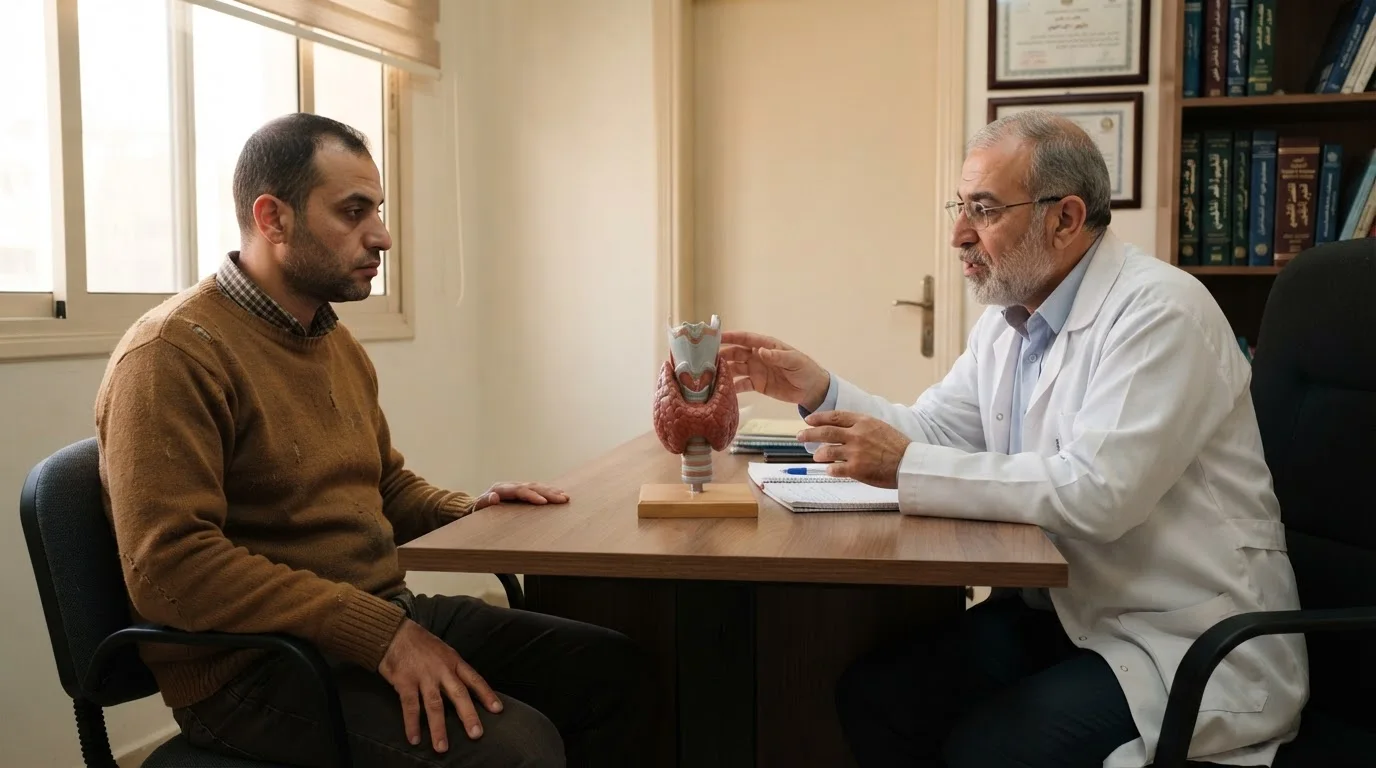
Hypothyroidism, or underactive thyroid, is one of the most common endocrine disorders in Jordan and worldwide. It affects women several times more often than men, especially after the age of 30. Because its symptoms develop slowly and resemble ordinary tiredness, many people live undiagnosed for years. The ClinicsJo Editorial Team explains everything from causes to the latest treatments.
What Is Hypothyroidism?
The thyroid is a small butterfly-shaped gland at the front of the neck that produces two main hormones, thyroxine (T4) and triiodothyronine (T3), which regulate metabolism in every cell. It is controlled by the pituitary gland through a hormone called TSH. In hypothyroidism the gland cannot make enough hormone, so the body slows down: heart rate, digestion, calorie burning, body temperature, and even thinking speed all decline.
Causes of Hypothyroidism
- Autoimmune thyroiditis (Hashimoto): the leading cause worldwide, where the immune system mistakenly attacks the gland.
- Iodine deficiency: iodine is essential for hormone production.
- Treatment of an overactive thyroid: surgery or radioactive iodine.
- Certain medications: such as lithium and some heart drugs.
- Congenital hypothyroidism: present at birth and detected by newborn screening.
- Pituitary disorders that control the thyroid.
Symptoms
- Persistent fatigue despite adequate sleep.
- Unexplained weight gain and difficulty losing it.
- Feeling cold and cold extremities.
- Dry skin, hair loss, and brittle nails.
- Chronic constipation.
- Slow heart rate, low mood, even depression.
- Poor concentration and memory (brain fog).
- Heavy or irregular periods in women.
- Puffy face and a hoarse voice.
Thyroid, Pregnancy, and Fertility
The thyroid is vital for fertility and a healthy pregnancy. Untreated hypothyroidism can make conception difficult and raises the risk of miscarriage, premature birth, and impaired fetal brain development. Every woman planning pregnancy or struggling with infertility should have her thyroid checked, and the dose monitored closely during pregnancy.
Complications of Neglect
Long-term neglect can raise cholesterol and heart-disease risk, enlarge the gland (goiter), worsen mood and memory, and in rare severe cases cause a life-threatening myxedema coma. Early diagnosis prevents these.
How Is It Diagnosed?
- TSH test: the most important test; a high level signals an underactive thyroid.
- Free T4: low in overt hypothyroidism.
- Anti-TPO antibodies: confirm an autoimmune cause.
- Ultrasound: when there is a goiter or nodules.
Treatment
Treatment is effective and safe: a once-daily tablet of levothyroxine taken in the morning on an empty stomach replaces the missing hormone. The doctor sets a dose based on weight, age, and heart status, then rechecks TSH after 6–8 weeks. With correct treatment, symptoms disappear and patients live a completely normal life. Never stop or change the dose without medical advice.
Medical tip: avoid over-the-counter "thyroid booster" supplements — some contain unregulated hormones that can harm the heart. The only proven treatment is levothyroxine under an endocrinologist's supervision.
When to See a Doctor
See an endocrinologist if you have chronic fatigue with unexplained weight gain, cold intolerance, and dry skin, or a family history of thyroid disease, or if you are planning pregnancy. Early diagnosis prevents complications such as high cholesterol and heart disease.
Frequently Asked Questions
Is hypothyroidism permanent?
In most cases (especially Hashimoto) it is lifelong, but it is fully controlled with a daily tablet.
Does it cause weight gain?
Yes, a slow metabolism adds a few kilograms, though some of it is fluid that clears with treatment.
Can I lose weight with hypothyroidism?
Yes — once the hormone is balanced, metabolism recovers and weight loss is possible with diet and exercise.
If you suspect hypothyroidism, book an appointment with an endocrinologist on ClinicsJo for testing and a tailored treatment plan.