

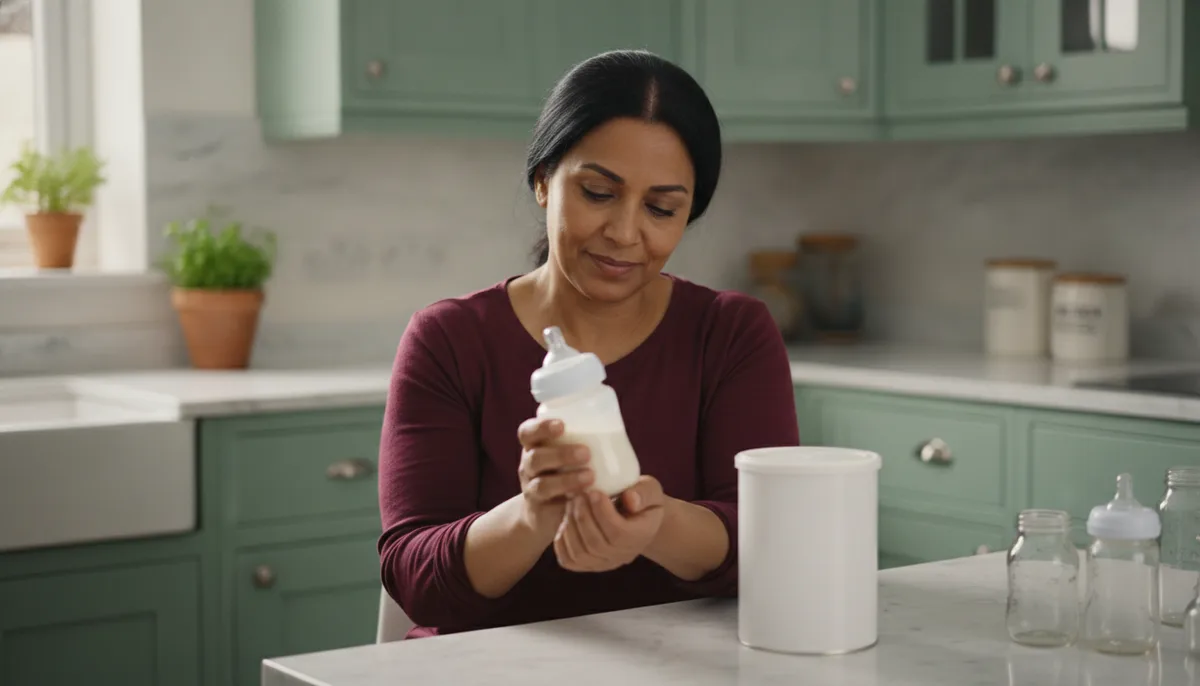
Infant formula is a suitable alternative for mothers who cannot breastfeed or choose not to, but breast milk remains the first choice recommended by the World Health Organization. Formula feeding is safe when the manufacturer's instructions are followed precisely, water is boiled and held at no less than 70°C, equipment is sterilized, the milk is neither diluted nor over-concentrated, and any leftover milk is discarded after the feed.
Is breast milk the best choice before infant formula?
The World Health Organization and UNICEF recommend starting breastfeeding within one hour of birth, feeding only breast milk for the first six months, and then continuing breastfeeding until the age of two or beyond, with complementary foods introduced from six months [2]. The organization also notes that infants who are not breastfed or are only partially breastfed are more likely to die from diarrhea, pneumonia, and other infections [2].
However, MedlinePlus explains that breast milk is best for the baby because it contains all the necessary vitamins and minerals, and that infant formula formulas exist for infants whose mothers cannot breastfeed or decide not to [3]. The decision belongs to the family, and the most important goal is that the child is fed safely.
If you are hesitant or facing difficulties with breastfeeding, you may find it helpful to read Breastfeeding guide: benefits, techniques, and solving problems or to request a lactation consultation before making a final decision. The World Health Organization recommends providing breastfeeding counseling to all families with children under the age of two [2].
How do you choose the right type of infant formula?
The sources available to us do not include a detailed comparison between formula types, so we do not present a classification with numerical specifications here. The practical principle is that the type should be chosen according to the child's age and health condition, and under the guidance of a pediatrician, not based on advertisements or price alone.
- Read the label: Make sure the product is designed for infants and for the correct age group, that it is within its expiry date, and that the container is intact and has not been previously opened.
- Stick to one type: Do not switch types constantly without a reason, and consult the doctor if symptoms appear that call for a change.
- Special cases: If you suspect a milk allergy or the child has a health problem, the type is determined by the doctor according to the condition.
- Use only the scoop provided: Each formula comes with a different scoop, and a scoop from another container must not be used [1].
To help choose the most suitable type for your child, you can contact pediatric nutrition specialists in Jordan or the pediatrician who follows your child's growth.
Why must infant formula not be diluted or concentrated?
The amounts of water and powder vary from product to product, so the UK National Health Service (NHS) recommends following the manufacturer's instructions very precisely [1]. It warns against two opposite mistakes:
- Adding extra powder: This may cause constipation or dehydration in the infant [1].
- Adding extra water: The child may not get adequate nutrition because the amount of powder will be too small [1].
Also, do not add sugar or cereal to an infant's milk [1]. If your baby seems not to be satisfied, do not change the preparation ratios on your own; instead, consult the pediatrician to assess the baby's growth and the number of feeds.
How do you prepare an infant formula feed step by step?
Cleanliness is essential because an infant's immune system is weaker than an adult's, so bottles, teats, and feeding equipment must be washed and sterilized before every feed, which reduces the chances of diarrhea and vomiting [1]. The steps outlined by the NHS are as follows [1]:
- Fill the kettle with at least one liter of fresh tap water, not water that has been boiled before.
- Boil the water, then leave it to cool for no more than 30 minutes so that its temperature remains at least 70°C.
- Clean and sterilize the surface you will be working on.
- Wash your hands thoroughly.
- If you use cold-water sterilizing solution, shake off the excess solution from the bottle and teat, or rinse them with cooled boiled water from the kettle, not tap water.
- Put the water into the bottle first while it is still hot, according to the instructions' quantity, then add the powder, and check the water level.
- Fill the scoop with powder, then level its surface with the edge of a clean, dry knife or with the provided tool.
- Attach the teat and ring securely, close with the cap, then shake the bottle until the powder dissolves.
- Cool the feed by holding the bottle (with its cap on) under cold running water.
- Test the temperature on the inside of your wrist; it should be body temperature, meaning warm or slightly cool, not hot.
- Discard any milk left in the bottle after the feed.
Never heat milk in the microwave, because it heats the feed unevenly and may burn the baby's mouth [1].
Why must the water temperature be at least 70°C?
Even sealed containers of infant formula powder may sometimes contain bacteria. These bacteria multiply quickly at room temperature and more slowly in the refrigerator, but they can remain alive [1]. Water at 70°C or higher kills any harmful bacteria [1]. The correct use of water is important here:
- Use freshly boiled drinking water, and do not use water that has been boiled before or softened water [1].
- Do not leave the water to cool in the kettle for more than 30 minutes [1].
- Bottled water is generally not recommended because it is not sterilized and may contain excess sodium or sulfates. It is only used in rare circumstances, such as when drinking water is unavailable or contaminated, and the same steps must be followed [1].
As for automatic milk preparation machines, follow the manufacturer's instructions and make sure the water coming out of them is at least 70°C. This can be checked with a digital food thermometer. If the water is cooler, stop using the machine and prepare the feed manually [1].
How do you sterilize bottles and store milk?
The NHS requires that bottles, teats, and any other feeding equipment be washed and sterilized before every feed [1]. As for storage, the safest rule according to the same source is to prepare feeds one at a time, as the baby needs them, to reduce the risk of infection [1].
| Topic | What to do | Source |
|---|---|---|
| Preparing feeds | Prepare one feed at a time, when needed | [1] |
| Leftover milk | Discard what remains in the bottle after the feed | [1] |
| Cooling the feed | Hold the closed bottle under cold tap water, then test the temperature on the wrist | [1] |
| Warming | Never use the microwave | [1] |
| Powdered milk | Use only the scoop provided with the same container | [1] |
Our sources do not include numerical time limits for storing a feed in the refrigerator. Therefore, follow the manufacturer's instructions printed on the container, and ask the pharmacist or pediatrician if you need to prepare feeds in advance under special circumstances.
MedlinePlus notes that US health authorities monitor the risks of Cronobacter bacteria in infant formula powder, which is an additional reason to adhere to hygiene and hot water use [3]. It also has a page answering questions about preparing and storing infant formula, and another warning about homemade infant milk and asking about its safety [3]. The safest approach is not to prepare homemade infant milk using untested recipes.
When is cow's milk unsuitable, and what about honey and juice?
MedlinePlus recommends avoiding cow's milk before the age of one, because it does not contain all the nutrients that infants need and because infants cannot digest it [3]. The same list of cautions includes [3]:
- Honey: It should not be given before one year of age, because it may contain bacteria that cause botulism in infants.
- Juice: It is not recommended before one year of age because it contains a large amount of sugar.
- Unpasteurized foods and drinks: such as milk, juices, yogurt, and cheeses, because they may expose the child to E. coli infection.
After completing the first year, the appropriate amount of milk varies according to the child's age. You can read the general answer to the question How much milk is appropriate for a toddler?.
What are the signs of intolerance to infant formula?
MedlinePlus states that allergic reactions include skin rash, diarrhea, and vomiting [3]. These symptoms may appear with any new food, including milk. There is a dedicated page on milk allergy in infants among MedlinePlus sources [3], and you can read more on our page about milk allergy.
- New skin rash or redness after a feed.
- Repeated diarrhea or repeated vomiting.
- Clear discomfort after feeds or refusal to feed.
- Poor weight gain over time.
We do not mention here the fine differences between allergy and intolerance, as they are not covered in our sources. Distinguishing between them and determining the appropriate alternative is the doctor's task. Do not change the type of milk or stop it on your own without consulting a specialist.
When should you see a doctor, and when should you go to the emergency room?
See the pediatrician in the following situations, as they require assessment:
- Repeated diarrhea or vomiting after feeds, or a skin rash that does not go away.
- Persistent constipation or signs of dehydration such as reduced urination and a dry mouth.
- The child refusing feeds or slow weight gain.
- Your wish to change the type of milk or switch from one type to another.
Emergencies require calling 911 or going to the nearest emergency department immediately: difficulty breathing, swelling of the face or lips, extreme lethargy or difficulty waking the child, severe continuous vomiting, or signs of severe dehydration. These are warning signs, and one must not wait when they appear.
You can also benefit from the Ministry of Health's maternal and child health centers located in the governorates to monitor the child's growth and nutrition.
How do you find a suitable pediatrician in Jordan?
Infant formula feeding is best managed with a pediatrician who regularly monitors the child's growth. Start with the page on pediatricians in Jordan, then narrow your search by governorate:
If the child has a specific nutritional problem, choose pediatric nutrition in Amman or the governorate closest to you. When reading a doctor's profile in the directory, check the specialty, the clinic's location, the available means of contact or booking, and what the profile says about experience.
Before the appointment, prepare your questions:
- Is the type I am using suitable for my child's age and weight?
- How many feeds does my child need daily, and in what volume?
- What are the signs of intolerance that I should watch for?
- When should I move on to complementary foods?
For further guidance on choosing, read How to choose a doctor or healthcare service in Jordan and questions to ask before booking when choosing a doctor.
When does a baby start complementary foods?
Around 6 months of age, the infant's need for energy and nutrients begins to exceed what milk alone provides, so complementary foods become necessary. Introducing them before this age or delaying them may hinder growth [2]. The principles outlined by the World Health Organization include:
- Starting with small amounts of food and gradually increasing them.
- Gradually increasing the texture and variety of food.
- 2–3 meals daily for infants aged 6 to 8 months, and 3–4 meals daily between 9 and 23 months, with one or two snacks as needed [2].
- Paying attention to hunger and fullness cues and responsive feeding, along with good hygiene when handling food [2].
When introducing foods, MedlinePlus recommends introducing one new food at a time to identify any food that causes an allergy [3]. It is advisable to discuss the appropriate timing for your child with their doctor.
Frequently asked questions
Can I use infant formula instead of breast milk?
Yes. Infant formula is used if the mother cannot breastfeed or chooses not to, and it provides nutrition when prepared correctly. However, breast milk remains the first choice recommended by the World Health Organization. Options can be discussed with a pediatrician.
Can I add more powder so my baby feels fuller?
No. Follow the manufacturer's instructions precisely. Adding too much powder may cause constipation or dehydration, and adding extra water may reduce the baby's nutrition. If your baby seems not to be satisfied, consult the pediatrician to assess their growth and number of feeds instead of changing the preparation ratios yourself.
What water temperature is suitable for preparing infant formula?
Boil the water and then leave it to cool for no more than 30 minutes, so that its temperature remains at least 70°C when mixed with the powder, as this temperature kills harmful bacteria. Then cool the feed and test it on the wrist before serving so that it is warm, not hot.
Is it permissible to heat a milk feed in the microwave?
No. The microwave heats milk unevenly and may burn the baby's mouth even if the bottle seems lukewarm. Use boiled water when preparing, cool the feed under cold running water, and test its temperature on the inside of your wrist.
What should I do with the milk left in the bottle after a feed?
Discard it and do not reuse it, because bacteria multiply quickly in prepared milk. It is best to prepare one feed at a time, when the baby needs it. Wash and sterilize the bottle and teat before the next feed.
When can a child be given cow's milk?
Cow's milk is not recommended before the age of one because it does not contain all the nutrients infants need and they cannot digest it. Honey and juice should also be avoided before the first year. After the first year, ask your child's pediatrician about the appropriate amount and type for your child.
Sources and references
- How to make up baby formula — NHS (UK National Health Service). Accessed: 2026-10-26.
- Infant and young child feeding — World Health Organization. Accessed: 2026-10-26.
- Infant and Newborn Nutrition: MedlinePlus — MedlinePlus — U.S. National Library of Medicine. Accessed: 2026-10-26.