

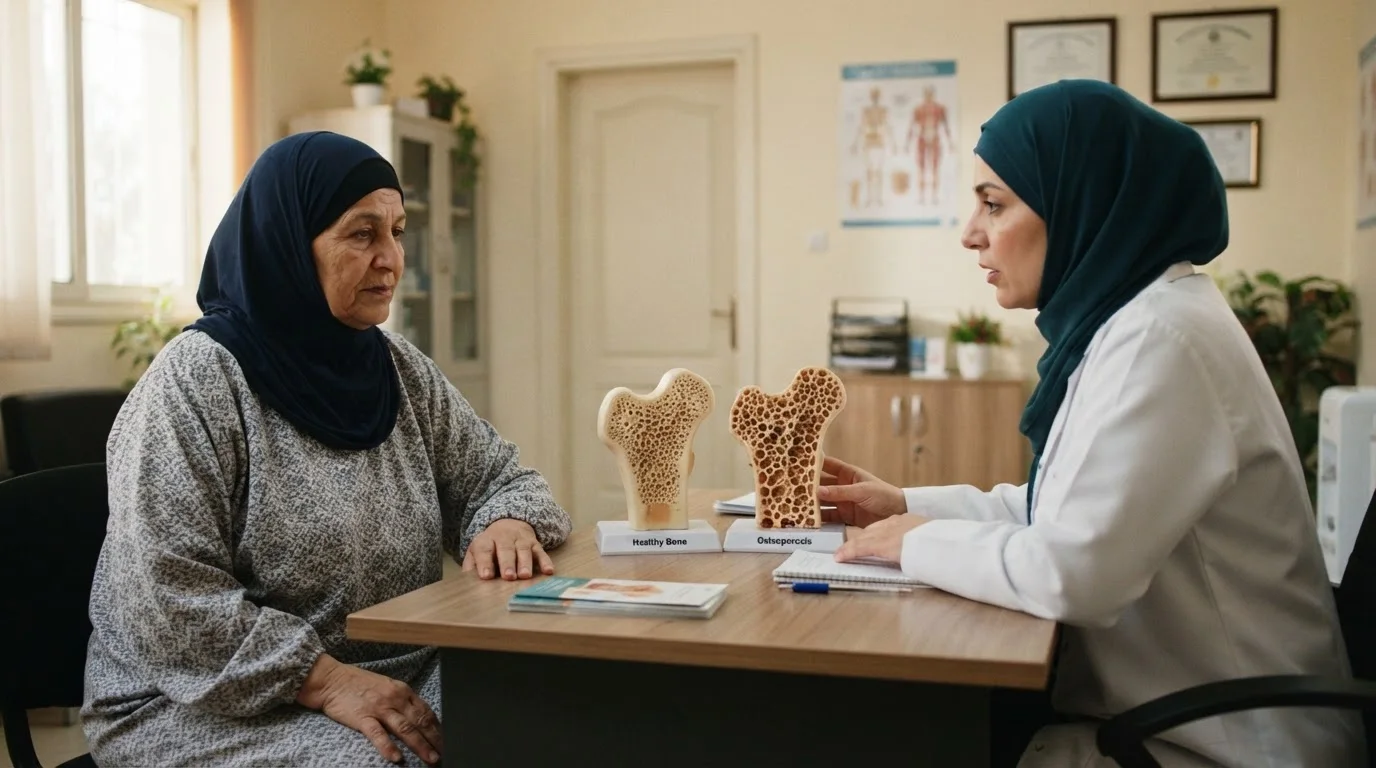
Osteoporosis is called the "silent disease" because it develops without symptoms until the first sudden fracture. It is common especially in women after menopause and in older adults, and can cause serious hip and spine fractures. But prevention is possible. The ClinicsJo Editorial Team offers this important guide.
What Is Osteoporosis?
Bone is living tissue that constantly renews. With age or other causes, bone loss outpaces bone formation, so density falls and the bone becomes weak, porous, and easily fractured — even from a minor injury or light fall.
Risk Factors
- Age, especially after 60.
- Menopause and estrogen loss in women.
- Calcium and vitamin D deficiency.
- Physical inactivity.
- Smoking and excess caffeine and alcohol.
- Long-term steroid use.
- Very low body weight and family history.
- Certain diseases such as thyroid disorders and malabsorption.
Symptoms
There are usually no early symptoms, but with progression there may be:
- Easy fractures from minor injuries (hip, wrist, vertebrae).
- Back pain from vertebral compression fractures.
- Height loss over time and a stooped posture.
How Is It Diagnosed?
- Bone density scan (DEXA): the gold standard for measuring bone strength.
- Blood tests for calcium, vitamin D, and thyroid function.
Density testing is advised for postmenopausal women, older adults, and those with risk factors.
Treatment
- Calcium and vitamin D: the basis of treatment and prevention.
- Bone-strengthening drugs: such as bisphosphonates and modern agents that slow bone loss or build new bone.
- Weight-bearing and muscle-strengthening exercise.
- Treating the cause if present.
- Fall prevention to avoid fractures.
Medical tip: bone is built in youth and protected in age. Regular activity and a calcium- and vitamin-D-rich diet from a young age is the best investment for strong bones.
Prevention
- Get enough calcium (dairy, leafy greens) and vitamin D.
- Do weight-bearing exercise like walking and resistance training.
- Quit smoking and limit caffeine and alcohol.
- Make your home safe to prevent falls.
When to See a Doctor
See a doctor if you are a postmenopausal woman, over 60, have risk factors, or had a fracture from a minor injury. Density testing detects osteoporosis before the first fracture.
Frequently Asked Questions
Does osteoporosis affect men?
Yes, though more common in women, men are affected especially with age and certain diseases and drugs.
Is calcium alone enough for prevention?
No, the body needs vitamin D to absorb calcium, plus physical activity — together they form complete prevention.
For density testing and a prevention or treatment plan, book with an orthopedist or an endocrinologist on ClinicsJo.
