
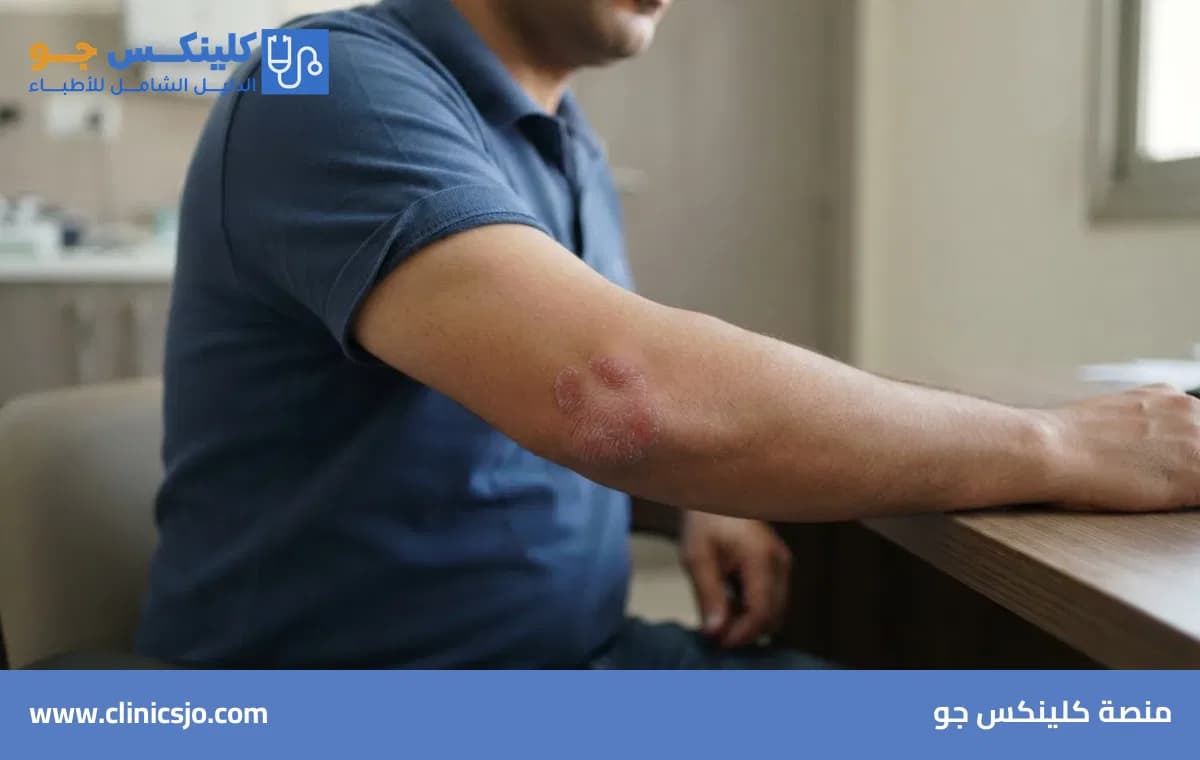
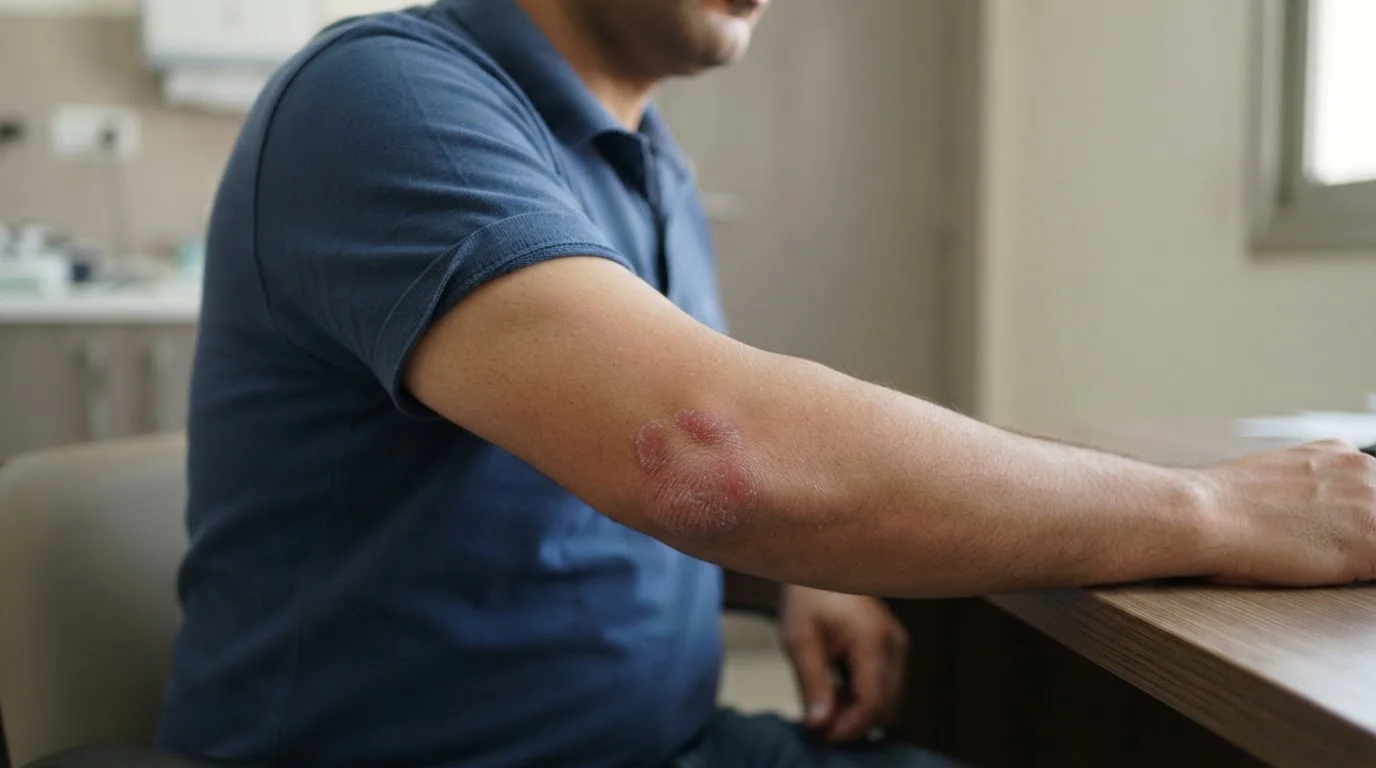
Psoriasis is a chronic autoimmune disease that causes skin cells to grow abnormally fast, accumulating on the surface as red patches with silvery scales. It affects 2–3% of the population and can be accompanied by joint inflammation. The ClinicsJo Editorial Team reviews the types, symptoms, and treatments.
What Is Psoriasis?
Psoriasis is not a simple skin disease — it's a systemic autoimmune disorder. The body produces skin cells every 3–4 days instead of the usual 28, causing them to pile up into plaques. It is not contagious in any way.
Types of Psoriasis
1. Plaque Psoriasis
The most common (80–90% of cases). Thick red patches with silvery-white scales on elbows, knees, scalp, and lower back.
2. Guttate Psoriasis
Small dots spread on the trunk and limbs, appearing suddenly in children and young adults after a streptococcal tonsillitis.
3. Inverse Psoriasis
In skin folds (armpits, under breasts, groin). Red, shiny, scale-free.
4. Pustular Psoriasis
Pus-filled blisters on palms and soles or generalized. Can be severe and require hospitalization.
5. Erythrodermic Psoriasis
The most severe and rarest type: redness and scaling covering most of the body. A medical emergency.
6. Nail Psoriasis
Pitting, thickening, discoloration, and separation from the nail bed. Affects 50% of patients.
7. Psoriatic Arthritis
Affects 30% of psoriasis patients. Joint pain and swelling, especially in fingers, feet, and the spine.
Causes and Risk Factors
- Genetics (40% have a family history).
- T-cell immune dysregulation.
- Severe psychological stress.
- Infections (strep throat triggers guttate psoriasis).
- Skin trauma (Koebner phenomenon).
- Medications: lithium, beta-blockers, antimalarials.
- Smoking and alcohol.
- Obesity.
- Cold, dry climate.
Symptoms
- Red, raised, scaly patches.
- Itching (in 60% of patients).
- Skin dryness and cracks that may bleed.
- Pain and burning.
- Nail changes.
- Joint pain and stiffness (in psoriatic arthritis).
Diagnosis
Usually clinical. Sometimes:
- Skin biopsy.
- Labs to rule out arthritis (CRP, ESR, RF).
- Joint imaging if psoriatic arthritis is suspected.
Topical Treatment
- Topical corticosteroids: mainstay for mild-to-moderate disease.
- Vitamin D analogs (calcipotriol): slow cell growth.
- Coal tar: older but effective products.
- Salicylic acid: removes scales.
- Intensive moisturizers.
- Topical retinoids (tazarotene).
Phototherapy
- NB-UVB (narrow-band UV): 2–3 sessions weekly.
- PUVA (UVA + psoralen): for resistant cases.
- Excimer laser: for localized plaques.
Systemic Treatment
Traditional Drugs
- Methotrexate: weekly pill or injection. Effective but requires blood monitoring.
- Cyclosporine: rapid-acting, for severe cases.
- Acitretin: oral retinoid, effective for pustular psoriasis.
Biologic Drugs (New Generation)
The most effective with the fewest side effects:
- TNF inhibitors: Adalimumab (Humira), Etanercept, Infliximab.
- IL-17 inhibitors: Secukinumab, Ixekizumab.
- IL-23 inhibitors: Guselkumab, Risankizumab — newest, given every 3 months.
New Oral Drugs
- Apremilast (Otezla).
- Deucravacitinib.
Medical tip: Psoriasis isn't just a skin disease. If you have joint pain or morning stiffness, tell your doctor right away — psoriatic arthritis can permanently damage joints without early treatment.
Associated Conditions (Comorbidities)
- Psoriatic arthritis (30%).
- Cardiovascular disease.
- Type 2 diabetes.
- Obesity and metabolic syndrome.
- Fatty liver disease.
- Depression and anxiety.
- Inflammatory bowel disease.
Living with Psoriasis
- Moisturize daily.
- Avoid hot baths.
- Reduce stress.
- Quit smoking and alcohol.
- Maintain a healthy weight.
- Get moderate sun exposure (15–20 minutes daily).
- Eat an anti-inflammatory diet (omega-3, vegetables).
- Join a support group.
For accurate diagnosis and a modern treatment plan, book an appointment with a specialist dermatologist on ClinicsJo.