

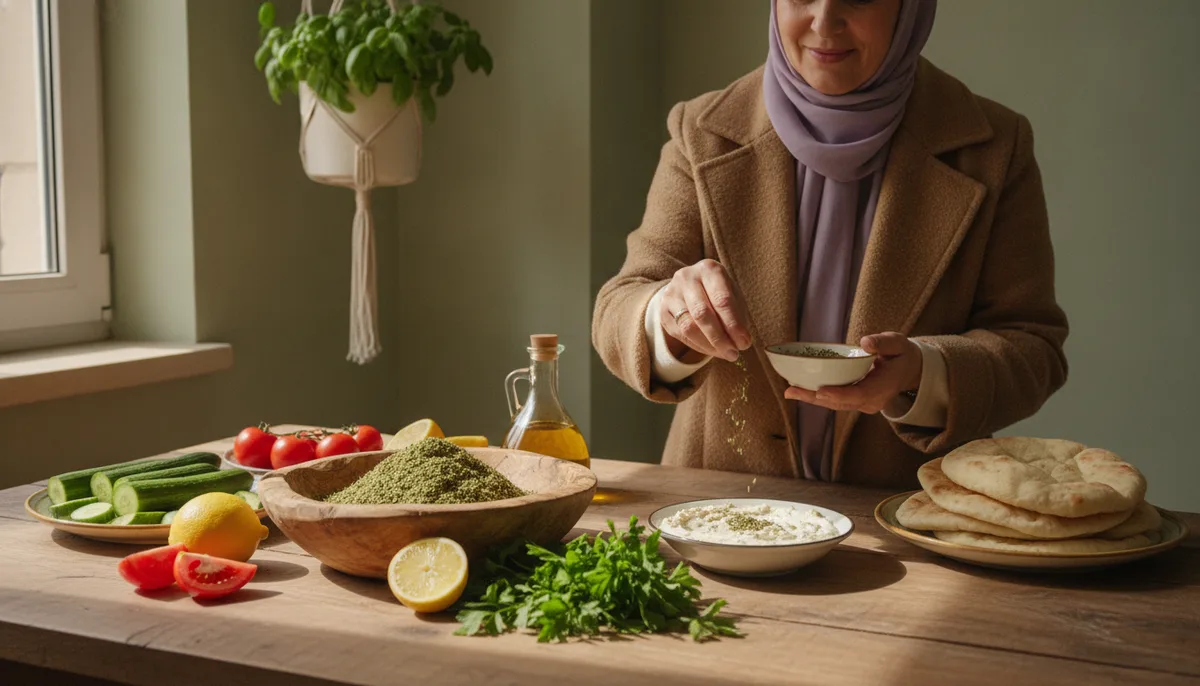
Salt and sodium are not the same thing. Salt is made of sodium and chloride. The World Health Organization (WHO) recommends that adults consume less than 2,000 mg of sodium per day, which is less than about 5 grams of salt, or roughly one teaspoon [1]. Sodium hides in bread, pickles, cheeses, and packaged foods, so controlling it starts with reading labels and cutting back on processed foods.
Salt and Sodium: What Is the Difference and Why Does the Body Need Them?
Table salt is made of two minerals, sodium and chloride [2]. In other words, sodium is part of salt, not a synonym for it. This is why we talk about "salt" in the kitchen, while manufacturers list the amount of "sodium" on food labels.
The body needs some sodium to function. It supports nerve and muscle function and helps maintain fluid balance [2]. The WHO describes sodium as an essential nutrient for maintaining plasma volume, acid-base balance, and the transmission of nerve signals [1]. The kidneys regulate how much sodium is in the body [2].
Sodium deficiency caused by diet is very unlikely in healthy people [1]. The common problem is excess, not shortage. To learn more about the difference between the two words and "hidden sodium," read The Difference Between Salt and Sodium.
Sodium Is Not Only in the Salt Shaker
Sodium occurs naturally in foods such as milk, meat, and oysters. It is found in high amounts in processed foods such as bread, processed meats, snacks, and sauces [1]. It is also present in monosodium glutamate, which is used as an ingredient and food additive [1]. This means you can exceed the daily limit without ever adding salt at the table.
How Much Salt and Sodium Do You Need Per Day?
The WHO recommends that adults consume less than 2,000 mg of sodium per day. This equals less than 5 grams of salt, or slightly less than one teaspoon [1]. This figure is an upper limit, not a target to reach. It includes both added salt and salt found in packaged foods.
| Salt | Equivalent Sodium |
|---|---|
| 1 gram | 400 mg [1] |
| 5 grams (recommended upper limit) | 2,000 mg [1] |
| 11 grams (global average adult intake in 2021) | 4,278 mg [1] |
In other words, the average adult intake worldwide is more than double the recommended amount [1]. The WHO states that nearly all populations consume more sodium than necessary [1].
Figures differ between organizations. For example, the US Dietary Guidelines recommend that most adults consume less than 2.3 grams of sodium per day [2]. This article uses the WHO figure as its reference. The direction is the same: the less sodium, the better for blood pressure. You can find a more detailed discussion in the article Dietary Sodium and Recommended Intake.
Why Does Excess Sodium Harm Health?
If sodium intake increases and the kidneys cannot remove it, it accumulates in the blood, which may lead to high blood pressure [2]. High blood pressure is the main health effect of sodium-rich diets. It increases the risk of cardiovascular disease and is also linked to stomach cancer, obesity, osteoporosis, Ménière's disease, and kidney disease [1].
The WHO estimated that about 1.7 million deaths per year were linked to excess sodium in 2023 [1]. It describes reducing sodium as one of the most cost-effective measures for improving health [1].
A person may not feel that their blood pressure is high, so it is advisable to check it regularly. Learn about the condition on the page Hypertension.
Where Is Sodium Hiding in Jordanian Food?
Sodium in the Jordanian diet comes from both what we salt at home and what we buy ready-made. The following table summarizes common foods and how to handle them. We do not list amounts for each item because quantities vary between products; the product label is the reference.
| Food | Why Its Sodium May Be High | What to Do |
|---|---|---|
| Bread, pastries, and manakish | Bread is often a food with high sodium [1], and we eat it in large amounts throughout the day | Reduce the number of loaves and pieces, and compare packaged bread labels |
| Pickles and pickled olives | Usually stored in a salt brine | Make them a small side dish rather than a main component, and limit drinking their brine |
| Cheeses such as white cheese and halloumi | Salt is used in their production and preservation | Choose lower-salt options, and soak salty cheese in water before serving, as this may remove some of the salt |
| Labneh and salted dairy | Milk contains natural sodium [1], and salt is added to some products | Read the label, and serve labneh in small portions with fresh vegetables |
| Processed meats and snacks | Among the foods the WHO has identified for their high sodium content [1] | Make them an occasional exception, and prefer fresh meat and chicken |
| Stock cubes, sauces, and ready-made spice mixes | Sauces and instant products are a known source of sodium [1], and may contain monosodium glutamate | Limit their use [1], and read the ingredients of spice mixes to see if they contain added salt |
Is There Sodium in Medicines Too?
Yes, some preparations contain sodium salts, such as Gaviscon, which contains sodium alginate and sodium bicarbonate. If you are following a low-sodium diet or are being treated for blood pressure, heart, or kidney conditions, ask your pharmacist or doctor about the content of your medicines. Do not stop any medicine on your own.
How Do You Reduce Salt and Sodium in Cooking and at the Table?
The steps suggested by the WHO are simple and applicable in any home [1]:
- Eat fresh, minimally processed foods in most of your meals.
- Remove the salt shaker from the table.
- Cook with little or no salt.
- Use herbs and spices instead of salt to enhance flavor.
- Reduce commercial sauces, marinades, and instant products.
- Choose products with lower sodium content.
Practical Ideas for Your Kitchen
- Cook with garlic, onion, lemon, sumac, mint, parsley, and cumin instead of relying on salt.
- Taste food before adding salt, and add a little at the end of cooking rather than at the beginning.
- Rinse canned pulses and canned vegetables before use.
- Make fresh salad and leafy vegetables a constant part of the meal, and serve pickles in small portions.
Low-Sodium Salt and Iodized Salt
If you want to use table salt, the WHO suggests replacing it with a low-sodium salt that contains potassium [1]. However, you should ask your doctor first if you have kidney disease or take blood pressure medicines, because potassium is not suitable for everyone.
All salt you use should be iodized, as iodine is essential for fetal and early childhood brain development and for overall brain function [1]. Reducing salt does not mean giving up iodine; it means using a smaller amount of iodized salt.
Foods may taste less salty in the first few days. The article How Long It Takes to Adjust to a Low-Sodium Diet covers this phase, and a complete eating pattern can be found in the DASH Diet and Sodium-Potassium Balance.
How Do You Read a Food Label and Convert Sodium to Salt?
Reading the label helps you know how much sodium is in packaged foods [2]. Follow these steps:
- Check the serving size, and whether the figures are per 100 grams or per serving.
- Look for the "sodium" line in milligrams.
- Convert it to salt by dividing the number by 400, because each gram of salt equals 400 mg of sodium [1].
- Compare the result with the limit of 5 grams of salt (2,000 mg sodium) per day [1].
- Compare two similar products and choose the one with less sodium.
Hypothetical example: a product containing 800 mg of sodium per serving equals 2 grams of salt, or about 40% of the recommended daily limit. If you eat two servings, you may approach the limit before counting what you add at home.
The WHO recommends that countries introduce front-of-pack labels to make comparison easier [1]. Until these are available on all products, the back-of-pack label remains your reference.
Do Children and People with Blood Pressure or Kidney Problems Need Different Amounts?
For children aged 2 to 15, the WHO recommends reducing the adult recommended amount according to their energy needs [1]. This recommendation does not apply to exclusive breastfeeding (0–6 months) or to complementary feeding alongside breastfeeding (6–24 months) [1]. Ask your child's doctor or staff at a maternal and child health center about feeding infants.
Some people are more sensitive to the effects of salt and are advised to consume less. This group includes people with high blood pressure, diabetes, or kidney problems, and people over 50 [2]. If you are one of them, ask your doctor about your personal limit.
If you take blood pressure medicines, take them as your doctor prescribed. Learn about their types in Blood Pressure Medications: Types, Side Effects, and Adherence, and about how they work in Major Blood Pressure Medication Categories. Reducing salt complements treatment but does not replace it.
When Should You See a Doctor, and When Should You Go to the Emergency Room?
See a doctor if
- Your blood pressure readings have been high on more than one occasion.
- You have frequent headaches, dizziness, or swelling in your feet.
- You have kidney, heart, or diabetes disease and want to adjust your diet or use salt substitutes.
- You want to change your salt or fluid habits while taking diuretics or blood pressure medicines. Do not change your medicine on your own.
Call 911 or go to the nearest emergency department if
- You experience chest pain or severe shortness of breath.
- You develop sudden weakness or numbness in the face, arm, or leg, or difficulty speaking.
- You have a sudden, severe, unusual headache.
- You experience confusion, fainting, or seizures.
Low blood sodium has causes other than diet, such as drinking very large amounts of water or certain diseases and medicines. Learn about the condition on the page Hyponatremia, and about its relationship with water in Can Drinking Too Much Water Cause Health Problems?. Do not take salt tablets or sodium supplements without your doctor's instructions.
How Do You Find the Right Doctor or Clinic in Jordan?
If you have high blood pressure or need a dietary plan, start by identifying the specialty you need:
- An internal medicine or cardiology physician to monitor blood pressure and heart health.
- A nephrologist if you have a kidney problem.
- A clinical dietitian to create a diet plan that suits your habits.
Then choose the governorate or area closest to you in the directory. You can browse the directory of hypertension clinics in Amman and the directory of hypertension physicians in Amman. If your question is about low sodium, there is a page on clinics assessing hyponatremia in Jordan. For information on follow-up treatment services, see Management of Antihypertensive Drugs.
When opening any profile, check the specialty, location, working hours, and contact or booking methods if available. You may also consider visiting the nearest health center in your governorate for initial follow-up. Questions to ask your doctor:
- What is my blood pressure target, and what is my appropriate sodium limit?
- Is a potassium-containing salt substitute suitable for me?
- Are any of my medicines affected by a change in diet?
- When should I recheck my blood pressure, and when is my follow-up appointment?
This article is for health education and does not replace your doctor's assessment of your condition.
Frequently asked questions
What is the difference between salt and sodium?
Table salt is made of two minerals, sodium and chloride, so sodium is part of salt and not a synonym for it. Food labels usually list the amount of sodium in milligrams, and each gram of salt equals 400 mg of sodium, so divide the sodium figure by 400 to find the salt in grams.
How many grams of salt can I consume per day?
The WHO recommends that adults consume less than 5 grams of salt per day, which is less than 2,000 mg of sodium and roughly one teaspoon. This figure includes salt used in cooking and at the table, as well as salt found in bread, cheeses, pickles, and packaged foods, not just added salt alone.
Do pickles, cheeses, and labneh affect blood pressure?
Pickles, salted cheeses, and some dairy products may raise your daily sodium intake if you eat them in large amounts, and excess sodium is linked to high blood pressure. You generally do not need to avoid them completely; reduce portions, read the label, and soak salty cheeses in water. If you have high blood pressure, ask your doctor.
Can I cut out salt completely?
Eliminating sodium is not recommended, as the body needs it for nerve and muscle function and fluid balance. The goal is to reduce excess, not eliminate salt, since sodium deficiency caused by diet is very unlikely in healthy people. If you take blood pressure medicines or have heart or kidney disease, ask your doctor before making any major change.
Is sea salt or rock salt better than regular table salt?
The sources referenced here do not state that one type of salt is better for blood pressure; what matters is the total amount of sodium you consume per day. If you use salt, choose iodized salt in small amounts. The WHO may recommend low-sodium alternatives that contain potassium, but ask your doctor first if you have kidney disease.
How can I tell if a product is high in sodium?
Read the back-of-pack label and look at the serving size and the sodium line in milligrams. Convert the figure to salt by dividing by 400, and compare it with the limit of 5 grams of salt per day. If one serving uses a large part of this limit, choose a similar product with less sodium.
Sources and references
- Sodium reduction — World Health Organization. Accessed: 2026-10-26.
- Sodium: MedlinePlus — MedlinePlus — U.S. National Library of Medicine. Accessed: 2026-10-26.