
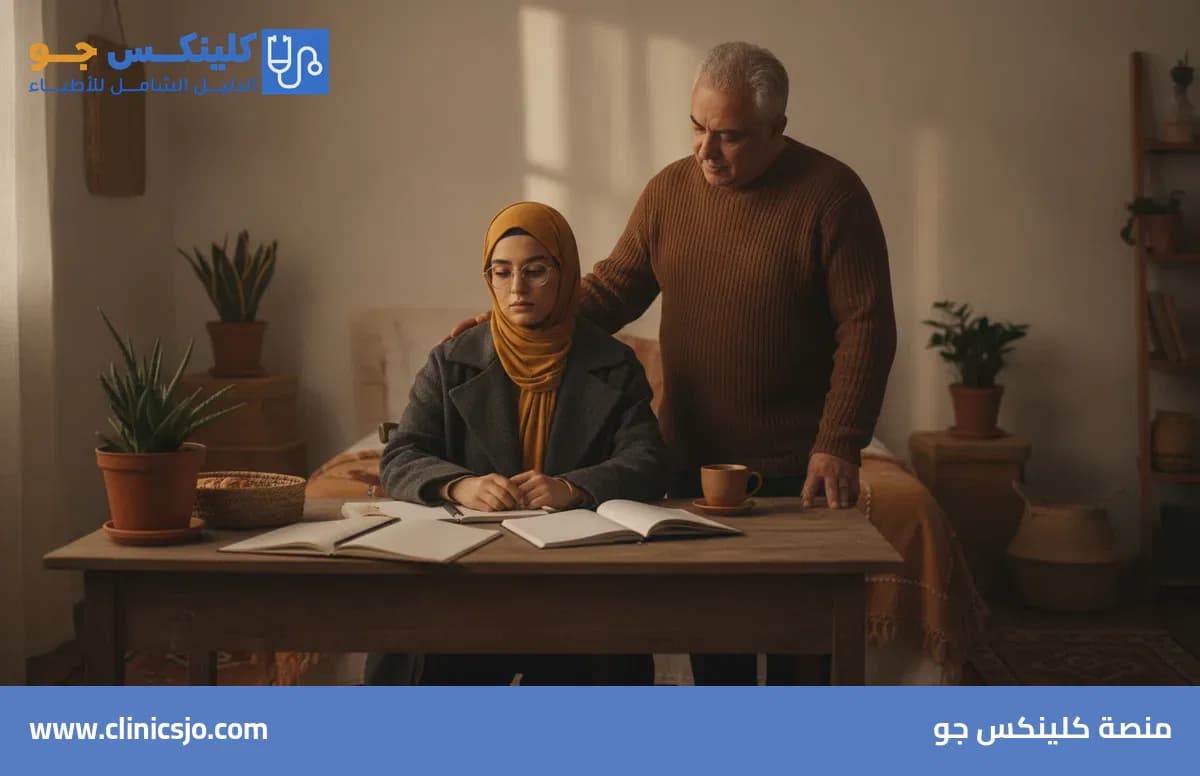

Tawjihi exam anxiety is a common and understandable feeling, but it becomes concerning when it lasts and disrupts sleep, eating, studying and daily life. Parents help their child by listening without criticism, and by making sure he or she gets enough sleep (8 to 10 hours for most teenagers), balanced meals, breaks and physical activity. If hopelessness or talk of self-harm appears, go to the emergency department immediately or call 911.
What Is Tawjihi Exam Anxiety, and When Is It Normal?
The Tawjihi is the General Secondary Education Certificate examination in Jordan, taken at the end of secondary school. For many families it therefore carries more weight than any other exam. This weight explains why Tawjihi exam anxiety sometimes spreads through the whole household, not just to the student.
Pre-exam stress is a normal reaction, and the goal is to channel it positively rather than eliminate it completely [1]. Teenagers already face multiple pressures, including succeeding in their studies, maintaining their relationships with their families and making major decisions, so being preoccupied with these is normal. However, intense sadness, hopelessness or a sense of worthlessness may be signs of a mental health problem [2].
The World Health Organization estimates that one in seven adolescents (14.3%) aged 10–19 years worldwide experiences a mental health condition. Anxiety disorders are the most common in this group, estimated at about 5.3% among those aged 15–19 years, and depression at about 3.4% [3]. These are global figures, not specific to Jordan or to exams, but they remind us that anxiety in teenagers is common and treatable.
To distinguish transient stress from a disorder that needs treatment, you can read the difference between normal anxiety and an anxiety disorder.
Signs of Tawjihi Exam Anxiety: What Should Parents Look For?
A student may not say "I am anxious." Instead, signs appear in his or her body, mood and behavior. The UK National Health Service (NHS) guidance notes that stressed students may worry a great deal, feel tense, have headaches and stomach pain, sleep poorly and become easily irritable [1]. A summary of the source's points follows:
| Type | Examples of signs |
|---|---|
| Physical | Headaches, stomach pain, disturbed sleep, loss of appetite or overeating |
| Emotional | Excessive worry, feeling tense, irritability, low mood and a negative outlook |
| Behavioral | Loss of enjoyment in activities they used to like, and withdrawal from others |
| Cognitive | A sense of hopelessness about the future |
The symptoms of anxiety and depression sometimes overlap, including rapid and unpredictable mood changes. Both can affect attendance and academic performance, and social withdrawal can increase isolation and loneliness [3].
Headaches or stomach pain alone do not necessarily indicate anxiety, as they may have physical causes. If symptoms persist or are severe, it is best to take the student to a doctor. To learn more about the symptoms and types of anxiety, you can read the article Anxiety Disorders: Types, Symptoms and Treatment.
How Can Parents Talk with Their Son or Daughter During the Tawjihi Season?
Having someone who listens to the student lightens the load, whether it is a parent, a teacher or a friend, because talking helps him or her share worries and see things in proportion. The guidance recommends involving the student in decisions as much as possible [1].
The UK organization Childline notes that many children who contact it feel that the greatest pressure during exam time comes from their families. Parents are therefore advised to listen, offer support and avoid criticism [1]. Here are practical examples of the difference between a pressuring statement and a supportive one:
| Statement that increases pressure | More supportive statement |
|---|---|
| "Our whole future depends on this grade" | "I am with you no matter what the result is, and we will think together about the next step" |
| "Look how hard the neighbor's son studies" | "I see how tired you are and how hard you are working. How can I help you?" |
| After the exam: "Why did you get this question wrong?" | "Which parts went well?" |
Before the exam, stay calm and positive, and tell him or her that failure is not the end of the world. After each exam, encourage him or her to talk, focus on what went well rather than on the difficult questions, and then move on to the next exam instead of dwelling on what cannot be changed [1].
Be flexible at home. If he or she studies all day, do not focus on an untidy room or postponed housework. Your own calm helps him or her, because exams do not last forever [1].
Sleep, Eating and Breaks: Basics That Ease Tawjihi Exam Anxiety
Sleep First
Good sleep improves thinking and concentration, and most teenagers need 8–10 hours a night. It is advisable to give the student about half an hour to relax between studying or watching TV or using the computer and going to bed. Staying up all night before an exam is generally a bad idea, because sleep benefits him or her far more than hours of stressed last-minute revision [1]. Healthy sleep habits are part of the habits important for mental health in adolescence [3]. To limit phone use before bed, you may find the article Parenting in the Digital Age helpful.
Balanced Meals
A balanced diet is important for the student's health and sense of well-being during the exam period. Some parents notice that foods and drinks high in fat, sugar and caffeine, such as energy drinks, cola, sweets, chocolate and fast food, make their children more energetic, irritable and moody. It is good to involve him or her in shopping and in choosing healthy snacks [1].
If he or she has lost appetite for weeks and weight is dropping, read Malnutrition: Warning Signs and Causes, and consult a doctor.
Movement, Breaks and Rewards
Exercise raises energy, clears the mind and reduces tension, and the type does not matter: walking, cycling, swimming, football or dancing all help. Activities involving others are especially beneficial [1]. Build short, regular breaks into his or her daily schedule, during which he or she can move around and breathe away from books.
You can agree on simple rewards after study sessions and after each exam, such as preparing his or her favorite meal, and then celebrating together once the exams are over [1]. However, exercise alone does not replace psychological treatment when it is needed, as explained in the answer to this question about exercise and treatment.
Do Concentration Pills and Stimulants Help Before the Exam?
There is no safe shortcut. "Concentration" pills, stimulants and energy drinks may seem like a quick solution, but they can increase stress and disrupt sleep, and sleep is what the student truly needs. It has been noted that caffeine-rich drinks, including energy drinks, can make some children more irritable and moody [1].
Medicines and their general prices in Jordan are regulated by the Jordan Food and Drug Administration (JFDA). Therefore, do not give your son any medicine or supplement for concentration without a prescription or guidance from a doctor or pharmacist, and do not buy products of unknown origin from the internet or from friends. If he or she is already taking a prescribed medicine, do not stop it or change the dose unless a doctor directs you to.
If your son asks for these pills or starts using substances to help him stay awake or calm down, treat this as a sign of how much pressure he feels, and talk to him calmly. Some teenagers may turn to risky behaviors, including substance use, as an unhelpful way of coping with emotional difficulties [3]. Using alcohol or drugs is among the signs that may warrant seeking help [2].
How Can We Help Him Study and Prepare for Exam Day?
Practical support reduces anxiety more than general advice. Try these steps, taken from NHS guidance [1]:
- Provide a comfortable place to study, and ask him how you can help.
- Help him create a realistic revision timetable, and help him obtain past exam papers to practice with.
- Remind him of his goals in life and how his studies and exams connect to them.
- Tell him that anxiety is a normal feeling, and help him make use of it.
- If anxiety is getting in his way, let him rehearse what he will do on exam day, such as solving papers under exam conditions, or visiting the exam hall before the date if possible.
Encouraging him to face his fears rather than avoid them helps him more, and it also helps him to remember what he actually knows and the time he has put into studying. If you feel he is not coping, it may help to speak with his teachers [1]. The school can also help by offering practice in exam conditions.
When Should Professional Help Be Sought, and When Should We Go to the Emergency Department?
When Should We Seek a Doctor's or Specialist's Help?
Not all students improve once the exams are over. The guidance recommends seeking help if anxiety or low mood is severe, persists and affects daily life. A good starting point is usually a general practitioner [1]. Other signs listed by MedlinePlus include [2]:
- Severe anger or severe anxiety that occurs repeatedly.
- Prolonged grief after a loss or death.
- Feeling that one's mind is controlled or out of control.
- Use of alcohol or drugs.
- Compulsive excessive exercise or dieting, or binge eating.
- Harming others or destroying property, or reckless behaviors that endanger oneself or others.
Mental health problems are treatable, and the conversation can start with parents, the school counselor or a healthcare provider [2]. Do not hesitate because of fear of stigma, as fear of stigma delays seeking help [3].
When Should We Go to the Emergency Department?
If your son expresses intense hopelessness, a wish to die or to harm himself, or actually harms himself, this is an urgent situation. Do not leave him alone, and call 911 or take him to the nearest emergency department immediately. You can ask him calmly and without accusation what he is feeling, and keep means of self-harm out of his reach, since easy access to means of suicide is a risk factor [3].
Depression can lead to suicide, and suicide is the third leading cause of death among those aged 15–29 years [3]. Therefore, do not dismiss these statements as just "exam pressure that will pass." After the urgent crisis, the student needs specialized assessment and follow-up.
How Do You Find the Right Doctor or Clinic in Jordan?
You can start with a family physician or pediatrician, then move on to a specialist when needed. In the ClinicsJo directory, you can find child and adolescent psychiatrists in Jordan and psychiatrists in Jordan. You can narrow your search by governorate, such as psychiatry in Amman, Irbid or Zarqa, or child psychiatry in Amman, and there are pages for the other governorates.
To learn about the services themselves, see the pages on diagnosis of depression and anxiety and anxiety treatment, and the page on generalized anxiety disorder if anxiety is daily and difficult to control.
What Should You Check in the Profile?
- The precise specialty: Does the doctor work with teenagers?
- The governorate, address and working hours.
- The method of contact or booking, if available in the profile.
Questions to Ask at the Visit
- What is your assessment of my son's condition, and what do you suggest as a first step?
- Does treatment begin with talking therapy and support before medication? The internationally preferred approach is to offer non-drug methods and avoid overuse of drug interventions [3].
- How will parents take part in the plan, and what are the limits of confidentiality for what my son says?
- When do we return for follow-up, and what warning signs require the emergency department?
The directory helps you reach profiles and make contact, but assessing the condition and prescribing any treatment is the sole responsibility of the treating doctor.
Practical Summary for Parents During the Tawjihi Season
- Consider mild anxiety normal, and monitor signs that persist or intensify.
- Listen more than you advise, and avoid comparisons and criticism.
- Protect his sleep (8–10 hours) and balanced meals, and build movement, breaks and rewards into his day.
- Stay away from concentration pills and energy drinks, and do not give any medicine without a prescription or specialist guidance.
- Seek medical help if anxiety lasts or affects his life, and call 911 at any mention of self-harm.
Tawjihi exam anxiety is a difficult but temporary phase, and the most important thing a student needs during it is to feel that his or her worth in the eyes of the family is not tied to a grade. This article provides general information and does not replace consulting a doctor.
Frequently asked questions
Is Tawjihi exam anxiety normal?
Yes, pre-exam stress is a normal reaction, especially for an important exam like the Tawjihi, and it can be channeled to motivate the student to prepare. However, if anxiety is severe, persists and disrupts sleep, eating, studying and daily life, it is best to take the student to a doctor or mental health specialist.
What signs show that my son is experiencing psychological pressure during the Tawjihi?
Signs include excessive worry, tension, headaches and stomach pain, sleep disturbance, irritability, changes in appetite, loss of enjoyment in things he used to like, low mood or a negative outlook, and a sense of hopelessness about the future. The longer these signs last and the more intense they become, the greater the need to consult a specialist.
How many hours should a Tawjihi student sleep?
Most teenagers need 8 to 10 hours of sleep a night. It is preferable for the student to set aside about half an hour to relax away from studying and screens before bed. Staying up all night before an exam is generally a bad idea, because sleep benefits thinking and concentration more than hours of stressed revision.
Can I give my son concentration pills or stimulants before the exam?
This is not recommended without a prescription or guidance from a doctor or pharmacist. These products may increase stress and disrupt sleep, and they may be of unknown origin. It is better to rely on sleep, balanced nutrition, physical activity and organized revision, and to consult a doctor if the student has persistent difficulty concentrating.
How do I talk with my son about the Tawjihi signs without increasing his stress?
Listen without criticism, ask him how you can help, and reassure him that his worth is not tied to a grade and that failure is not the end of the world. Avoid comparing him to others. After each exam, ask him what went well rather than focusing on the difficult questions, and then move on to the next exam together.
When does my son's anxiety become an emergency?
If he talks about wanting to die or harm himself, shows intense hopelessness, or actually harms himself, this is an urgent situation. Do not leave him alone. Call 911 or take him immediately to the nearest emergency department, then request an assessment from a mental health specialist.
Sources and references
- Help your child beat exam stress — NHS (UK National Health Service). Accessed: 2026-10-26.
- Teen Mental Health: MedlinePlus — MedlinePlus — U.S. National Library of Medicine. Accessed: 2026-10-26.
- Mental health of adolescents — World Health Organization. Accessed: 2026-10-26.