

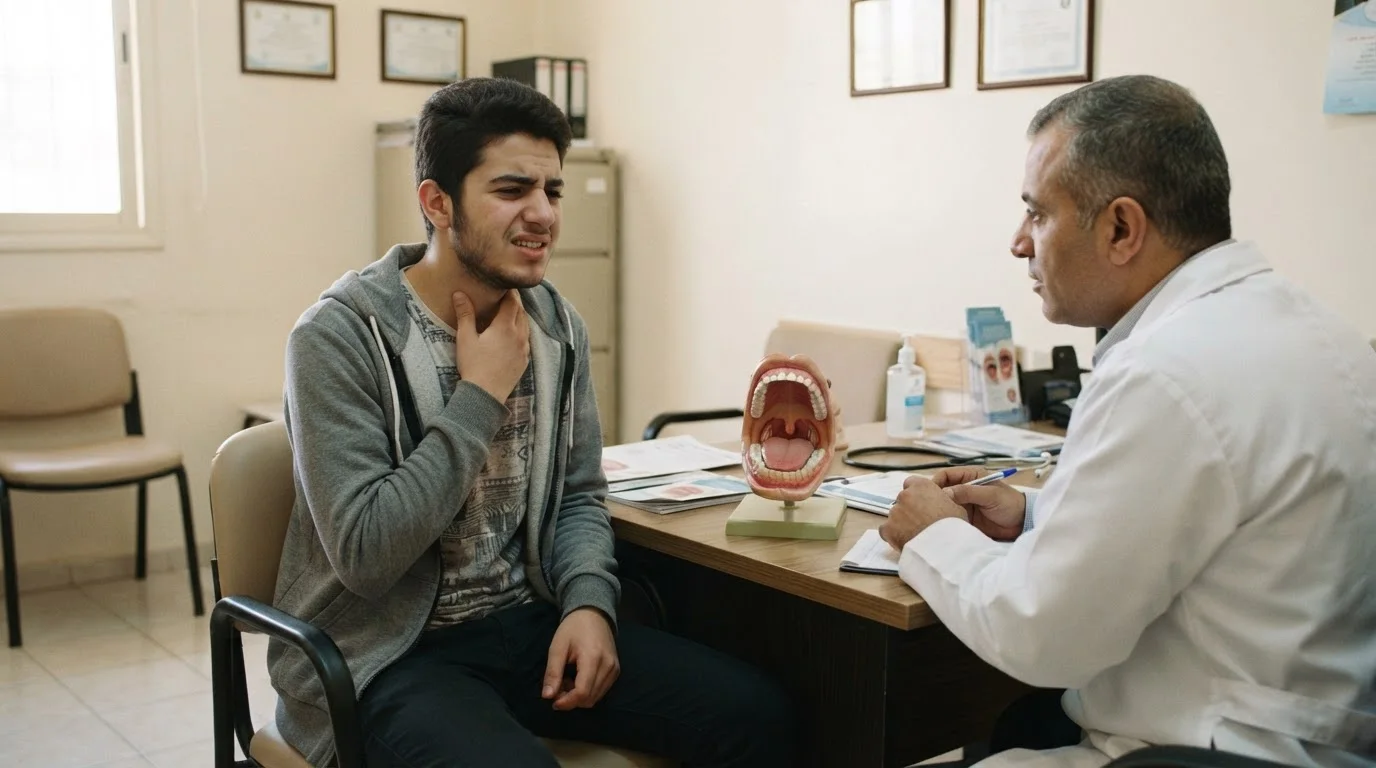
Tonsillitis is one of the most common causes of sore throat, especially in children, and a frequent reason for doctor visits and school absence. Among parents' biggest questions: do we need an antibiotic, and when should the tonsils be removed? The ClinicsJo Editorial Team answers in this guide.
What Are the Tonsils?
The tonsils are two masses of lymphatic tissue on each side of the back of the throat, part of the immune system that helps fight infection, especially in childhood. But they can themselves become inflamed when attacked by viruses or bacteria.
Causes
- Viral infection: the most common cause (such as cold viruses).
- Bacterial infection: especially streptococcus causing strep throat.
Distinguishing the two matters because bacterial may need antibiotics while viral does not.
Symptoms
- Sore throat and difficulty swallowing.
- Red, swollen tonsils, sometimes with white patches or pus.
- Fever and chills.
- Enlarged, tender neck lymph nodes.
- Headache, fatigue, and loss of appetite.
- Changed voice and bad breath.
- In children: refusing food and crying.
When Is the Cause Bacterial?
A bacterial (strep) infection is more likely with: high fever, pus on the tonsils, tender enlarged neck nodes, and absence of cough and runny nose. The doctor may use a throat swab or rapid test before prescribing an antibiotic.
Treatment
- Viral tonsillitis: rest, warm fluids, pain and fever relievers, and salt-water gargles. It improves in days without antibiotics.
- Bacterial tonsillitis: a doctor-prescribed antibiotic, completing the full course to prevent complications.
- Rest and hydration are essential in all cases.
When Is Tonsillectomy Necessary?
- Frequent severe infections several times a year over consecutive years.
- Enlarged tonsils causing sleep apnea or swallowing difficulty.
- Recurrent peritonsillar abscess.
- Suspicion of other causes needing examination.
Medical tip: do not request antibiotics for every sore throat; most cases are viral, where antibiotics do not help and may harm by increasing bacterial resistance. Leave the decision to the doctor after examination.
Prevention
- Wash hands regularly and teach children to.
- Avoid sharing cups and utensils with the sick.
- Cover the mouth when coughing and sneezing.
When to See a Doctor
See a doctor for severe sore throat or one lasting more than a few days, high fever, or difficulty swallowing. Seek urgent care for severe difficulty breathing or swallowing, drooling, or marked neck swelling.
Frequently Asked Questions
Does tonsillectomy weaken immunity?
No, the body has other immune tissues that compensate, and removal when needed helps more than it harms.
Is tonsillitis contagious?
Yes, the causative infection spreads via droplets, so prevention and hygiene matter.
To assess the tonsils, especially in children, book with an ENT doctor on ClinicsJo.