

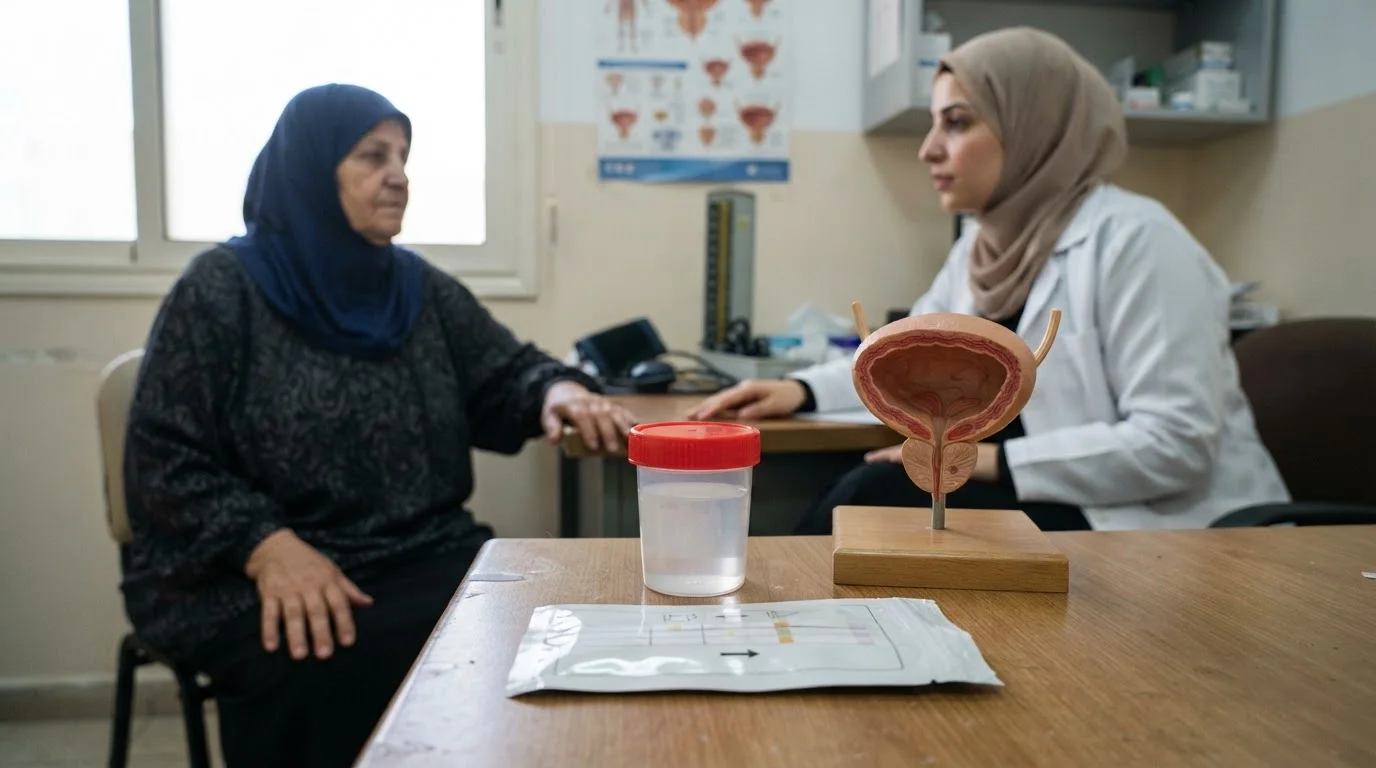
Urinary tract infection is one of the most common infections, affecting women in particular due to anatomy. Although usually mild and easily treated, neglecting it can let the infection reach the kidneys and cause complications. The ClinicsJo Editorial Team offers this complete guide.
What Is a UTI?
A UTI is an infection of any part of the urinary system: the urethra, the bladder (cystitis, the most common), or the kidneys (pyelonephritis, the most serious). It usually occurs when bacteria — especially E. coli from the gut — enter the urinary tract and multiply.
Causes and Risk Factors
- Female anatomy: a shorter urethra in women eases bacterial entry.
- Low water intake and holding urine for long.
- Intercourse and some contraceptives.
- Pregnancy and menopause.
- Urinary stones and enlarged prostate (in men).
- Diabetes and weak immunity.
- Urinary catheters.
Symptoms
- Burning and pain on urination.
- Urgency and frequency with small amounts.
- Lower-abdominal pain or pressure.
- Cloudy, foul-smelling, or bloody urine.
- A feeling of not fully emptying the bladder.
If the infection reaches the kidneys, more severe symptoms appear: fever and chills, flank and back pain, nausea, and vomiting — needing urgent treatment.
How Is It Diagnosed?
- Urinalysis: detects signs of infection and bacteria.
- Urine culture: identifies the bacteria and the right antibiotic, important in recurrent cases.
- Further imaging with recurrent infection or a suspected underlying cause.
Treatment
- Antibiotics: the main treatment, prescribed by the doctor, completing the full course.
- Drinking plenty of water to flush bacteria.
- Pain relievers to ease burning.
- Treating the underlying cause such as stones or enlarged prostate in recurrent infection.
Medical tip: do not stop antibiotics once symptoms ease; stopping early can leave bacteria causing relapse and resistance. Complete the full course as prescribed even if you feel better quickly.
Prevention
- Drink enough water daily.
- Do not hold urine for long and empty the bladder regularly.
- Maintain proper hygiene (wiping front to back).
- Urinate after intercourse.
- Avoid irritants and scented products in the sensitive area.
When to See a Doctor
See a doctor for UTI symptoms to get appropriate treatment. Seek urgent care for fever and chills with flank pain, nausea and vomiting, or visible blood in urine — the infection may have reached the kidneys. A pregnant woman should see a doctor immediately for any symptoms.
Frequently Asked Questions
Is a UTI contagious?
It does not spread like a cold but relates to the body's own bacteria and hygiene and behavior factors.
Does it heal without antibiotics?
Some very mild cases may improve with water, but most need antibiotics to avoid complications, especially in pregnancy.
To diagnose, treat, and prevent recurrence, book with a urologist on ClinicsJo.