
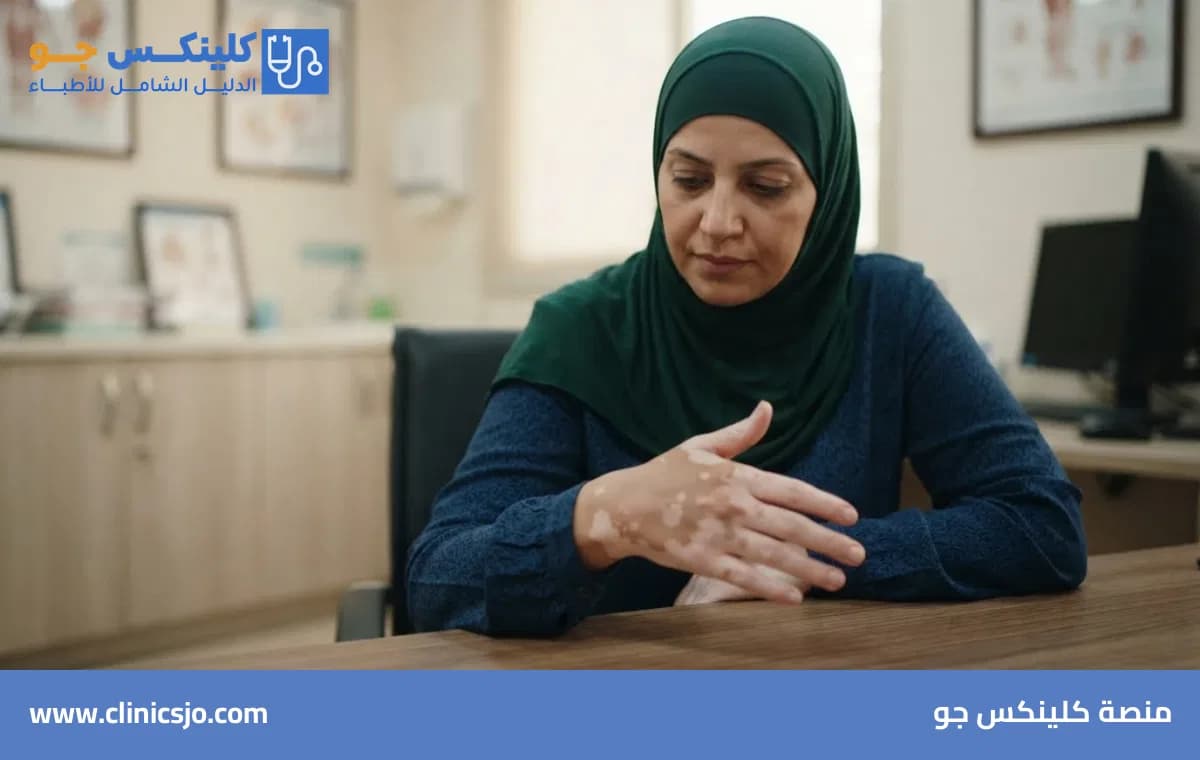
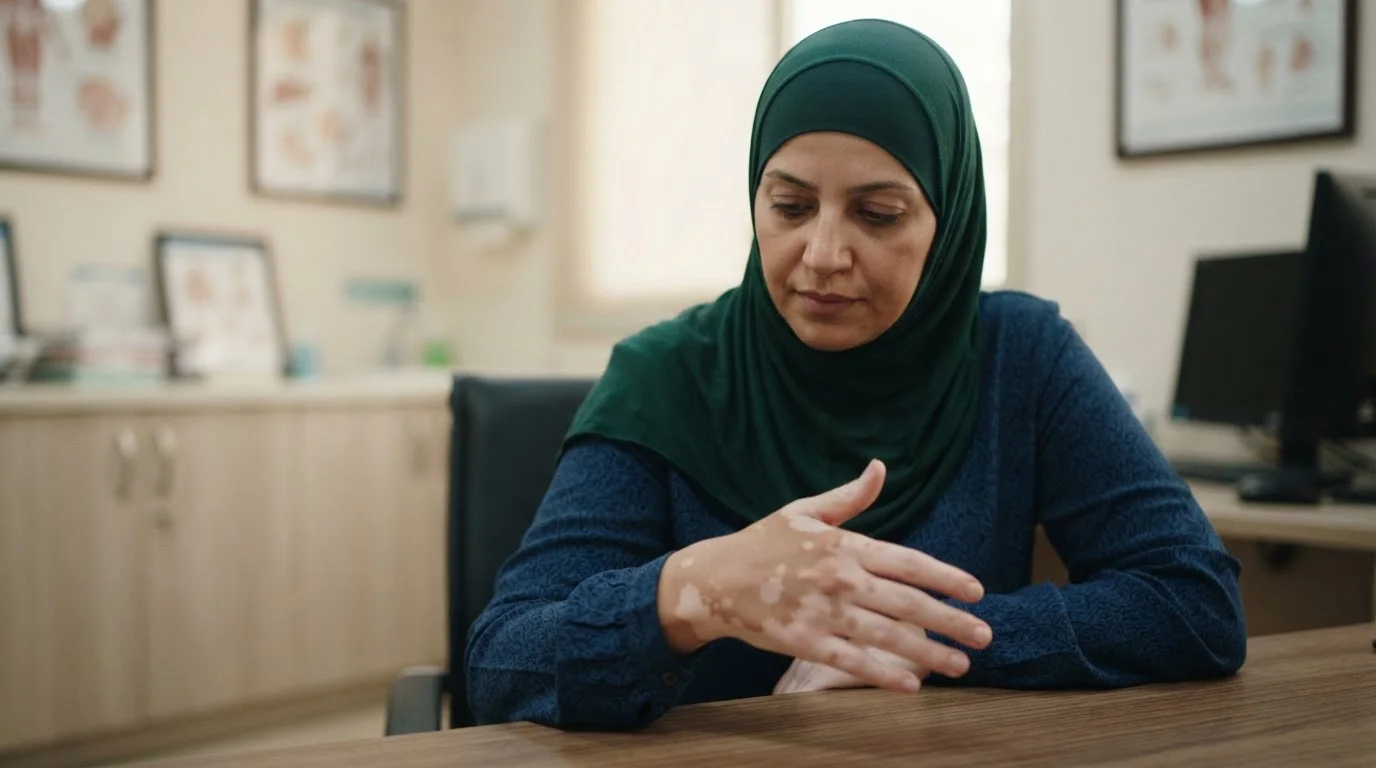
Vitiligo affects 0.5–2% of the world's population, causing loss of melanin pigment in defined skin areas, producing white patches. It's not contagious or painful, but it has profound psychological and social impact. The ClinicsJo Editorial Team reviews the latest treatments.
What Is Vitiligo?
Vitiligo is an autoimmune disease in which the immune system attacks melanocytes (pigment cells) and destroys them, causing skin to lose its color. Usually begins before age 30, affecting men and women equally. It is not limited to a specific ethnicity, but more visible on darker skin.
Types of Vitiligo
1. Generalized
The most common; symmetrical patches on both sides (face, hands, around mouth and eyes).
2. Segmental
Affects one side of the body; begins early and stabilizes after years.
3. Focal
One or two patches in a small area.
4. Universal
The patient loses most pigmentation (rare).
Causes and Risk Factors
- Autoimmune disorder (attacks melanocytes).
- Genetics (30% have an affected relative).
- Severe psychological stress.
- Skin trauma (Koebner phenomenon).
- Other autoimmune diseases (thyroid, type 1 diabetes).
- Exposure to chemicals (phenol).
- Severe sunburns.
Diagnosis
- Clinical examination.
- Wood's lamp — clearly highlights patches.
- Blood tests to exclude other autoimmune conditions (TSH, ANA, B12).
- Biopsy in unclear cases.
Medical Treatments
1. Topical Corticosteroids
First line for limited patches (not the face). Multiple potencies. Not used more than 3 months continuously.
2. Topical Calcineurin Inhibitors (Tacrolimus, Pimecrolimus)
Safe for face and eyelid area; used for months.
3. Ruxolitinib Cream (Opzelura)
The newest FDA-approved vitiligo treatment (2022). Topical JAK inhibitor, restores pigment on face and hands. Twice-daily use for 24 weeks.
4. Phototherapy (Narrow-Band UVB)
The most effective for generalized vitiligo. 2–3 sessions weekly for 6–12 months. Stimulates melanin production. Response rate 60–70%.
5. Excimer Laser
For limited patches; faster than NB-UVB.
6. PUVA
Psoralen + UVA. Older than NB-UVB, more side effects.
Surgical Treatments
For stable patches inactive for 1–2 years:
- Melanocyte transplantation: cells taken from healthy skin and grafted onto the patch.
- Thin skin grafting.
- Medical tattooing (micropigmentation): for lips and defined areas.
Depigmentation (for Extensive Cases)
If a patient has lost more than 50% of pigment, monobenzone can be used to remove remaining pigment and unify skin color. A difficult and irreversible decision.
Psychological Support
Vitiligo has profound psychological effects. Psychological support and peer groups are essential parts of treatment.
Medical tip: Early treatment yields significantly better results. Patches less than a year old respond faster. Don't wait.
Living Tips
- Use strong sunscreen (SPF 50+) — white patches burn easily.
- Cover-up makeup is an acceptable daily option.
- Avoid skin trauma.
- Check thyroid hormones annually.
- Reduce stress.
- Take vitamins (B12, folate, vitamin D, zinc).
- Join a support group.
For a modern treatment plan, book an appointment with a dermatologist on ClinicsJo.