
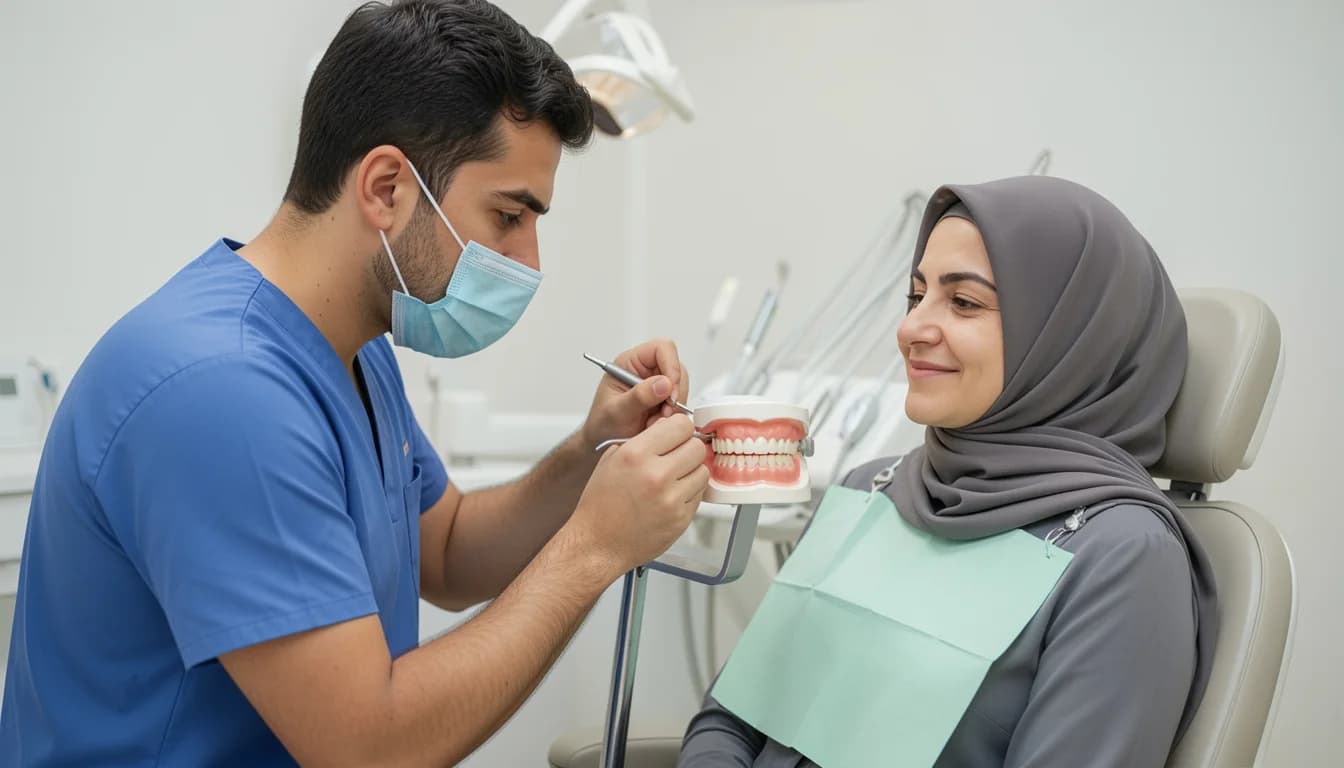
When you wake up with severe tooth pain or suffer a dental injury, you need fast and effective care — and that's where dental emergencies come in. In Tafilah Governorate, a relatively remote mountainous region with around 120,000 residents, emergency dental services may not be uniformly available everywhere, but public and military hospitals in the governorate provide emergency care and basic treatment. Finding a nearby dental clinic ensures you can access care quickly before the situation escalates.
About Dental Emergencies and Why They Matter
Dental emergencies cover a broad spectrum of acute conditions and severe pain that cannot be postponed:
Common conditions seen in emergency clinics: - Severe tooth pain: caused by deep decay or root inflammation (pulpitis), requiring immediate pain relief and assessment - Tooth abscess: a pus collection at the root or in the gum, often accompanied by fever and swelling - Chipped, cracked or broken tooth: due to a fall or accident, requires urgent stabilization or temporary filling - Knocked-out tooth: if recent, it may be salvageable if handled quickly and properly stored - Acute swelling of the jaw or face: may indicate an infection threatening the airway - Persistent bleeding after extraction: requires immediate control - Broken crown or bridge: causes pain when chewing or drinking - Acute gum inflammation: severe bleeding or sharp pain while mastication
The key is not to delay — the faster you seek care, the less likely you are to lose the tooth or develop serious infection.
Local Context in Tafilah and Surrounding Areas
Tafilah Governorate sits in a unique geographic position as Jordan's least populous region, distinguished by its mountainous terrain, the natural Afra hot springs, Dana National Reserve, and Tafila Technical University, which provides educational and medical opportunities. Population centers include Tafileh city (the administrative hub), Busaira, Al-Hasa, Al-Eis, and Ain Al-Baida — each may need emergency dental services at critical moments.
Tafileh Government Hospital and Prince Zaid bin Al-Hussein Military Hospital form the backbone of medical infrastructure in the governorate, offering emergency services including initial assessment of acute dental cases. Specialist dental care is often limited at the hospital emergency level, but immediate examination, pain management, and infection control can be provided there, with referral to a specialist if needed.
Choosing the Best Emergency Dental Clinic in Tafilah
When searching for an emergency dental clinic in Tafilah Governorate or nearby areas, pay attention to these critical criteria:
1. Availability and Flexible Hours - Is the clinic open in the evenings, weekends, and public holidays? - Do they accept emergency cases without prior appointment, or do they require a call first? - Proximity to your home or workplace is crucial during acute dental pain
2. Qualifications and Experience - Look for a dentist holding a license in general dentistry or an advanced specialty - Experience managing emergencies, fractures, and abscesses is non-negotiable - Some practitioners may have additional training in oral surgery or pain management
3. Equipment and Technology - Availability of digital X-rays for rapid diagnosis - Modern sterilization equipment and strict infection-control protocols - Availability of effective local anesthetics and appropriate analgesics
4. Insurance and Payment Options - Verify the clinic accepts your health insurance card - Do they offer payment plans for emergency cases? - Do they accept cash, bank transfers, and credit cards?
5. Clinic Reputation and Reviews - Search for patient reviews online and on social media - Ask friends and family about their personal experiences - Do patients mention quick pain management and professionalism?
Pricing and Health Insurance
Dental emergency service costs in Tafilah generally fall within these ranges (in Jordanian Dinar):
Emergency examination and diagnosis: 15–30 JOD Pain relief and temporary filling: 25–50 JOD Emergency tooth extraction: 40–80 JOD (depending on complexity) Abscess treatment or drainage: 50–100 JOD Emergency root canal (endodontic) treatment: 80–150 JOD Dental X-rays: 10–20 JOD
Health Insurance Coverage: Most major Jordanian health insurance companies provide coverage for emergency dental services (acute pain, abscess, broken tooth) — but the percentage coverage and co-pays vary:
- Globemed: moderate dental coverage with priority for emergencies
- MetLife: multi-level health programs that include dental care
- Allianz: comprehensive emergency dental coverage in most plans
- NextCare: specialized health insurance at reasonable premiums
- Arab Orient: well-known local insurance services
- Jordan Insurance: one of the oldest and most established domestic insurers
Call your insurer before your visit to clarify coverage percentage and whether a referral from a general practitioner is required.
What to Expect During an Emergency Dental Visit
Check-in and Waiting You'll be asked to complete a brief form with patient information, current symptoms, and any drug allergies. There may be a short wait depending on the severity of other cases in the queue.
Initial Examination and Diagnosis The dentist performs a visual and tactile examination; X-rays may be ordered for accurate diagnosis. This stage is rapid and typically takes 5–10 minutes.
Anesthesia and Treatment Local anesthetic is applied before any painful procedure. Emergency treatment might include a temporary filling to relieve pain, abscess drainage, or tooth extraction to halt damage — the goal is immediate pain and infection control.
Post-Care Instructions and Follow-up You receive clear instructions on caring for the treated tooth, prescribed pain relievers and antibiotics if needed, and a follow-up appointment with a general dentist to complete definitive treatment.
Costs and Payment You'll receive an itemized bill before leaving. Keep the receipt to submit to your insurer if applicable.
Choosing Dental Emergency clinics in Tafilah
Use the profiles on this page to compare relevant practices in Tafilah, read the published qualifications and locate a suitable appointment. Start with the clinical problem or service you need, then compare the practice location and contact options. The directory reflects listed platform profiles, rather than a census of every provider in the region.
“Best” is a search and comparison term: there is no single doctor who is the best for every patient. Featured placement is not proof of superior clinical outcomes. Choose according to your needs and the qualifications shown in each profile.
Location, appointment and fees
Confirm the exact branch address in Tafilah, access instructions and appointment time before travelling. A governorate-level result may cover more than one district; an area-specific page keeps its area filter. A provider practising at several clinics may have a different schedule at each branch.
Ask whether the first visit is an assessment, a consultation or a planned procedure. Confirm the consultation charge, any investigation fees and what is included in the quoted price. If a profile does not publish a fee, request it directly rather than assuming a typical market price.
For insurance, confirm your insurer, policy, branch and requested service with the practice. A listed insurer does not establish coverage for every procedure or every policy. Ask about referrals, prior authorization and your share of the cost.
Explore matching directories
Preparing for your first visit
Write down the main reason for the appointment, when the problem started and how it affects your daily activities. Bring the reports and images you already have, along with a list of current medicines and known allergies. Ask the practice which documents it needs before the visit; a directory listing does not mean that additional tests are necessary.
If you are arranging an appointment for someone else, confirm the patient's age and whether the practice sees that age group. Ask about access needs, companions and the expected visit duration. At the end of the consultation, ask how to obtain the written recommendations, who to contact with follow-up questions and whether another appointment is needed.