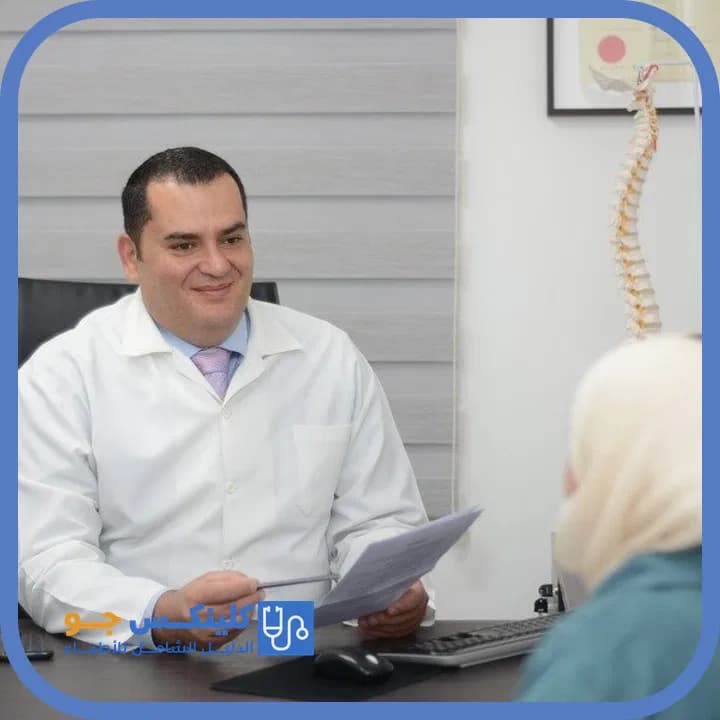
Dr. Feras Mohammad Amin DAifallah Rawagah. Professional field: Neurology. Practice address: Amman, Specialty Hospital, Al-Husseini Medical Building 2, fourth fl…

A brain biopsy takes a very small piece of abnormal brain tissue for microscopic and molecular examination. It is most often performed stereotactically through a small hole in the skull, using either a fixation frame or a surgical navigation system that defines the needle trajectory to millimetre accuracy. In selected cases the sample is taken endoscopically or through a limited open exposure.
Biopsy is considered when imaging cannot distinguish between a tumour, inflammation, an abscess and demyelinating disease, or when the lesion is deep, multiple, or sited where removal would be unsafe or of no benefit. The biopsy result is what determines the route ahead: cancer treatment, anti-infective therapy, immune-suppressing treatment, or simply surveillance.
The plan is made by a multidisciplinary team of neurosurgeon, neuroradiologist, oncologist, pathologist and sometimes infectious disease physician, because choosing the exact point from which tissue is taken depends on precise reading of the images. Whether a person is a candidate is decided by clinical examination and image review, not by reading a page.
Some limits must be understood clearly. A biopsy is a diagnostic step, not a treatment. It does not shrink the lesion, does not relieve pressure inside the skull, and does not improve symptoms in itself. In a proportion of cases the sample is inconclusive and has to be repeated, or a wider removal becomes necessary. The result takes days, and the molecular tests that guide modern treatment take longer still; this wait is normal and is not a delay. If removal is both feasible and beneficial from the outset, it may be preferred over biopsy.
The procedure is carried out under general or local anaesthesia depending on the situation, is relatively short, and is followed by an observation stay and a scan to confirm there is no bleeding, then an appointment to explain the result and set out the plan.

Procedure steps
- 1
Image review and choice of the sampling point
The MRI is studied in detail to choose the most representative part of the lesion and to avoid necrotic areas that yield no diagnosis. The entry point and trajectory are then planned to avoid blood vessels, ventricles and functional areas.
- 2
Fixation and planning imaging
The head is fixed in a stereotactic frame or the facial contours are registered in the navigation system, and planning imaging is fused with the earlier scans to calculate the final coordinates. Any error at this stage translates into millimetres inside the brain.
- 3
Anaesthesia and a small skull opening
General or local anaesthesia is given according to the site of the lesion and the patient's condition, a small area of hair is shaved, and a short incision and a hole usually no wider than a pen are made; this is the corridor through which the needle passes.
- 4
Taking the sample and immediate adequacy check
The biopsy needle is advanced along the calculated trajectory and small samples are taken from different levels. Part of the tissue may be examined immediately in the laboratory to confirm that it is adequate diseased tissue before the operation ends, which reduces the chance of a repeat procedure.
- 5
Closure, monitoring and explaining the result
The incision is closed with a few sutures and the patient is monitored for some hours with a scan to confirm there is no bleeding around the biopsy site. An appointment is then set to explain the histological and molecular result and to set the treatment plan at the team meeting.
Before the procedure
Tell the team about all your medicines, specifically blood thinners, anticoagulants, aspirin and any herbal supplements that increase bleeding tendency, and stop none of them on your own; follow your doctor's instructions and timing. Complete clotting tests and a blood count before the date. If you take antiseizure medicines, continue them and do not miss a dose on the day unless directly instructed. Have the planning MRI at the time the team specifies, because how recent it is affects the accuracy of the trajectory. Report any skin infection, fever or raised blood pressure. Follow the fasting time before anaesthesia, arrange someone to accompany and drive you, and do not expect a final result on the same day.
After the procedure
Rest on the first day, sleep with your head slightly raised, and avoid lifting, straining, bending and vigorous exercise for the period your doctor specifies. Keep the wound site clean and dry, do not rub the hair over it, and attend the appointment for suture removal. Continue all your medicines exactly as prescribed, especially antiseizure treatment. Mild headache or local soreness in the first two days is not a cause for alarm, but note any change in its severity. Remember that the pathology result takes days and molecular tests take longer; this wait is normal.
Seek emergency care immediately for headache that becomes progressively more severe with vomiting, drowsiness or confusion; new weakness or numbness in the face or limbs; difficulty speaking or understanding speech; a seizure; a sudden change in vision; fever with neck stiffness; or fluid or blood leaking from the wound site or swelling of it.
Expected duration
Usually 45 to 90 minutes, with a single overnight stay for observation in most cases.
Doctors who provide Brain Biopsy
Dr Majdi Ramadan provides neurosurgical and spine consultations at Ibn Al-Haytham Hospital’s outpatient clinics in Amman. His specialty includes spine surgery a…
Alaa Abdul Rahman Al Mousa is a neurosurgeon whose advertised consultations cover brain and spine concerns, including tumours, disc and vertebral problems and p…
Amer Abu Al Ragheb is a consultant neurosurgeon and spine surgeon at Abdali Hospital. His clinical interests include brain and spinal cord tumours, cerebral ane…
Luay Abu Alia practises neurosurgery and spine surgery at Abdali Hospital in Amman. His clinical interests include brain and pituitary tumours, disc disease, hy…
Zuhair Abu Salma is a consultant neurosurgeon with Jordanian board certification and fellowship training in Paris in brain, epilepsy and movement-disorder surge…
Finding Brain Biopsy services in Jordan
Which doctors are listed for Brain Biopsy in Jordan?
There are currently 6 doctor profiles linked to Brain Biopsy on ClinicsJo. Review the listed services and contact the practice to confirm availability with the doctor and branch you choose.
How can I find an appointment for Brain Biopsy?
Start with an available doctor's profile and use the contact or booking options shown there. Confirm the service, practice location and appointment time with the clinic. If this list is empty, broaden your search using the directory links on this page.
What does Brain Biopsy cost in Jordan?
Ask the practice for the current price and what it includes. A consultation fee shown on a profile is not necessarily the price of a procedure, tests or follow-up. Confirm any additional charges and insurance arrangements before your visit.
How much does Brain Biopsy cost in Jordan?
No clinic on ClinicsJo has published a price for Brain Biopsy yet, so we do not quote an estimated figure. What is published is the consultation fee: 17–30 JOD (profiles: 10). The doctor sets the treatment price after assessing your case.
What clinics and doctors have published on ClinicsJo
- Published consultation fee — Majdi Abu Oweideh: 17 JOD consultation fee.
- Published consultation fee — Feras Mohammad Amin DAifallah Rawagah: 25 JOD consultation fee.
- Published consultation fee — Alaa Abdul Rahman Al Mousa: 30 JOD consultation fee.
- Published consultation fee — Mazen Samaha: 30 JOD consultation fee.
- Published consultation fee — Ahmad Sheikh Qasem: 30 JOD consultation fee.
Other doctor profiles with a published fee: 5.
What sets the price of Brain Biopsy?
- The exact test and the equipment used
- Whether the price includes the doctor's report and reading
- Contrast dye, sedation or special preparation
- Whether a referral or a consultation is needed first
- Insurance coverage and your share of the cost
Expected duration (from the procedure guide): Usually 45 to 90 minutes, with a single overnight stay for observation in most cases.
How to ask about the price
Before booking, ask the clinic for the all-inclusive price and what it covers, any extra tests or scans, how many follow-up visits are included, the payment options, and whether your insurance is accepted. You can reach them through the contact details on the doctor and clinic profiles on this page.
The figures above were published by the clinics and doctors themselves on ClinicsJo and may change. We do not estimate prices. Confirm the all-inclusive price with the clinic before booking. Offers on ClinicsJo