
Amman Eye Clinic
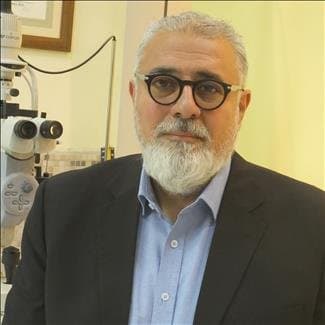
Dr. Mohammad Abu Samak is a consultant ophthalmologist with vitreoretinal fellowship training at Henry Ford Hospital in the United States. His clinical work cov…
Hours not listedInsurance not specified5 views
Trusted medical platform in Jordan

A cataract is clouding of the eye’s natural lens that develops gradually — most often with age — reducing the amount and clarity of light reaching the retina. Characteristic symptoms are slowly increasing blur, glare and dazzle from lights with harder night driving, washed-out colours, and repeatedly changing spectacle prescriptions. The fundamental fact: **no drug or eye drop removes a cataract** — the only effective treatment is surgical, replacing the clouded lens with a clear artificial one. Surgery is usually performed under local anaesthesia through a very small incision, with the lens broken up by ultrasound (phacoemulsification) and aspirated, then a folded intraocular lens implanted that unfolds in place. Timing no longer waits for the cataract to “ripen” as it once did; the decision now rests on how much the blur affects the patient’s daily life, work and driving, and on other medical indications. Choosing the intraocular lens deserves a frank discussion beforehand, because it determines the shape of vision afterwards: a monofocal lens gives excellent clarity at one distance (usually far) with reading glasses needed, while other lenses reduce spectacle dependence but may come with optical phenomena such as night haloes and variation in contrast sensitivity. There is no single “best lens for everyone”; the best is what fits the patient’s eye and lifestyle. Retinal disease, raised eye pressure or an unhealthy cornea affect the expected outcome and must be discussed in advance.
A full eye examination with precise biometry to calculate intraocular lens power, plus assessment of retina, cornea and eye pressure, since these determine the expected outcome.
The difference between monofocal lenses and types reducing spectacle dependence is discussed, including possible optical phenomena, and the choice is matched to lifestyle.
The eye is anaesthetised locally and a very small corneal incision is made; the patient is usually awake and feels pressure and bright light rather than pain.
The clouded lens is emulsified by ultrasound and aspirated, then the folded artificial lens is implanted within the same capsule and unfolds into position.
Anti-inflammatory and anti-infective drops on a set schedule with staged reviews; vision usually improves within days and the final spectacle prescription is measured after stabilisation.
Tell your surgeon about all medications, especially alpha-blocker prostate drugs, since they affect pupil behaviour during surgery and the surgeon must know in advance, and any blood thinners. Report previous eye surgery, LASIK, retinal disease, diabetes or raised eye pressure. Stop contact lenses as instructed before measurements. **Discuss the intraocular lens type and your spectacle expectations before the day of surgery, not on it** — this decision should not be rushed. Fast if asked, wear no eye make-up, and arrange transport both ways.
Do not rub or press the eye, and wear the shield for sleep if asked. Use the drops exactly on schedule and do not stop them because vision improved — inflammation can return silently. Avoid bending to lift heavy objects, swimming, saunas, dust and eye make-up until permitted. Expect a mild gritty sensation, redness of the white of the eye and glare in the first days. Do not judge your spectacle prescription until your surgeon says vision has stabilised. Seek urgent care immediately for severe pain, sudden visual deterioration, flashes, a shadow creeping across the field, or increasing redness with discharge — do not wait for the scheduled visit.
15–30 minutes per eye, with same-day discharge
Dr. Mohammad Abu Samak is a consultant ophthalmologist with vitreoretinal fellowship training at Henry Ford Hospital in the United States. His clinical work cov…
There are currently 1 doctor profiles linked to Cataract Surgery on ClinicsJo. Review the listed services and contact the practice to confirm availability with the doctor and branch you choose.
Start with an available doctor's profile and use the contact or booking options shown there. Confirm the service, practice location and appointment time with the clinic. If this list is empty, broaden your search using the directory links on this page.
Ask the practice for the current price and what it includes. A consultation fee shown on a profile is not necessarily the price of a procedure, tests or follow-up. Confirm any additional charges and insurance arrangements before your visit.