Catheter ablation treats a heart rhythm disorder from inside the heart itself. Thin catheters are introduced through a vein, usually at the top of the thigh, and guided into the heart under X-ray imaging. An electrical map of the heart is then created to pinpoint the tissue or pathway responsible for the arrhythmia, and that tissue is neutralised with heat or with cold so the abnormal electrical circuit can no longer function. Before finishing, the team confirms the result with pacing and measurement rather than assuming it.
The procedure is considered for recurrent supraventricular tachycardia or an extra electrical pathway, for atrial tachycardia, for troublesome atrial fibrillation when medication has not been sufficient or has not been tolerated, for some forms of ventricular tachycardia, and for people with an implanted defibrillator who are receiving repeated shocks. It is usually done under local anaesthesia with sedation, and under general anaesthesia in longer or more complex cases.
Its limits are explicit. It treats the electrics, not the arteries: it does not open a blocked coronary artery, does not repair a valve, does not cure heart failure, and does not remove the need to control blood pressure, diabetes and weight. The likelihood of success differs by arrhythmia: very high for extra pathways and supraventricular tachycardia, and far less predictable in persistent atrial fibrillation, where a second procedure may be required. In atrial fibrillation the procedure does not by itself cancel the decision about anticoagulation, and other heart medicines are stopped only on your doctor's instruction.
The possible complications should be understood before you consent: bruising, bleeding or a haematoma at the access site, injury to a blood vessel, a collection of fluid around the heart that compresses it, an unexpected need for a pacemaker if the normal conduction pathway is affected, a rare stroke, and very rarely injury to the oesophagus in left-sided procedures. Suitability is determined by clinical examination, an ECG, extended monitoring and cardiac imaging, not by reading.
1 specialists
Procedure steps
1
Assessment and medication planning
Rhythm recordings, the ECG, cardiac imaging, blood tests and kidney function are reviewed, and the medication plan for the procedure is set: what continues, what is paused and when — on the doctor's instruction alone. The expected benefit and possible complications are explained and your consent is documented.
2
Vascular access and catheter insertion
The access site at the top of the thigh is anaesthetised locally and sedation is given, then fine sheaths are placed in the vein and the catheters are advanced to the heart under X-ray guidance. You remain awake or asleep according to the agreed anaesthetic plan, with continuous cardiac monitoring throughout.
3
The electrical study and mapping
Electrical signals are recorded from inside the heart and the rhythm is gently stimulated to bring on the arrhythmia and locate its origin precisely on a three-dimensional map. This stage is the real diagnosis, and it can change the plan if the arrhythmia turns out to be a different type from the one expected.
4
Ablation and confirming the result
The responsible tissue is neutralised with heat or cold at defined points, then pacing and measurement are repeated to confirm that the abnormal circuit no longer conducts. Proximity to the normal conduction pathway is watched closely to minimise the risk of needing a pacemaker.
5
Access-site compression and monitoring
The sheaths are withdrawn and the access site is compressed or closed with a dedicated device, and you lie flat on your back for several hours to protect the vein. Your pulse, blood pressure and the access site are monitored, the ECG is repeated before discharge, and the medication and follow-up plan is set.
Before the procedure
Bring a written list of all your medicines and supplements, along with your ECGs, monitor reports and cardiac imaging. Tell your doctor about blood thinners, anticoagulants, antiplatelet drugs and diabetes medication, and never stop or adjust anything yourself; the timing of pausing or continuing is a purely medical decision. Report kidney or thyroid disease, allergy to contrast dye, anaesthetic or dressings, and any possibility of pregnancy. Mention any previous cardiac surgery, catheterisation or implanted device. Follow the fasting period set by the team, shave the upper thighs if asked, shower on the morning of the appointment, and arrange for someone to drive you and stay with you after discharge.
After the procedure
Stay lying flat for as long as the team instructs, do not bend or strain the thigh, and get up for the first time with help. Avoid heavy lifting, hard exertion, swimming and hot baths for at least a week or until your doctor allows them. Take your medicines exactly as prescribed, and never stop an anticoagulant on your own after the procedure. Intermittent palpitations in the first weeks are common while the tissue heals and do not necessarily mean the procedure failed, but report them to your doctor. **Seek care immediately — or call an ambulance — for bleeding, rapidly increasing swelling or severe pain at the access site, a cold, pale or numb leg, chest pain or breathlessness, sudden fainting with no warning, a very fast pulse that will not settle, fever, or pain on swallowing or severe pain high in the back.**
Expected duration
Usually two to four hours depending on the type and complexity of the arrhythmia, followed by four to six hours lying flat to protect the access site, with discharge the same day or after one night in hospital.
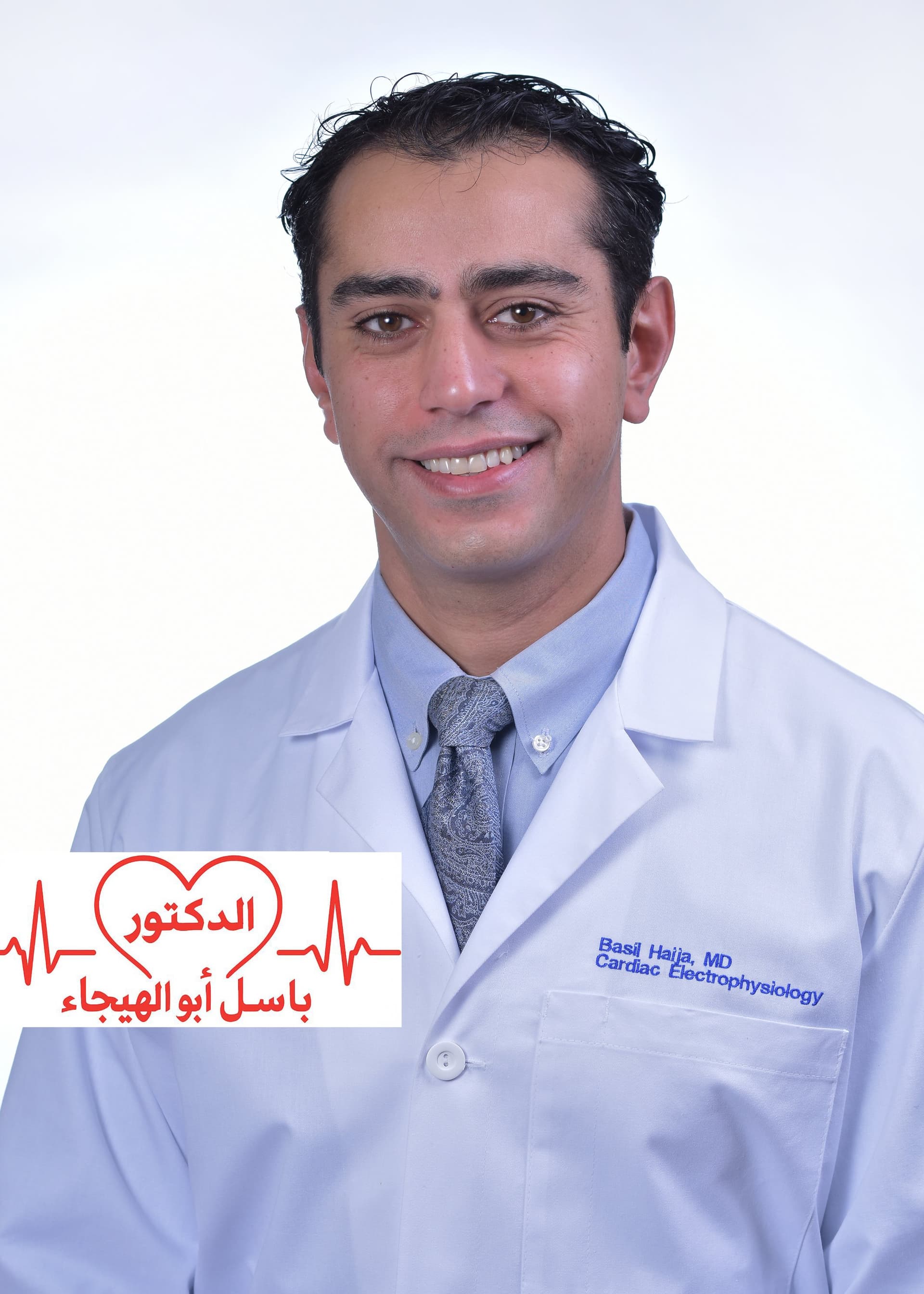
Dr. Basil Abu-El-Haija is a consultant cardiologist and cardiac electrophysiologist focused on arrhythmias and cardiac rhythm devices. After graduating from the…
Finding Catheter , Cardiac, Ablation services in Jordan
Which doctors are listed for Catheter , Cardiac, Ablation in Jordan?
There are currently 1 doctor profiles linked to Catheter , Cardiac, Ablation on ClinicsJo. Review the listed services and contact the practice to confirm availability with the doctor and branch you choose.
How can I find an appointment for Catheter , Cardiac, Ablation?
Start with an available doctor's profile and use the contact or booking options shown there. Confirm the service, practice location and appointment time with the clinic. If this list is empty, broaden your search using the directory links on this page.
What does Catheter , Cardiac, Ablation cost in Jordan?
Ask the practice for the current price and what it includes. A consultation fee shown on a profile is not necessarily the price of a procedure, tests or follow-up. Confirm any additional charges and insurance arrangements before your visit.
Explore related Cardiac Electrophysiology doctor directories