Istiklal Hospital Outpatient Clinics
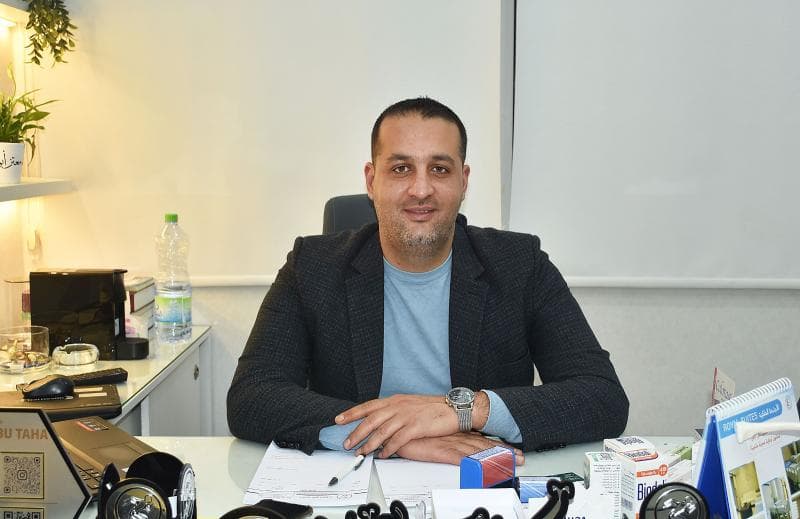
Dr Mutaz Saleh Abu Taha practices orthopedics in Amman. His official profile describes simple and complex fracture care, hip, knee and shoulder replacement, kne…
Hours not listedInsurance not specified3 views
Trusted medical platform in Jordan

Hip replacement is an operation in which the worn femoral head is removed and replaced by a ball mounted on a stem seated inside the thigh bone, while the pelvic socket is lined with a metal cup and a smooth bearing surface, restoring gliding movement without painful bone-on-bone contact. It is usually considered in advanced hip arthritis, avascular necrosis of the femoral head, after certain femoral neck fractures, and in long-standing hip dysplasia or deformity, once non-surgical measures such as physiotherapy, load reduction and physician-prescribed medication have failed. The practical picture surgeons hear most often is groin or upper-thigh pain that worsens with movement and rotation and turns putting on socks and shoes, cutting toenails or sleeping on the side into a struggle. Candidacy is established by clinical examination read together with imaging — never by imaging alone. There are clear limits. The operation does not treat pain arising from the lower back or a compressed nerve root, which is why the surgeon carefully separates hip pain from spinal pain before deciding; both conditions can coexist, and the dominant one is addressed first. It does not restore youthful joint flexibility, and during the early weeks certain positions that risk dislocation are avoided — deep flexion beyond ninety degrees, crossing the legs and forceful rotation of the limb. The list of restrictions differs with the surgical approach, so ask which list applies to you. A slight perceived difference in leg length may persist, and the implant has a finite service life that may eventually require revision. Preventing deep vein thrombosis is a core part of the plan: preventive medication for a period your surgeon defines, early mobilisation, ankle exercises, adequate fluids, and compression stockings or devices. Watch for pain, swelling, warmth or redness in one leg, and for sudden breathlessness, chest pain or palpitations — signs that require emergency care without delay. Rehabilitation determines the outcome. Assisted walking usually begins the same or the next day, weight-bearing progresses according to the fixation used and your surgeon's instructions, and many people regain daily independence within four to eight weeks while strength and gait keep improving for several months. Strengthening the gluteal and thigh muscles and retraining your walking pattern are what prevent a residual limp once the pain has gone.
Clinical examination distinguishes hip from spinal pain and records range of motion and leg lengths, while X-rays are used to template implant size and position. Your medications and chronic conditions are reviewed, and any dental, urinary or skin infection is identified and treated before surgery.
Spinal or general anaesthesia is selected by the anaesthetist, a prophylactic antibiotic dose is given, and you are positioned on the table according to the chosen approach — anterior, posterior or lateral — with the limb prepared, draped and thromboprophylaxis measures in place.
The joint is opened, the damaged femoral head is cut and removed, the acetabulum is prepared and the cup with its liner is fixed, then the femoral canal is prepared for the stem, seated either press-fit or with cement. Head size and neck length are chosen to fine-tune stability, leg length and soft-tissue tension.
The joint is taken through different arcs of movement to confirm stability and resistance to dislocation, leg lengths are compared, bleeding is controlled, the wound is irrigated and closed in layers with repair of the divided muscle and capsule. A post-operative check X-ray may confirm component position.
You stand and walk with assistance the same or the next day, and are trained in using a walker or cane, stairs and car transfers, and given the precaution list specific to your surgical approach and how long it applies. A gluteal and thigh strengthening and gait-retraining programme starts, and the duration of clot prevention and follow-up dates are explained.
Tell your doctor about all your medication, especially blood thinners, diabetes drugs, steroids, immune-modulating treatments and herbal supplements, and stop nothing on your own. Stop smoking several weeks before surgery and optimise blood sugar, blood pressure and weight as far as possible. Report any dental, urinary or skin infection before the date, as it is treated first to protect the implant. Strengthen your gluteal and thigh muscles and practise using a walker beforehand — it shortens rehabilitation. Prepare your home for the early weeks: a raised toilet seat, a firm chair of adequate height with armrests, a long-handled sock aid and a reacher, removal of loose rugs and cables, and a bed on an easily reached floor. Arrange a companion and comfortable transport, follow fasting instructions, do not shave the surgical site with a razor, bring your X-rays, reports and medication list on admission, and ask your surgeon explicitly for the precaution list that matches your surgical approach.
**Call emergency services immediately if you develop:** sudden breathlessness, chest pain, palpitations or coughing blood (suspected pulmonary embolism); pain, swelling or warmth in one leg (deep vein thrombosis); a temperature of 38C or above with shivering; pus or discharge from the wound or wound opening; sudden severe pain with a shortened, rotated limb you cannot move (suspected dislocation of the implant); or new numbness or weakness in the foot. Day to day: move your ankles every hour, take frequent short walks rather than one long outing, drink enough fluid, and take clot prevention exactly as prescribed for the whole period without stopping it yourself. Follow your personal precaution list: avoid deep hip flexion, do not cross your legs, do not twist over the operated limb, and avoid low chairs and deep sofas. Keep the wound clean and dry and do not submerge it until your surgeon agrees. Do your exercises daily — rehabilitation is what turns a well-done operation into a normal, limp-free walk. Tell any future dentist or surgeon that you have a joint implant.
Surgery usually takes 60 to 120 minutes, hospital stay is one to three days, and daily independence is often regained within 4 to 8 weeks, with strength and gait improving for several months.
Dr Mutaz Saleh Abu Taha practices orthopedics in Amman. His official profile describes simple and complex fracture care, hip, knee and shoulder replacement, kne…
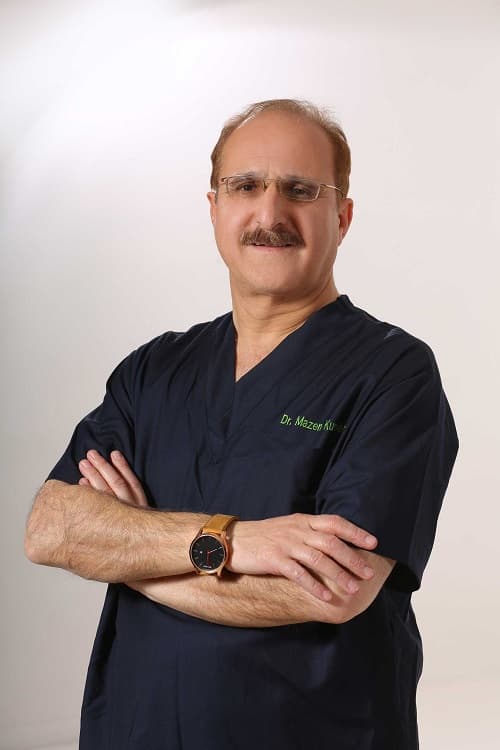
Dr Mazen Kurdieh practices orthopedics in Amman. Qualifications include Jordanian Board in Orthopaedic Surgery; Jordanian Board in General Surgery; German Fello…
There are currently 2 doctor profiles linked to Hip Replacement on ClinicsJo. Review the listed services and contact the practice to confirm availability with the doctor and branch you choose.
Start with an available doctor's profile and use the contact or booking options shown there. Confirm the service, practice location and appointment time with the clinic. If this list is empty, broaden your search using the directory links on this page.
Ask the practice for the current price and what it includes. A consultation fee shown on a profile is not necessarily the price of a procedure, tests or follow-up. Confirm any additional charges and insurance arrangements before your visit.