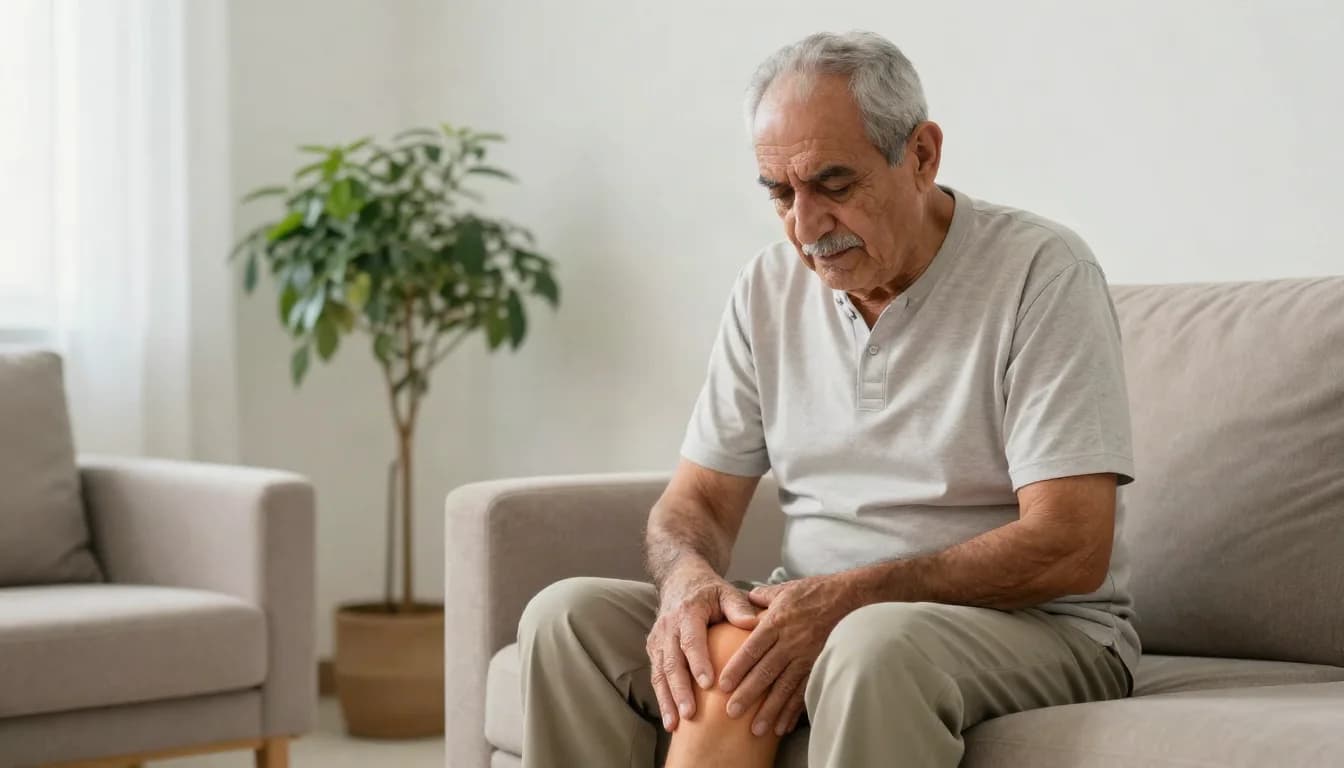
Osteoporosis is a loss of bone mass together with deterioration of the fine internal architecture of bone, leaving it less able to bear load, so it breaks under a force that would not break healthy bone. It is a **silent disease**: it does not itself cause back or joint pain, it cannot be felt, and **the first symptom is often a fracture**. Treatment is therefore built on estimating and reducing fracture risk, not on waiting for a complaint.
**A fracture after a simple fall, or a fall from standing height, in anyone over fifty is a signal that demands a full osteoporosis assessment even if the fracture healed perfectly. So is losing more than three centimetres of height, an increasing stoop, or sudden severe back pain after an ordinary movement or a sneeze, because these may be vertebral compression fractures that pass undiagnosed.** Important risk factors include a previous fracture after fifty, a hip fracture in a parent, early menopause, long-term corticosteroid treatment, smoking, low body weight, inactivity, and thyroid, parathyroid, malabsorption or kidney disease.
Treatment is a package, not a single tablet. It starts with risk assessment, bone density measurement and laboratory tests to exclude secondary causes. Vitamin D deficiency is corrected and adequate dietary calcium is ensured under medical supervision. An exercise programme combines weight-bearing activity, resistance work and balance training, progressed safely. Smoking is stopped, alcohol reduced, and every medicine that weakens bone or causes dizziness is reviewed. On that basis the doctor decides whether medication is needed, in what form and for how long, monitors adherence and response, and repeats bone density measurement at intervals they specify.
Fall prevention is part of the treatment itself, not marginal advice, because most hip fractures happen during a fall at home. That means checking and correcting vision, reviewing medicines that cause dizziness or drowsiness, adequate lighting in the hallway, bathroom and night-time route, removing loose rugs and floor cables, fitting grab rails and a non-slip bath mat, wearing firm closed shoes indoors instead of slippers, treating thigh muscle weakness and peripheral neuropathy, and balance training two to three times a week.
The limits must be stated plainly. Treatment lowers fracture risk but does not abolish it, and it does not return bone to what it was at twenty. Calcium or vitamin D alone is not a treatment. No food, supplement or device treats osteoporosis on its own. Success cannot be judged by pain disappearing, because the disease is painless to begin with, and a bone density figure is one number inside a wider picture that includes your age and previous fractures. Candidacy and the plan are decided by clinical assessment and testing, not by reading.
1 specialists
Procedure steps
1
Risk and history assessment
The doctor asks about previous fractures and how they happened, hip fracture in the family, age at menopause, corticosteroid use, smoking, daily activity, diet and dairy intake, and any falls in the past year. Height and weight are measured and height is compared with earlier records, and the spine, balance and gait are examined.
2
Bone density measurement and laboratory tests
Bone density is measured by dual-energy X-ray absorptiometry of the hip and lumbar spine, a short, painless test with a low radiation dose. Blood tests are requested to exclude secondary causes, including calcium, vitamin D, kidney function, thyroid and parathyroid, and spine imaging is added when a compression fracture is suspected.
3
Building the non-drug plan
Dietary calcium is brought up to target and vitamin D deficiency corrected under supervision. An exercise programme is prescribed combining walking or other weight-bearing activity with graded resistance work and balance training. The patient is taught to protect the spine and avoid bending forward while lifting, and smoking cessation and alcohol reduction are addressed.
4
The medication decision and its monitoring
The doctor weighs your risk level, the density result and your kidney and dental status to decide whether medication is needed, and explains its form, duration, expected benefit and possible effects. Adherence determines the outcome, treatment must not be stopped or switched on your own initiative, and the plan is reviewed periodically and adjusted according to response.
5
Fall-proofing the home and reassessment
Vision, hearing and dizziness-inducing medicines are reviewed, lighting is improved, loose rugs and cables are removed, bathroom grab rails are fitted, slippers are replaced with firm shoes, and the need for a stick or walker is assessed. Clinical review, height measurement and repeat bone density then follow at the scheduled intervals.
Before the procedure
Bring a written list of all your medicines and supplements to the visit, especially corticosteroids, acid-reducing drugs, sedatives, antidepressants and thyroid medication, since some affect bone or balance. Note the date of any previous fracture and how it happened, your earlier height if you know it, any falls in the past year, and family history, particularly a hip fracture in a parent. Bring previous laboratory results and any earlier bone density report in full, because comparison needs the same machine and the actual numbers rather than a summary. On the day of the density scan, do not take calcium supplements beforehand, wear clothing without metal buttons or zips, and tell the technologist about any possible pregnancy or recent contrast imaging. Write down your questions about which exercises are allowed and how to protect your back at work.
After the procedure
Treat this as a long-term plan rather than a short course. If medication has been prescribed, take it consistently and do not stop it because you feel nothing, since the absence of symptoms does not mean the absence of disease, and speak to your doctor before any change. Keep up the exercise and balance programme every week, maintain the dietary calcium and vitamin D intake set for you, and do not smoke. Tell your dentist that you are on osteoporosis treatment before any extraction or implant, and complete necessary dental work early. Have your vision checked yearly, keep your home well lit and free of floor obstacles, and wear firm shoes indoors.
**Seek medical advice promptly if there is: sudden severe back pain after a minor movement or a sneeze; a noticeable loss of height or an increasing stoop; hip or thigh pain with limping or inability to bear weight after any fall; thigh or groin pain lasting weeks during long-term treatment; jaw pain, jaw swelling or a loose tooth after a dental procedure; or numbness and leg weakness with disturbed bladder control.** And never accept a fracture from a minor fall as bad luck without an osteoporosis assessment.
Expected duration
The first assessment visit usually takes 20 to 40 minutes, a bone density scan takes 10 to 20 minutes and is painless with no special preparation, and the plan is reviewed every three to twelve months with density remeasured typically every one to two years.
Dr Saher Sadeq Al Safarini is a consultant in endocrinology and diabetes who sees adults and children aged one year and older in Shmeisani. He studied medicine …
Which doctors are listed for Osteoporosis Treatment in Jordan?
There are currently 1 doctor profiles linked to Osteoporosis Treatment on ClinicsJo. Review the listed services and contact the practice to confirm availability with the doctor and branch you choose.
How can I find an appointment for Osteoporosis Treatment?
Start with an available doctor's profile and use the contact or booking options shown there. Confirm the service, practice location and appointment time with the clinic. If this list is empty, broaden your search using the directory links on this page.
What does Osteoporosis Treatment cost in Jordan?
Ask the practice for the current price and what it includes. A consultation fee shown on a profile is not necessarily the price of a procedure, tests or follow-up. Confirm any additional charges and insurance arrangements before your visit.