
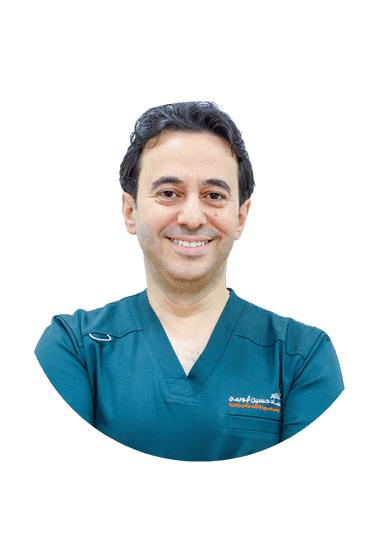
Dr. Imad Hussein Abu Romeh ENT Clinic
Imad Hussein Abu Romeh is an ENT surgery specialist in Amman. His qualifications include a medical degree from Cairo University, the Jordanian Board in otolaryn…
Hours not listedInsurance not specified7 views
Trusted medical platform in Jordan

علاج سوائل الأذن الوسطى (خلف طبلة الأذن)
Middle ear fluid, or otitis media with effusion, is a collection of fluid in the space behind an intact eardrum without the acute features of pain and fever. It results from impaired ventilation of the middle ear through the Eustachian tube, which links the ear to the nasopharynx. It is very common in children after respiratory infections or following acute otitis media, and in them it is associated with adenoid enlargement, allergy and exposure to tobacco smoke. The main problem is not pain but hearing. Fluid prevents the eardrum from vibrating freely and produces a mild to moderate conductive hearing loss, usually without any clear complaint from the child. The condition is therefore noticed through indirect signs: turning the television up, asking for words to be repeated, delayed or regressed pronunciation of certain sounds, inattention and poor concentration in class, ear discomfort or tugging, and slightly less steady balance. The child is not being stubborn or inattentive, as is often assumed. Diagnosis rests on otoscopy together with tympanometry, which demonstrates reduced eardrum mobility, completed by age-appropriate hearing testing and examination of the nose and nasopharynx to identify contributing causes. Management usually begins with observation, because a substantial proportion of cases resolve on their own within weeks to around three months, alongside treatment of allergy and nasal obstruction and keeping the child away from tobacco smoke. If fluid persists in both ears with hearing loss that affects speech or learning, insertion of a small ventilation tube into the eardrum is considered, with adenoidectomy added in selected cases. The limits of treatment should be clear: antihistamines and decongestants do not drain the fluid or hasten its clearance, and repeated antibiotic courses are not a solution for this condition. A ventilation tube restores hearing while it remains in place, usually extrudes on its own within months, and fluid may return afterwards, requiring fresh assessment. An important caution in adults: fluid in one ear without an obvious cause must not be managed as if it were a childhood problem. It calls for endoscopic examination of the nasopharynx to exclude a mass obstructing the Eustachian tube opening, particularly alongside one-sided hearing loss, nasal obstruction, nosebleeds or a neck lump. Suitability for any step is determined by clinical examination and hearing testing, not by symptom duration alone.
The clinician asks about colds, previous ear infections, snoring, mouth breathing and school observations on hearing and attention, then examines both ears with an otoscope to assess the eardrum and any fluid behind it.
Tympanometry documents reduced eardrum mobility and is combined with age-appropriate audiometry. These two tests convert the complaint into an objective measurement that can be compared at follow-up.
The nose and nasopharynx are examined endoscopically to assess the adenoid, allergy and nasal obstruction. In an adult with unilateral fluid this examination is essential to exclude a mass, not an optional extra.
The child is reviewed at defined intervals while allergy and nasal obstruction are treated and tobacco smoke exposure is removed. Many cases resolve spontaneously, and observation here is a measured clinical decision rather than passive waiting.
If fluid persists with significant hearing loss, a small ventilation tube is placed in the eardrum in a short operation, with adenoidectomy where indicated. Hearing improves promptly, and the ear is followed until the tube extrudes.
Before the appointment, write down your observations about your child's hearing: whether the television volume is raised, whether words are asked to be repeated, whether pronunciation has changed, and whether school has commented on attention or responsiveness when called. Tell the doctor how many ear infections have occurred in the past year, about snoring, mouth breathing and any pauses in breathing during sleep, about allergy and asthma, about exposure to tobacco smoke at home or in the car, and about newborn hearing screening results if available. Bring reports from previous tests and visits. Do not use decongestants or antihistamines hoping to drain the fluid before assessment. If hearing testing is planned, try to bring the child rested rather than sleepy or tired, and if surgery is a possibility follow the fasting instructions given to you.
Keep follow-up appointments even if the child seems well, because the hearing loss in this condition is silent and is only detected by measurement. Inform the school of the temporary hearing status and ask for a front-row seat; speak facing the child clearly without shouting; remove tobacco smoke exposure completely and treat nasal obstruction and allergy consistently. After a ventilation tube is placed, follow your surgeon's advice about water, swimming and diving, use any prescribed drops for the stated duration, and never insert cotton buds into the ear. Seek review promptly for persistent or foul-smelling ear discharge, severe pain or bleeding, high fever, dizziness or unsteadiness, new hearing loss or deterioration after an improvement, or clear speech delay or declining school performance. In an adult, seek assessment without delay if the fluid is one-sided or accompanied by nasal obstruction, nosebleeds or a neck lump.
An assessment visit with tympanometry and audiometry usually takes 30 to 45 minutes; placing a ventilation tube, when needed, is a short operation of about 15 to 30 minutes.
Imad Hussein Abu Romeh is an ENT surgery specialist in Amman. His qualifications include a medical degree from Cairo University, the Jordanian Board in otolaryn…
There are currently 1 doctor profiles linked to Treatment of otitis media with effusion on ClinicsJo. Review the listed services and contact the practice to confirm availability with the doctor and branch you choose.
Start with an available doctor's profile and use the contact or booking options shown there. Confirm the service, practice location and appointment time with the clinic. If this list is empty, broaden your search using the directory links on this page.
Ask the practice for the current price and what it includes. A consultation fee shown on a profile is not necessarily the price of a procedure, tests or follow-up. Confirm any additional charges and insurance arrangements before your visit.