
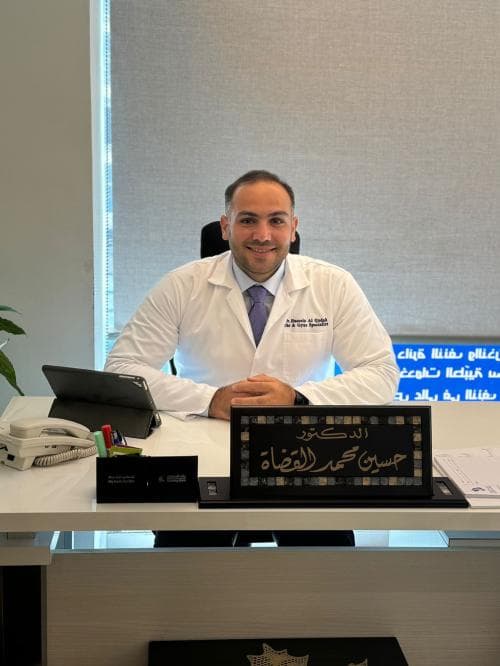
Dr. Hussein Al Qudah Obstetrics and Gynaecology Clinic
Dr. Hussein Mohammad Hussein Al Qudah is a Jordanian board-certified obstetrician and gynaecologist and a University of Jordan medical graduate. His previous ex…
Trusted medical platform in Jordan

Uterine polyp removal is a procedure in which a polyp growing from the lining of the uterus or from the cervix is excised and sent for histological examination. In most cases it is now performed through a hysteroscope: a slim telescope passed through the vagina and cervix with no abdominal incision, so the surgeon sees the polyp directly and removes it from its base under vision. The procedure is usually considered for abnormal bleeding: bleeding between periods, heavy periods, spotting after intercourse, or any bleeding after the menopause, which must never be ignored and always requires full assessment. It is also considered in delayed conception or failed embryo implantation when a polyp lies inside the cavity, and when a polyp grows or looks suspicious on imaging. A small polyp found incidentally without symptoms in a woman of reproductive age may simply be monitored, and suitability is determined by clinical examination and imaging rather than by reading online. One of the most important things to understand is that histology is a non-negotiable part of the procedure. The great majority of polyps are benign, but a small proportion can harbour pre-cancerous change or endometrial cancer, particularly after the menopause or in the presence of other risk factors. For that reason imaging alone is not relied upon, nor is the appearance of the polyp during hysteroscopy; the excised tissue is sent for examination and the result is discussed at the review appointment. This is also why technique matters. Traditional blind curettage may miss a polyp altogether, or remove only part of it and leave the base behind, so hysteroscopically guided excision that visualises and removes the base completely is preferred. The limits should be equally clear: removing a polyp does not correct every cause of bleeding, since a hormonal imbalance, thyroid disorder, fibroids, a clotting disorder or endometrial disease may coexist. It does not guarantee pregnancy even though it improves the uterine environment, and new polyps can form afterwards in some women, so follow-up remains necessary. The procedure itself is short and most women go home the same day, but it remains a medical procedure under anaesthesia with a small number of risks that are explained in advance, including bleeding, infection and, rarely, perforation of the uterus.
The pattern and duration of bleeding and its relation to periods or the menopause are documented, with a pelvic examination and transvaginal ultrasound, and saline infusion sonography or office hysteroscopy may be added to confirm the polyp, its size and its base. Risk factors and hormonal medicines are reviewed, and blood tests and a pregnancy test are requested when needed.
The procedure is usually scheduled after a period has finished, and anaesthetic options are explained: short general anaesthesia, or local cervical anaesthesia for small polyps and office procedures. Blood-thinning medicines are reviewed with the prescribing doctor, fasting time is set, and consent is taken after the procedure and its risks are explained.
A slim hysteroscope is passed through the vagina and cervix with no incision, and the cavity is distended with sterile fluid for a clear view. The surgeon inspects the whole endometrium and both tubal openings, and records the number and position of polyps together with any other findings such as submucosal fibroids or adhesions.
The polyp is excised from its base using fine instruments, a resecting loop or a mechanical morcellating device passed through the hysteroscope, avoiding wide thermal injury to the endometrium so that fertility is preserved. The base is checked for residual tissue, minor bleeding is controlled, and all tissue is collected and sent for histology.
The patient is monitored for about one to two hours after anaesthesia and in most cases goes home the same day. Instructions and warning signs are explained, and an appointment is set to discuss the histology result and the plan that follows: treating another cause of bleeding if present, continuing fertility care, or periodic monitoring if polyps recur.
Before the appointment, record the pattern of bleeding: which days it occurs, how many pads you use, whether there is spotting after intercourse, and any bleeding after the menopause, because these details change the assessment plan. Bring ultrasound reports, any previous hysteroscopy report and your blood tests, plus a list of medicines and supplements including hormonal treatment and contraceptive pills. Tell your doctor if pregnancy is possible, about heart disease, diabetes and thyroid disorders, about clotting problems or prolonged bleeding after any procedure, about any drug or latex allergy, and about blood thinners, which are stopped only on the instruction of the prescriber. Follow the fasting period set by the anaesthetist, arrange someone to take you home because anaesthesia rules out driving that day, and expect the procedure to be scheduled after a period has finished.
Expect period-like cramping that settles within a day or two, and spotting or light bleeding that may last from a few days up to about two weeks, and your next period may be late or differ in heaviness once. Use pads rather than tampons, and avoid intercourse, vaginal pessaries, swimming, public baths and douching for the period your doctor specifies, usually about one to two weeks. Take the prescribed painkiller when needed and do not add anti-inflammatory drugs yourself if you have a bleeding disorder. Do not skip the appointment for your histology result even if all symptoms have gone, since it is the most important remaining step. **Go to the emergency department immediately if you develop: fever or shivering; bleeding that soaks a full pad in under an hour or continues heavily; foul-smelling discharge; severe or increasing abdominal pain, or distension with vomiting; dizziness or fainting; or severe burning and inability to pass urine.**
Usually 10 to 30 minutes, plus one to two hours of recovery and observation before same-day discharge.
Dr. Hussein Mohammad Hussein Al Qudah is a Jordanian board-certified obstetrician and gynaecologist and a University of Jordan medical graduate. His previous ex…
There are currently 1 doctor profiles linked to Uterine polyp removal on ClinicsJo. Review the listed services and contact the practice to confirm availability with the doctor and branch you choose.
Start with an available doctor's profile and use the contact or booking options shown there. Confirm the service, practice location and appointment time with the clinic. If this list is empty, broaden your search using the directory links on this page.
Ask the practice for the current price and what it includes. A consultation fee shown on a profile is not necessarily the price of a procedure, tests or follow-up. Confirm any additional charges and insurance arrangements before your visit.