
Dr Reem Al Qudah Clinic
Dr Reem Al Qudah is a dermatologist and venereologist with the Jordanian Board in dermatology. Her practice combines care for skin, hair and nail disorders with…
Hours not listedInsurance not specified10 views
Trusted medical platform in Jordan
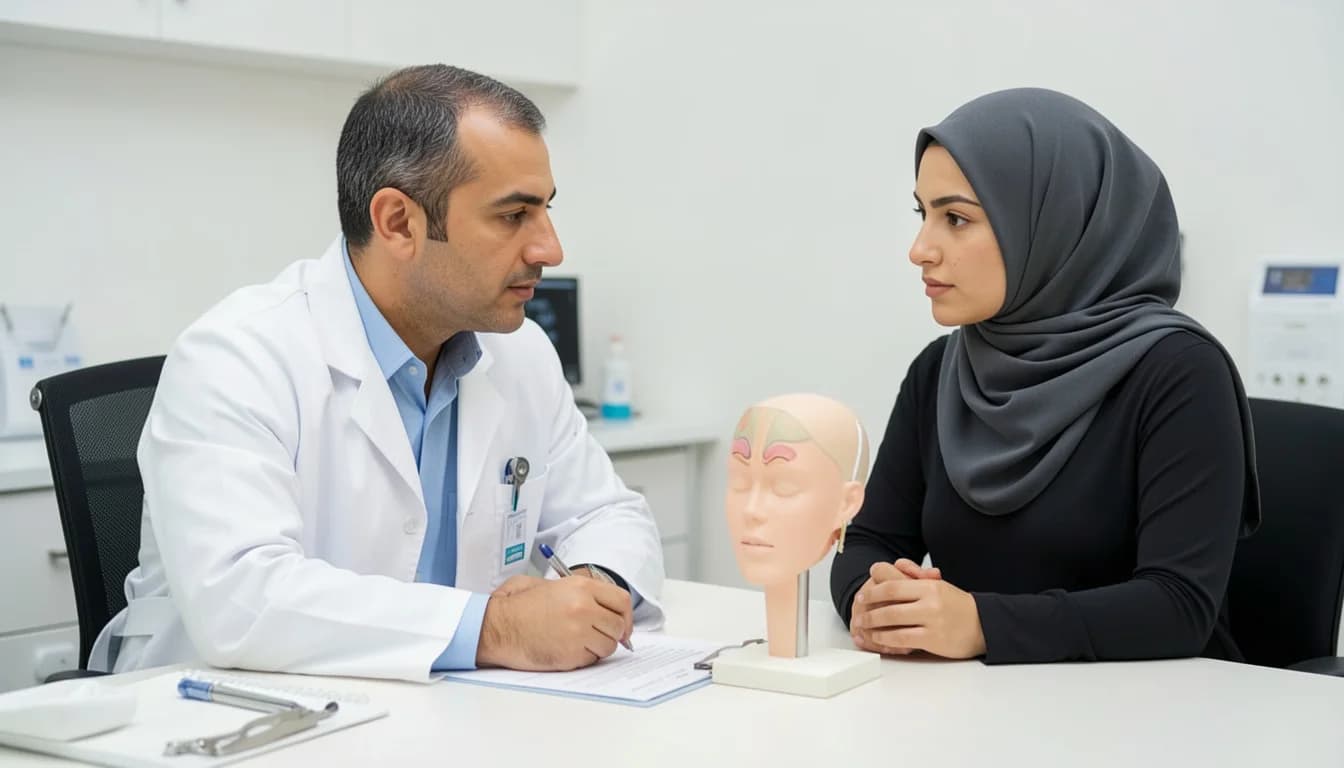
A wart is a benign, rough-surfaced skin growth caused by human papillomavirus infecting the outer layer of the skin. Wart removal is a group of procedures aimed at destroying the affected tissue and prompting the immune system to clear the virus. It spreads by direct contact and from damp surfaces — pool and public bathroom floors, gym changing rooms — and through shared towels, razors, nail tools and beauty instruments; it also spreads from one wart to other skin on the same person through scratching. The technique is chosen according to the site, size and number of warts and the patient's age. Cryotherapy with liquid nitrogen is given in sessions typically two to four weeks apart. Topical keratolytic preparations are applied daily for weeks while the surrounding skin is protected. Curettage, electrocautery or laser suits large or resistant warts. Topical immune-stimulating treatments or injections into the wart itself are reserved for stubborn, multiple lesions. Genital warts, warts around the nails and warts on the face need specialist assessment and a different approach. **The limits are fundamental: every method removes the visible growth but does not kill virus lying dormant in the normal-looking skin around it. Warts can therefore return in the same place or nearby and need further sessions. No single session guarantees permanent clearance, and plantar warts on the sole are among the most stubborn, sometimes needing months of repeated treatment.** Many warts in children clear on their own with time, so watchful waiting with sensible precautions can be a reasonable option in selected cases decided by the doctor. Not every rough growth is a wart: corns, actinic keratoses, skin tags and some skin tumours look similar. **Any growth that bleeds spontaneously, enlarges quickly, ulcerates, or fails to respond to correct treatment after several sessions needs a biopsy to rule out skin cancer.** People with diabetes, poor circulation, immune deficiency, or who take immunosuppressive medication need a more cautious plan and closer supervision, and should not use strong home keratolytics on the feet. Finally, some persistent myths: warts have nothing to do with touching frogs, with the evil eye, or with poor hygiene. Cutting them with scissors or a blade, or burning them with caustic household substances, garlic or salt, spreads the virus into adjacent skin and causes infection and a permanent scar. Eligibility for each method is decided by clinical examination, not from a photograph.
The doctor inspects the growth with the naked eye and a dermatoscope and distinguishes a wart from a corn and from other lesions: a wart interrupts the normal skin lines, shows fine dark dots and bleeds when pared. Questions cover how long it has been there, whether it is spreading, any condition that weakens immunity, and previous failed treatments.
You are told the difference between cryotherapy, home topical treatment, curettage and laser, the expected number of sessions, the discomfort involved, the likelihood of recurrence, and how much longer soles take to heal. A realistic plan is agreed instead of expecting a single session to finish the job.
In cryotherapy, liquid nitrogen is applied to the wart in short measured cycles until the tissue whitens; stinging lasts a few minutes and a blister may form the next day. For curettage, the area is numbed with local anaesthetic, the thickened keratin and infected tissue are removed, bleeding is controlled and the wound is dressed.
You may be asked to soak and dry the area, then apply the prescribed preparation to the wart alone while shielding the healthy skin around it, and to thin the hard layer gently with a file kept for your own use only. The area is covered to limit spread of the virus, and scratching — which carries it to the fingers — must be avoided.
The case is reviewed every two to four weeks to judge response and to adjust or combine methods. You are advised not to share towels, razors or nail tools, to wear sandals in public showers and pools, to avoid nail biting and scratching the wart, and to treat all warts together, which reduces the chance of relapse.
Tell the doctor how many warts you have, how long they have been present and exactly where they all are — including hidden ones between the toes, under a nail or in the scalp — because leaving one behind restarts the problem. Mention chronic illness, especially diabetes, poor circulation, nerve damage and immune deficiency, and any immunosuppressive medicine or long-term steroid, since these change the chosen method completely. Women should mention pregnancy or breastfeeding, as some topical preparations are unsuitable. Say whether you have tried a home remedy, a caustic substance or cutting with scissors, and what happened afterwards. Do not shave the area or rub the wart before the appointment, and apply nothing to it for the preceding two days. Wear roomy, comfortable shoes if the wart is on the foot, because the site will be tender after the session.
Expect stinging or mild pain for some hours after cryotherapy; a blister or dark patch may appear, followed by a crust that falls off over days to two weeks. Do not open the blister, pull off the crust or cut the tissue; wash gently, dry and cover with a clean dressing. Avoid pools and public showers until the skin has healed, do not share towels, razors or nail files, and do not scratch the wart and then touch your face or fingers. Keep your appointments, because even responsive warts need repeated sessions. **Seek review immediately if: throbbing pain increases after the second day; redness spreads with local heat or red streaks tracking upwards; there is pus or odour; you develop a fever; bleeding does not stop with pressure; or a finger or toe becomes numb or changes colour. See the doctor as well if the growth bleeds on its own, enlarges quickly, ulcerates, or fails to respond after several correct sessions, since it may need a biopsy to rule out skin cancer.** If you have diabetes, seek review for any foot wound, however small.
A cryotherapy session usually takes 5 to 15 minutes and is repeated every two to four weeks; most cases need anywhere from two to several sessions depending on the site and number of warts.
Dr Reem Al Qudah is a dermatologist and venereologist with the Jordanian Board in dermatology. Her practice combines care for skin, hair and nail disorders with…
There are currently 1 doctor profiles linked to Warts Removal on ClinicsJo. Review the listed services and contact the practice to confirm availability with the doctor and branch you choose.
Start with an available doctor's profile and use the contact or booking options shown there. Confirm the service, practice location and appointment time with the clinic. If this list is empty, broaden your search using the directory links on this page.
Ask the practice for the current price and what it includes. A consultation fee shown on a profile is not necessarily the price of a procedure, tests or follow-up. Confirm any additional charges and insurance arrangements before your visit.