Eczema, or atopic dermatitis, is a chronic inflammatory skin disease that appears as dryness, itching and rough red patches, typically in the skin folds, the inner elbow and knee, the face in children, and the neck and hands in adults. The underlying problem is a defective skin barrier that loses water quickly and lets irritants and bacteria through, combined with an over-reactive immune response. It is **not contagious**, does not spread by touch, and is not caused by poor hygiene.
The correct expectation is that eczema is a condition **controlled rather than cured in one stroke**: it settles and flares in cycles, and many children improve markedly as they grow, yet the skin remains prone to dryness and irritation. Treatment therefore runs on two parallel tracks: treating the active flare, and continuous daily skin care that lengthens the quiet periods.
The cornerstone is generous daily moisturising even when there are no symptoms, with short lukewarm baths, a gentle fragrance-free cleanser, and application of emollient immediately after bathing. Active inflammation is treated with a topical anti-inflammatory of a potency matched to the site and the patient's age, for a defined period, given as treatment bursts. Non-steroidal alternatives may be used on the face, eyelids and folds and for longer-term maintenance. Wet wrap therapy is used in severe flares, and bacterial skin infection is treated only when there is evidence of it. Antihistamines may be prescribed to aid sleep on nights of severe itching, but they are not a treatment for the eczema itself. Severe resistant disease may need phototherapy or systemic or biologic medicines under supervision with monitoring tests.
**A two-sided warning about topical steroids:** prolonged unsupervised use of potent ointments, especially on the face, eyelids, folds and nappy area, thins the skin, dilates surface vessels, causes stretch marks and a rosacea-like eruption, and may be absorbed systemically in children. Conversely, excessive fear of steroids and using less than the prescribed amount or duration is one of the commonest reasons treatment fails and an acute flare becomes chronic. The correct approach is to use exactly the prescribed potency for exactly the prescribed period, then stop as planned, neither less nor more, and never to use unlabelled mixtures, skin-lightening creams or products passed on by someone else.
The limits matter too: treatment does not prevent every flare, it never replaces the moisturiser, and improvement does not mean daily care can stop. Diet is not a treatment for eczema, and depriving a child of staple foods without a genuine allergy diagnosis can harm growth; any suspicion of food allergy is assessed through history and testing rather than random elimination. Suitability for any line of treatment is determined by clinical examination.
3 specialists
Procedure steps
1
Diagnosis, severity and trigger identification
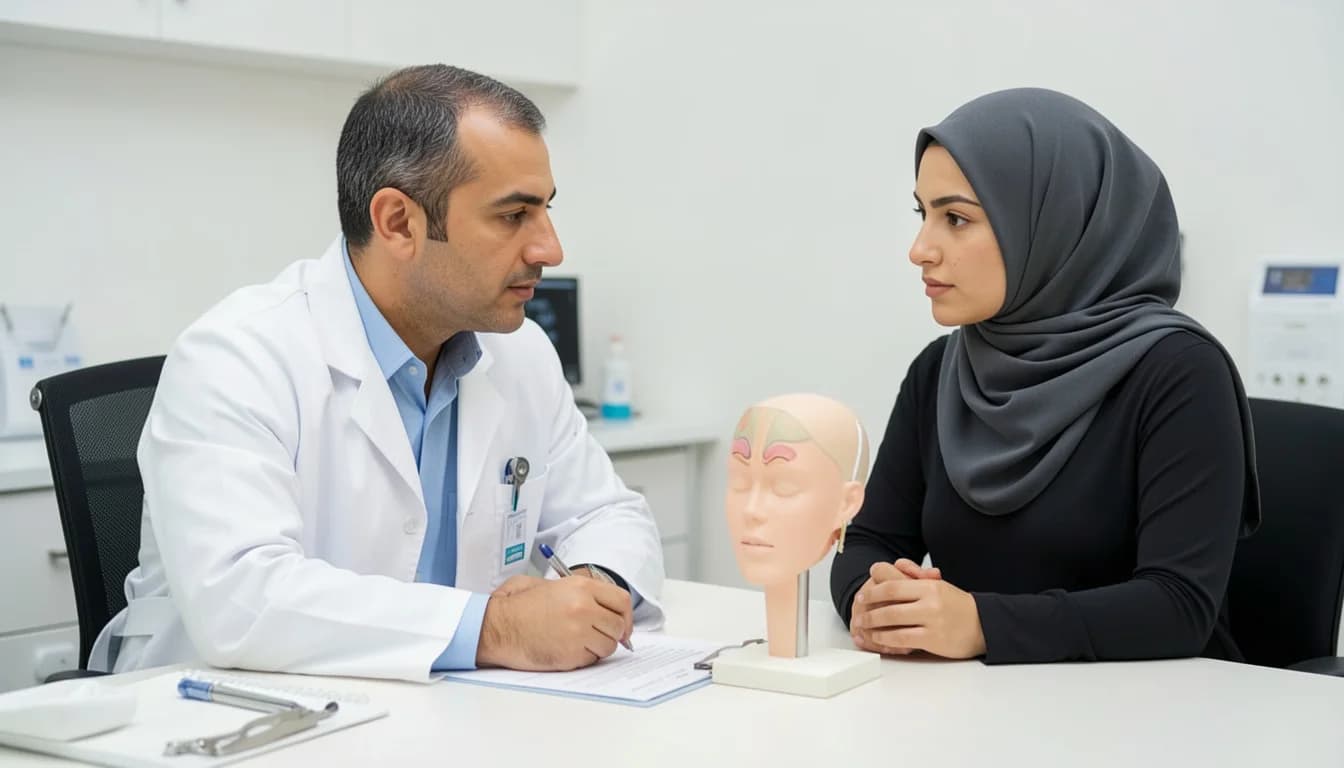
The diagnosis is clinical, based on the appearance and distribution of the rash, a history of recurrent itching, and a family history of asthma or allergic rhinitis. Severity is graded by affected area, intensity of itch and its effect on sleep, and triggers are reviewed: soaps and detergents, wool, sweat and heat, dry air and cleaning products, with specific questioning about any clear temporal link to a particular food.
2
Building the skin-barrier routine
A practical daily routine is established: one short lukewarm bath a day, a gentle fragrance-free cleanser, patting rather than rubbing dry, then applying a thick emollient to damp skin within minutes. The amount of emollient genuinely needed per week is specified, since using far too little is the commonest mistake, cotton clothing is advised and sweating is reduced.
3
Treating the active flare in prescribed bursts
A topical anti-inflammatory is prescribed at a potency matched to site and age, with detailed instructions: which areas to treat, how much, how often each day, for how many days, and when to stop. Non-steroidal alternatives are used for the face, eyelids and folds, wet wraps are added in severe flares under supervision, and any confirmed bacterial infection is treated.
4
Maintenance therapy at recurring sites
Once the flare settles, maintenance treatment may be prescribed for the sites that repeatedly relapse, applied on two days a week with emollient continued on the other days, because this genuinely reduces the number of flares. It is explained that skin which looks normal may still be inflamed beneath the surface, which is why waiting for a visible rash is not enough.
5
Monitoring itch and sleep, and escalation
Response is measured by itch, sleep quality and rash extent rather than appearance alone, and adherence and application technique are reviewed before declaring treatment failure. Where disease is severe and resistant, growth or schooling is affected, or infections recur, phototherapy or a systemic or biologic medicine is proposed after explaining the risks, required tests and monitoring.
Before the procedure
Do not apply ointment or moisturiser to the affected areas on the morning of the visit, so the doctor can see the skin as it really is. Bring everything you have used: emollients, cleansers, steroid ointments, antibiotics, syrups, herbal mixtures, oils and any creams from a pharmacy or from acquaintances, stating how long each was used and the result, especially any potent steroid used for a long time or on the face. Before the visit, record when the eczema started, how many flares occur each month, whether itching wakes the child at night and how often, and whether it has caused absence from school or work. Note any clear and repeated link to a food, soap, laundry detergent, fabric type or swimming pool, but do not remove staple foods from a child's diet before assessment. Tell the doctor about asthma or hay fever in the family, any previous skin infection, pregnancy or breastfeeding, and all current medicines. Photograph the skin during the worst flare, since it may look calm on the day of the appointment.
After the procedure
Continue the emollient daily and generously even after the rash clears, because this is what most effectively lengthens quiet periods. Take one short lukewarm bath a day, apply the moisturiser to damp skin immediately, use a fragrance-free cleanser and a detergent without softeners, and rinse clothing thoroughly. Keep nails short, use cotton sleep mittens for a child with severe night-time itching, and avoid wool, high heat and heavy sweating. Use the anti-inflammatory at the prescribed potency for the prescribed period and then stop as planned; do not move it to the face or eyelids without permission, and do not reduce the amount out of fear of it. Never apply an unknown mixture or oil to cracked skin.
Seek care promptly if there is: **a painful rash with small clustered blisters or rapidly spreading small ulcers, which may be a herpes infection needing urgent treatment**; **honey-coloured yellow crusts, pus, fever, or increasing swelling and pain suggesting bacterial infection**; **generalised redness of the body with shivering or feeling unwell**; **itching that prevents sleep for several nights or affects a child's weight and schooling**; **no improvement after two weeks of a correctly followed plan**; **skin thinning, stretch marks or persistent redness after steroid use**; **swelling of the face or lips or breathing difficulty after a medicine or food, which is an emergency**.
Expected duration
The assessment visit usually takes 20 to 40 minutes, a topical treatment burst for a flare typically runs seven to fourteen days, and response is generally reviewed after two to six weeks.
Dr Huda Al Qudah is a consultant dermatologist and venereologist, a Jordan University of Science and Technology graduate and holder of the Jordanian Board. Her …
Dr. Mohammad Helalat is a consultant dermatologist and venereologist practicing at Helalat Clinic in Dabouq. He assesses acne and acne scarring, pigmentation, d…
Dr Reem Mahmoud Al Awadi is a dermatologist and venereologist with the Jordanian Board in the specialty. At her Shmeisani practice, she assesses skin and hair c…
Which doctors are listed for Treatment of eczema in Jordan?
There are currently 3 doctor profiles linked to Treatment of eczema on ClinicsJo. Review the listed services and contact the practice to confirm availability with the doctor and branch you choose.
How can I find an appointment for Treatment of eczema?
Start with an available doctor's profile and use the contact or booking options shown there. Confirm the service, practice location and appointment time with the clinic. If this list is empty, broaden your search using the directory links on this page.
What does Treatment of eczema cost in Jordan?
Ask the practice for the current price and what it includes. A consultation fee shown on a profile is not necessarily the price of a procedure, tests or follow-up. Confirm any additional charges and insurance arrangements before your visit.
Explore related Chronic Skin Conditions doctor directories