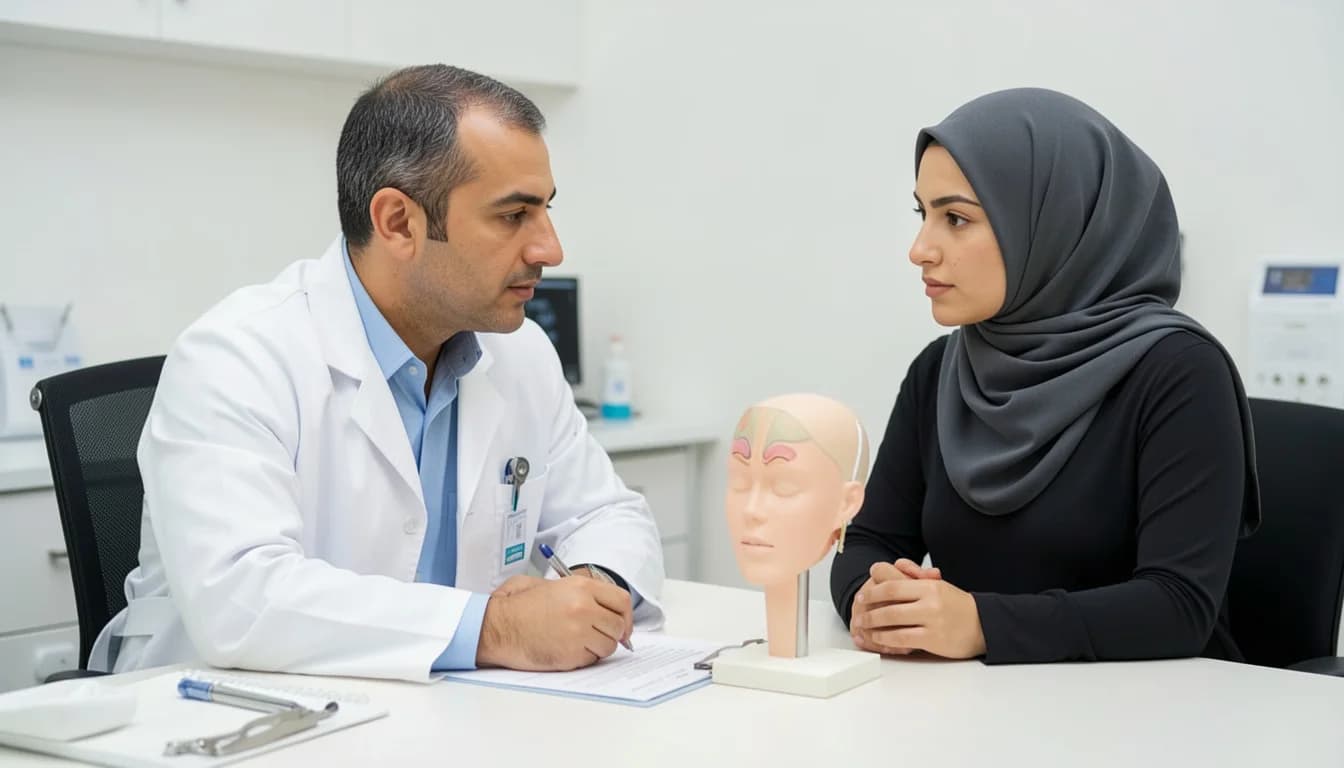
Vitiligo is an autoimmune skin condition in which the cells that produce melanin pigment are destroyed, producing sharply defined white patches on the skin; hair within a patch may also turn white. It affects any age and any skin tone, and appears most often on the face, around the mouth and eyes, on the hands and feet, around body openings and at sites of friction. It is **not contagious in any way**, does not pass through touch or shared belongings, is not a form of cancer, and is not caused by eating fish with dairy, by envy, or by any lapse in hygiene. These widespread false beliefs create a social stigma that harms patients more than the disease itself.
Vitiligo is a chronic condition that **can be controlled, and in many cases part of the depigmented area can be repigmented, but no treatment guarantees a permanent cure or prevents new patches from appearing**. Treatment therefore has two aims: first to halt progression, then to attempt repigmentation. Because it is autoimmune in nature, thyroid function tests and sometimes other investigations are requested, since the association with autoimmune disease, and thyroid disorders in particular, is well recognised.
Treatment options include topical corticosteroids for limited periods on localised patches; non-steroidal topical immunomodulators, which suit the face, eyelids and thin-skinned areas; newer topical agents that act on inflammatory signalling enzymes; and narrowband ultraviolet phototherapy, which is the backbone of treatment for widespread disease and is given in several sessions per week over months. Where the disease is advancing rapidly, a short course of systemic treatment may be used under supervision. Stable patches that have not responded may be treated surgically with skin grafting or melanocyte transplantation, and cosmetic camouflage with cover products remains a legitimate, immediate option for improving appearance.
The limits should be understood before starting. Response varies greatly by site: the face, neck and trunk usually respond better, whereas **fingertips, lips, bony areas and patches in which the hair has turned white respond poorly**. The first signs of repigmentation may take months of consistent treatment to appear, and stopping early is the commonest reason treatment fails. Even after successful repigmentation, relapse remains possible, and no medicine, food or supplement stops vitiligo permanently.
**Safety warnings:** do not use a potent topical steroid on the face or eyelids, or for prolonged periods without supervision, because it thins the skin, dilates surface vessels, can raise eye pressure when used on the eyelid, and causes stretch marks. Be wary of herbal mixtures applied before deliberate sun exposure, a recurring cause of burns and permanent hyperpigmentation. A white patch contains no melanin and burns quickly, so sun protection is a necessity rather than a luxury, and it also reduces the colour contrast. Suitability for any option is determined by clinical examination, not by reading.
1 specialists
Procedure steps
1
Diagnosis and mapping of patches
Vitiligo is diagnosed clinically from the appearance and margins of the patches, and a specialised lamp is used to reveal faint patches and define their true extent, particularly in lighter skin. Patches are photographed and measured to serve as an objective baseline for judging response, and the condition is distinguished from other causes of pale patches such as pityriasis, superficial fungal infection and post-inflammatory change.
2
Activity assessment and autoimmune screening
It is determined whether the disease is active or stable, because this changes the plan entirely: active disease needs progression halted first, while stable disease may be suitable for a surgical option. Thyroid function and antibody tests are requested, other investigations may be added according to symptoms, and family history of autoimmune disease and any fatigue, weight change or tremor are explored.
3
Site-appropriate topical treatment
For localised patches a topical regimen is prescribed according to site: non-steroidal options for the face, eyelids and folds, and a corticosteroid of defined potency and duration for the body with clear stopping points, or newer topical agents depending on availability and the case. The amount, duration and the need for periodic review to detect side effects early are all explained.
4
Phototherapy for widespread disease
Narrowband ultraviolet phototherapy is offered for multiple or widespread patches, in short sessions several times a week with carefully graded light dosing. It is explained that the first pigment spots may appear after two to four months of consistent attendance, that interruptions slow the result, and that burning and skin sensitivity are monitored between sessions.
5
Surgical options, camouflage and psychological support
For stable patches that have not responded over an adequate period, skin grafting or melanocyte transplantation in a qualified centre is discussed. Cosmetic camouflage with cover products is offered as an immediate solution that does not conflict with treatment. The psychological and social impact is addressed openly, especially in children and adolescents, together with correcting the belief that the condition is contagious.
Before the procedure
Do not cover the patches with camouflage products, make-up or dyes on the day of the visit, so the doctor can see their true margins and examine them with the specialised lamp. Photograph the patches in natural light at intervals if you can, since this is the best evidence of whether the disease is progressing or stable, and note approximately when the first patch appeared and which is the newest. Bring everything you have used: steroid ointments, topical products, herbal mixtures, oils and any previous prescription, with the duration of use and the result, and tell the doctor openly if you have been exposing the skin to the sun as a form of treatment. Report any autoimmune disease in you or your family, thyroid symptoms such as fatigue, weight change or tremor, any sun sensitivity or medicines that increase photosensitivity, a history of skin cancer or severe sunburn, and pregnancy, breastfeeding or plans to conceive. Do mention the psychological and social impact on you, as this is part of the plan rather than an addition to it.
After the procedure
Give treatment enough time before judging it: repigmentation usually begins as small dark dots inside the patch or from its edges after some months, and stopping early is the greatest waste of progress. Use the ointment only in the prescribed amount and for the prescribed period, do not transfer it to the eyelids or face without permission, and do not prolong potent preparations on a single area. Apply a broad-spectrum sunscreen daily to the patches, wear a hat and covering clothes, and avoid midday sun and tanning, because unpigmented skin burns quickly and a burn can enlarge the patch. Do not expose your skin to the sun as a treatment, and do not use mixtures combined with sun exposure. Protect the skin from cuts, friction and tattooing, follow up thyroid tests as your doctor requests, and attend phototherapy sessions without interruption.
Seek review promptly if there is: **rapid enlargement of patches or new patches appearing within weeks**; **a burn, blisters or severe pain after a light session or after applying a topical product**; **skin thinning, visible surface vessels or stretch marks where a steroid was used**; **eye pain, pressure or a change in vision when using an ointment near the eye**; **marked fatigue, clear weight change, tremor or palpitations, which may indicate a thyroid disorder**; **a patch that scales, itches, bleeds, ulcerates or changes shape, since this does not fit vitiligo and needs examination**; **severe psychological distress or social withdrawal in a child or adolescent**.
Expected duration
The assessment visit usually takes 20 to 40 minutes, each phototherapy session lasts a few minutes several times a week, and response is generally judged after three to six months of uninterrupted treatment.
Dr Huda Al Qudah is a consultant dermatologist and venereologist, a Jordan University of Science and Technology graduate and holder of the Jordanian Board. Her …
Which doctors are listed for Vitiligo treatment in Jordan?
There are currently 1 doctor profiles linked to Vitiligo treatment on ClinicsJo. Review the listed services and contact the practice to confirm availability with the doctor and branch you choose.
How can I find an appointment for Vitiligo treatment?
Start with an available doctor's profile and use the contact or booking options shown there. Confirm the service, practice location and appointment time with the clinic. If this list is empty, broaden your search using the directory links on this page.
What does Vitiligo treatment cost in Jordan?
Ask the practice for the current price and what it includes. A consultation fee shown on a profile is not necessarily the price of a procedure, tests or follow-up. Confirm any additional charges and insurance arrangements before your visit.
Explore related Chronic Skin Conditions doctor directories