
Amman Eye Clinic
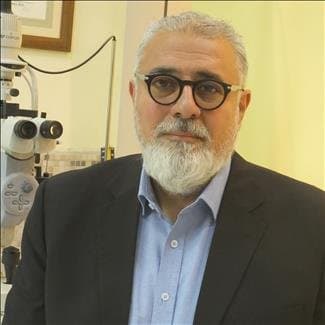
Dr. Mohammad Abu Samak is a consultant ophthalmologist with vitreoretinal fellowship training at Henry Ford Hospital in the United States. His clinical work cov…
Hours not listedInsurance not specified6 views
Trusted medical platform in Jordan

Diabetic eye screening is a scheduled dilated examination of the back of the eye that looks for diabetic retinopathy and macular changes before the patient has any complaint. Its purpose is not to diagnose visual loss after it has happened, but to detect treatable changes at a stage when treatment is effective, which is why it is performed on people who see perfectly well and have no symptoms at all. The logic of screening rests on a single fact: **diabetic retinopathy is silent until advanced stages**. The retina may already be at a proliferative stage requiring urgent laser while visual acuity remains completely normal, because the damage begins in the peripheral retina or in layers that do not immediately affect the centre of vision. **This is why an annual examination for a person with diabetes is not optional**; good vision is in no way proof that the retina is healthy, and relying on symptoms means arriving late. The examination includes measuring visual acuity and eye pressure, and examining the front of the eye at the slit lamp, since diabetes increases the risk of cataract, dry eye and corneal problems. The pupil is then dilated with drops and the fundus, macula and the whole peripheral retina are examined. Digital retinal photography may be added for documentation and comparison, cross-sectional retinal imaging if macular oedema is suspected, and dye angiography in selected cases. Intervals between examinations are shortened when retinopathy is already present, or when glucose control is poor, blood pressure is high or there is kidney disease, and **in pregnancy a woman needs early examination and closer follow-up because retinopathy can accelerate**. The limits of screening are clear. Screening **does not prevent retinopathy; it detects it**, and it is no substitute for controlling blood sugar, blood pressure and cholesterol and for stopping smoking, since those are what genuinely slow deterioration. A retinal photograph alone may not be enough to assess the periphery or the macula, so a fuller examination or additional imaging may be requested. A normal result today does not mean permanent safety; it means a next appointment that must be kept. The result is shared with your diabetes physician, because managing the eye and managing diabetes are one task.
You are asked how long you have had diabetes, its type, how well controlled it is and your latest glycated haemoglobin result, along with your blood pressure, lipids and kidney function, your medications, pregnancy status and smoking. This is not administrative routine: it is what determines the likelihood of retinopathy and how short the interval to your next screening should be.
Visual acuity is measured in each eye separately with and without your glasses, and refraction is checked when needed because a change in blood glucose can temporarily shift your prescription. Eye pressure is measured, since people with diabetes are at higher risk of certain types of glaucoma, and all findings are recorded for comparison with future screenings.
The lids, cornea, lens and iris are examined at the slit lamp, looking for early cataract, dry eye, corneal problems and new vessels on the iris, all of which are more common in diabetes. This step identifies causes of reduced vision that have nothing to do with the retina and are treated in a completely different way.
Drops are instilled to dilate the pupil and time is allowed for them to work, then the fundus is examined with special lenses: the optic nerve, macula, vessels and the entire peripheral retina. The examiner looks for small haemorrhages, deposits, venous changes, new vessels and macular swelling, and the stage of retinopathy is defined precisely.
Findings are documented with digital retinal photography where available, with cross-sectional imaging added if macular oedema is suspected, and the next screening interval is then set according to the stage: annually when the retina is normal and glucose is controlled, and sooner when retinopathy, pregnancy or poor control is present. The result is explained to you and sent to your diabetes physician.
Bring someone to take you home, **because you will not be able to drive after dilation as your vision stays blurred for hours**, and bring sunglasses since light sensitivity is expected. Bring your current glasses or their prescription, your glycated haemoglobin result and recent home glucose readings, your blood pressure measurement, kidney and lipid results, and a complete list of your medicines including insulin. Know the date you were diagnosed with diabetes and the date and result of your last retinal examination if you have it. Eat and take your usual medicines and do not attend fasting, since a low blood sugar during the examination is unpleasant and unnecessary. Tell the doctor if you are pregnant or planning pregnancy, about any previous laser, injections or eye surgery, and about any new symptom such as floaters, flashes, blurring or distortion of straight lines.
Your vision will stay blurred and your eyes light-sensitive, usually for four to six hours after dilation, so do not drive, wear sunglasses and avoid fine reading and screens during that time. Keep your screening report and give a copy to your diabetes physician, and put your next screening date in your calendar even if you see perfectly well, because **the absence of symptoms does not mean the retina is healthy, and diabetic retinopathy is silent until advanced stages**. Keep working on glucose, blood pressure and cholesterol control and on stopping smoking, since these are what genuinely slow deterioration. **Seek same-day review and do not wait for your annual appointment if you develop sudden flashes of light, a new shower of dense floaters, a black curtain covering part of your field of vision, a sudden drop in sight, distortion of straight lines, or severe eye pain with redness, because delay with these signs costs sight that cannot be recovered.**
The complete examination usually takes 45 minutes to an hour and a half, most of it waiting for the dilating drops, which need about 20 to 30 minutes to work. Vision stays blurred for four to six hours. Screening is repeated annually when the retina is normal and control is good, and sooner with retinopathy, pregnancy or poor control.
Dr. Mohammad Abu Samak is a consultant ophthalmologist with vitreoretinal fellowship training at Henry Ford Hospital in the United States. His clinical work cov…
There are currently 1 doctor profiles linked to Diabetic Eye Screening on ClinicsJo. Review the listed services and contact the practice to confirm availability with the doctor and branch you choose.
Start with an available doctor's profile and use the contact or booking options shown there. Confirm the service, practice location and appointment time with the clinic. If this list is empty, broaden your search using the directory links on this page.
Ask the practice for the current price and what it includes. A consultation fee shown on a profile is not necessarily the price of a procedure, tests or follow-up. Confirm any additional charges and insurance arrangements before your visit.