Dr. Yaser Kawar Clinic
Dr. Yaser Kawar is a consultant in pulmonary and critical care medicine. He studied medicine at Jordan University of Science and Technology and completed intern…
Hours not listedInsurance not specified7 views
Trusted medical platform in Jordan

Pulmonary function testing is a group of breathing tests that measure how much air your lungs can hold, how much of it you can push out and how fast, and how efficiently oxygen crosses from the air sacs into the blood. Its best-known component is spirometry, and lung volume measurement, gas transfer capacity, and a bronchodilator response test may be added to see whether any narrowing is reversible. The value of the test is that it turns the complaint of feeling breathless into numbers that can be measured and compared. It is how chronic obstructive pulmonary disease is diagnosed, and that diagnosis must never rest on assumption or on smoking history alone: it requires documented spirometry. It is also how asthma control is monitored, how an obstructive pattern that blocks airflow out is distinguished from a restrictive pattern that shrinks lung volume as in fibrosis, how patients are assessed before surgery, and how people exposed to dust and fumes at work are followed. When chronic obstructive pulmonary disease is confirmed, the truth should be stated without softening: stopping smoking is the only intervention that slows the decline in lung function. Inhalers, pulmonary rehabilitation, vaccination, and oxygen relieve symptoms, reduce flare-ups, and improve quality of life, but they do not stop that decline. Anyone who keeps smoking keeps deteriorating even with every available medication added. An important limitation is that this test does not detect sleep apnoea. Snoring is not merely a nuisance for whoever sleeps nearby: snoring with witnessed pauses in breathing, unrefreshing sleep, and daytime sleepiness is linked to high blood pressure, heart disease, rhythm disturbance, and a higher risk of road traffic accidents. Diagnosing it requires a sleep study that measures breathing and oxygen during sleep, not an estimate, not a partner's description, and not a judgement based on body weight. Results also depend heavily on your effort: a weak or incomplete blow produces misleading numbers that can be misread as disease. A normal result does not always exclude asthma, because symptoms fluctuate and a challenge test or follow-up may be needed, and the test cannot tell you whether breathlessness is cardiac or due to anaemia. Finally, a myth worth correcting: holding your breath or blowing up balloons does not strengthen the lungs; useful training is a structured pulmonary rehabilitation programme, not a home trick.
The technician asks about recent eye, chest, or abdominal surgery, about a recent heart attack, collapsed lung, or pulmonary embolism, and about active bleeding or ongoing chest pain. Such situations may require postponing the test, because forceful blowing briefly raises pressure inside the chest and head, and deferring is a safety decision rather than an obstacle.
Height, weight, and age are recorded because results are compared with predicted values for someone like you, then the technician explains the manoeuvre and rehearses it with you: a full breath in to complete filling, then blowing out as hard and as long as possible through the mouthpiece with no leak at the lips. Good coaching determines the quality of the entire result.
The manoeuvre is repeated several times with short rests until technically acceptable and reproducible efforts are obtained, because a single attempt is never enough. You may feel briefly light-headed or cough, which is common and settles with sitting and resting; tell the technician at once if you feel chest pain or marked dizziness.
If an obstructive pattern appears, a bronchodilator is given and the measurement repeated after a short interval to see how much improves, which separates reversible from fixed obstruction. Lung volume measurement and gas transfer capacity may be added when restrictive disease or fibrosis is suspected, along with oxygen measurement during exertion.
The physician reads the numbers together with your symptoms, examination, and imaging, because a number alone does not diagnose. The pattern and its severity are defined, and a plan is built starting with smoking cessation for smokers, prescribed inhalers with technique correction, pulmonary rehabilitation, and vaccination, with a date set for repeat testing to allow comparison over time. Snoring with daytime sleepiness is referred for a sleep study.
Avoid smoking for several hours before the test, skip a heavy meal and stimulant drinks beforehand, and avoid strenuous exercise in the preceding hour. Tell the technician the names of all your inhalers and exactly when you last used one, ask your clinic in advance whether any dose should be delayed before testing, and never stop a medication on your own without instructions. Wear loose clothing that does not compress your chest or abdomen and avoid a tight belt. Mention removable dentures, say if you are pregnant, and report a current respiratory infection, which may mean rescheduling. Most importantly, disclose any recent eye, chest, or abdominal surgery, a recent heart attack, or a recent collapsed lung, and bring reports from earlier tests so results can be compared.
The test needs no recovery period and you can return to your day immediately. Mild tiredness, brief light-headedness, or coughing after repeated efforts is possible; sit down and drink water until it passes. If you were given a bronchodilator during the test, slight hand tremor or palpitations for a few minutes are common and settle. Resume your usual inhalers according to your doctor's instructions, and keep a copy of the report, because comparing one test with the next matters more than reading a single number. See your physician to interpret the result and build a plan, and if you smoke, start quitting immediately, since it is the only step that slows loss of lung function. **Go to the emergency department immediately for chest pain during or after the test, sudden severe breathlessness, blue lips, breathlessness that stops you finishing a sentence, or fainting.** Also tell your doctor if you snore with pauses in breathing or fall asleep during the day, because that requires a sleep study rather than guesswork.
Spirometry alone usually takes 15 to 20 minutes including coaching and repeated efforts, rising to 30 to 45 minutes when a bronchodilator test is added because of the waiting interval before repeat measurement. A comprehensive study with lung volumes and gas transfer may run 45 to 60 minutes or longer.
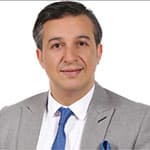
Dr. Yaser Kawar is a consultant in pulmonary and critical care medicine. He studied medicine at Jordan University of Science and Technology and completed intern…
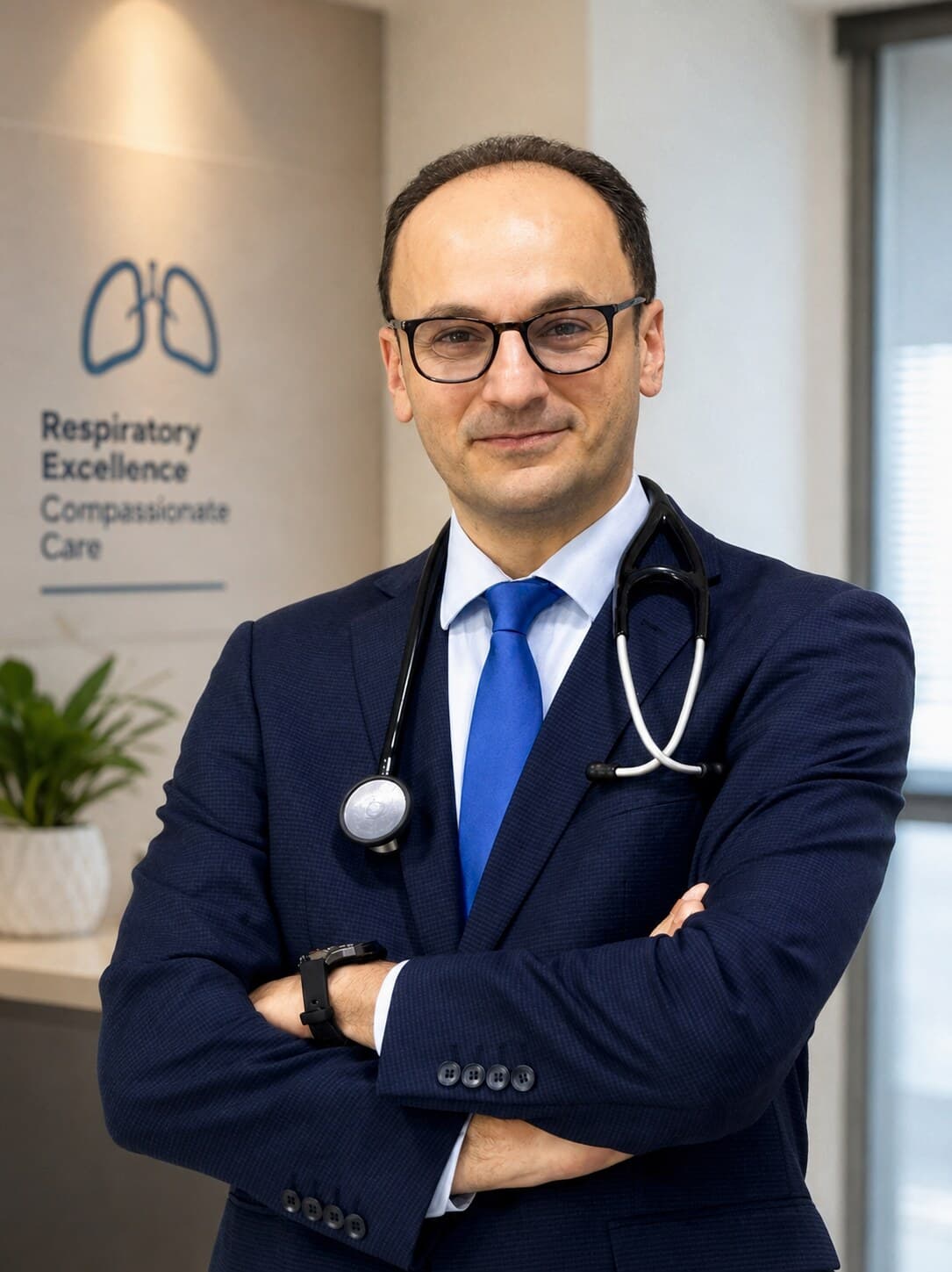
Dr. Mohammad Hassan Saeed Al Tarawneh practices pulmonary, respiratory, allergy and sleep medicine. His published scope includes asthma, COPD and lung fibrosis …
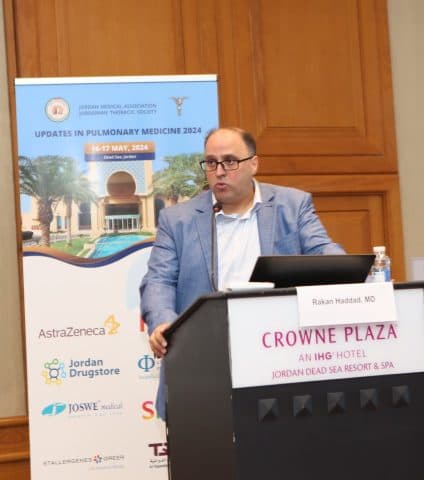
Dr Rakan Haddad is a consultant in pulmonary and sleep medicine, with Jordanian boards in pulmonology and internal medicine and a medical degree from Jordan Uni…
Dr Ahmad AlKhyat is a specialist in pulmonology and sleep medicine with Jordanian board qualifications in pulmonary and internal medicine. His published practic…
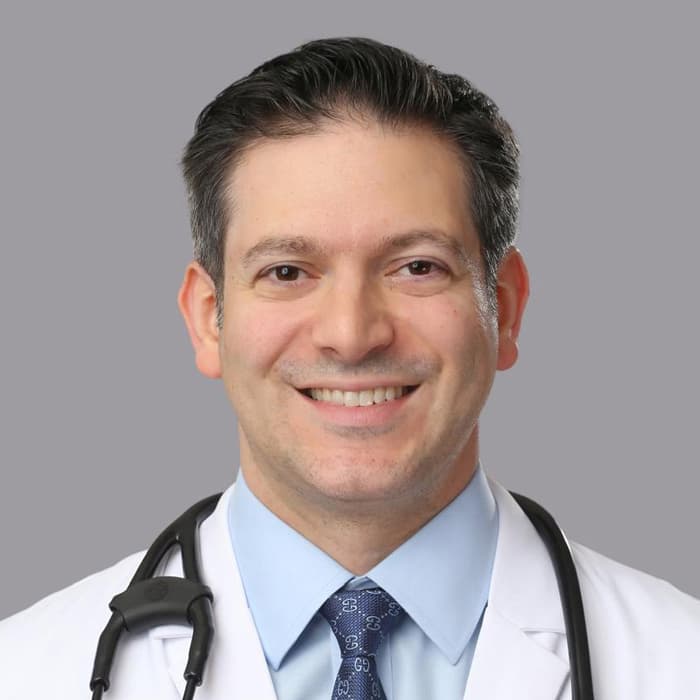
Dr. Yousef Najib Nawas sees pulmonary and internal medicine patients at his clinic in Al Khalidi Hospital’s outpatient building. His published scope includes as…
There are currently 5 doctor profiles linked to Pulmonary Function Testing on ClinicsJo. Review the listed services and contact the practice to confirm availability with the doctor and branch you choose.
Start with an available doctor's profile and use the contact or booking options shown there. Confirm the service, practice location and appointment time with the clinic. If this list is empty, broaden your search using the directory links on this page.
Ask the practice for the current price and what it includes. A consultation fee shown on a profile is not necessarily the price of a procedure, tests or follow-up. Confirm any additional charges and insurance arrangements before your visit.