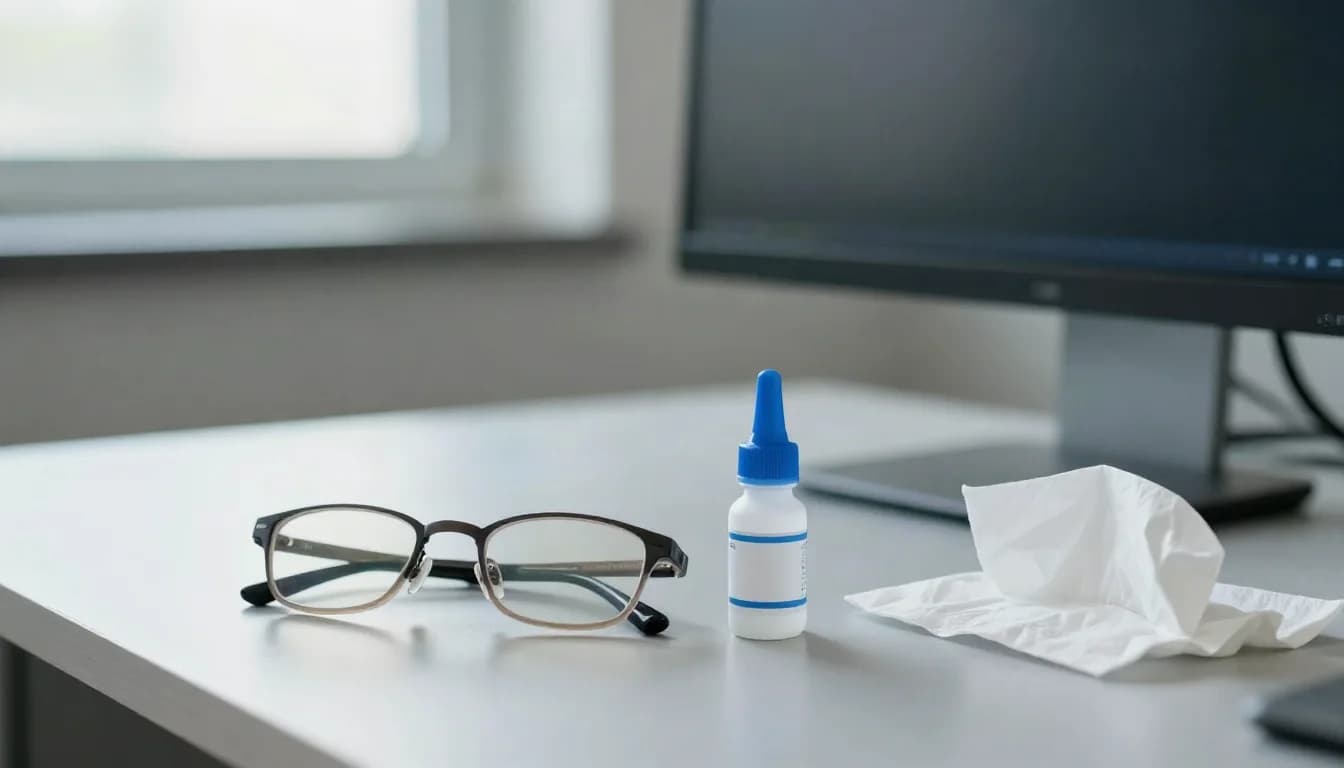
Top 3 Eye Clinics in Shmeisani — Glasses and eye drops beside a computer screen — directory of the best Ophthalmology doctors in Shmeisani, Amman

Top 3 Eye Clinics in Shmeisani 2026

If you searched for the best eye clinics in Shmeisani, this page lists three ophthalmology clinics in the area, all close to or inside Specialty Hospital. They are ordered by a published score of how complete and checkable each profile is, not by treatment quality. Compare their locations, listed services and confirmed hours, then read practical advice on when to see an eye doctor and what to ask before booking.

3 of 3 clinics on ClinicsJoUpdated 13 October 2026How we chose

At a glance

#ClinicAreaSuitsProfile score
1Dr. Ahmed Khalaf Nawaiseh Eye ClinicShmeisaniStrabismus or general eye consultations inside Specialty Hospital29/100
2Dr. Moath Al Hasan Eye ClinicShmeisaniRetinal, cataract or refractive questions near Specialty Hospital29/100
3Dr. Rawan Al Far Ophthalmology ClinicShmeisaniReviewing earlier eye investigations and follow-up, from 09:30 most days27/100
  1. 1Dr. Ahmed Khalaf Nawaiseh Eye Clinic

    Dr. Ahmed Khalaf Nawaiseh Eye Clinic is on the fourth floor of outpatient building A at the Specialty Hospital in Shmeisani, Amman. Ophthalmologist Ahmed Khalaf Nawaiseh leads the clinic, and its reception coordinates eye-health, visual and strabismus consultations. Published services are ophthalmology consultation, eye symptom assessment and vision follow-up. Confirmed hours are Saturday to Wednesday 10:00–18:00 and Thursday 10:00–15:00, so Thursday reception is shorter than other working days. The clinic asks patients to confirm visit arrangements by phone before coming, which is worth doing if you plan a Thursday visit.

    Suits: Strabismus or general eye consultations inside Specialty Hospital

  2. 2Dr. Moath Al Hasan Eye Clinic

    Dr. Moath Al Hasan Eye Clinic is at Abu Eid Plaza in Shmeisani, opposite the Specialty Hospital emergency department. Ophthalmologist Moath Al Hasan offers ophthalmology consultations, and the clinic advertises retinal, cataract and refractive fields. Listed services are ophthalmology consultation, eye symptom assessment and vision follow-up. Confirmed hours are Saturday to Wednesday 10:00–17:00 and Thursday 10:00–16:00, which gives a slightly longer Thursday window than some neighbouring clinics. The profile advises confirming the examination you need and that the clinician will be attending before you visit.

    Suits: Retinal, cataract or refractive questions near Specialty Hospital

  3. 3Dr. Rawan Al Far Ophthalmology Clinic

    Dr. Rawan Al Far Ophthalmology Clinic is at 11 Hunayn Bin Ishaq Street, near Specialty Hospital in Shmeisani, Amman. Ophthalmologist Rawan Al Far handles consultations about eye symptoms and vision, along with review of investigations and follow-up options. Published services are ophthalmology consultation, symptom and investigation review, and treatment-plan follow-up. Confirmed hours are Saturday, Sunday, Tuesday and Wednesday 09:30–18:00, Monday 11:30–18:00 and Thursday 10:30–15:00. The clinic asks patients to confirm the appointment, the service required and the fees before visiting.

    Suits: Reviewing earlier eye investigations and follow-up, from 09:30 most days

This shortlist covers 3 of the 3 matching clinics on ClinicsJo. Browse the full list and filter it.

How we chose this list

Every matching clinic profile in this area was scored out of 100 for how complete and checkable its published information is, and the highest scores appear here in order. Featured placement does not change a profile's score, and the score does not measure treatment quality or outcomes — it tells you how much you can check before you call.

  • Profile verified by the platform15
  • Approved reviews (number and average)20
  • Written clinic description8
  • Logo and photos10
  • Published services10
  • Doctors linked to the clinic10
  • Listed insurers7
  • Confirmed opening hours8
  • Map location5
  • Years since establishment (up to 20)5
  • Official website or account2

Ties are broken by the number of approved reviews, then published years of experience. Confirm the service, branch, appointment, fees and insurance coverage with the practice before visiting.

When do you need an eye doctor?

An ophthalmologist is a medical doctor who diagnoses and treats eye diseases, assesses and corrects vision problems, and manages conditions affecting the retina, cornea and other parts of the eye. Common reasons people visit include a full eye examination, dry eye, cataract (a clouding of the lens), checks for raised eye pressure linked to glaucoma, retinal screening for people with diabetes, and prescriptions for glasses or contact lenses.

Signs it is worth booking an appointment

  • Vision that has become blurred or weaker, even gradually
  • A red, sore or irritated eye that does not settle within a day or two
  • Frequent headaches with eye strain, especially after reading or screen work
  • New floaters (small spots or threads drifting across your vision)
  • Diabetes: regular retinal checks are widely recommended, usually once a year or as your doctor advises, because early diabetic eye changes often cause no symptoms
  • A family history of glaucoma, or being over 40 and never having had eye pressure checked

Warning signs that need urgent care

Some eye symptoms can signal a condition that threatens sight within hours. Go to an emergency department or call 911 if you have:

  • Sudden loss or dimming of vision in one or both eyes
  • A shadow or curtain moving across your vision, or a sudden shower of floaters with flashes of light
  • Severe eye pain, especially with headache, nausea, vomiting or coloured halos around lights
  • A chemical splash in the eye: rinse immediately with plenty of clean water and seek emergency care
  • An injury, cut or object stuck in the eye
  • Sudden double vision, or vision changes with facial weakness or difficulty speaking
  • A painful red eye with sensitivity to light, particularly if you wear contact lenses

Do not wait for a routine clinic slot for these symptoms.

How to choose among the clinics here

All three clinics are in Shmeisani and close to Specialty Hospital, so location alone will not separate them much. People looking for the best eye clinics in Shmeisani usually get further by matching their own need to what each profile publishes.

  • Match the concern to the published focus. One clinic's description mentions strabismus consultations; another advertises retinal, cataract and refractive fields; the third highlights review of investigations and follow-up. If your concern falls into one of these, start there, but always confirm the specific examination is available.
  • Bring existing results to the right place. If you already have scans, test results or a treatment plan from another doctor, a clinic that lists investigation review and treatment-plan follow-up may suit a second look.
  • Check the hours against your schedule. Opening times differ, especially on Mondays and Thursdays. One clinic opens at 09:30 most days, another closes at 17:00 rather than 18:00, and Thursday hours are shorter at all three.
  • Consider access. One clinic is inside an outpatient building of Specialty Hospital; the other two are in nearby buildings. If you have limited mobility, ask about lifts and the walking distance from parking.
  • Ask about equipment for your test. Eye pressure measurement, retinal imaging and dilated examinations need specific equipment and time. Ask whether your test is done on site during the consultation.

What to expect at the first visit

A first eye consultation usually starts with questions about your symptoms, general health and medicines, followed by a vision test and an examination of the front and back of the eye. Depending on your symptoms, the doctor may measure eye pressure or use drops to widen (dilate) the pupils so the retina can be seen clearly.

How to prepare

  • If dilating drops are likely, plan not to drive for several hours afterwards, as vision can stay blurred and sensitive to light. Bring sunglasses and, ideally, someone to accompany you.
  • Contact lens wearers should ask when booking whether to remove lenses before the visit, and bring their lens case and glasses.
  • Note when symptoms started, which eye is affected and what makes them better or worse.

What to bring

  • Your current glasses and any previous prescriptions
  • A list of all medicines, including eye drops and supplements
  • Previous eye reports, scans or test results
  • For people with diabetes, recent blood sugar results if you have them
  • Your ID and insurance card if relevant

Questions worth asking

  • What is causing my symptoms, and what tests confirm it?
  • What are the treatment options, including doing nothing for now?
  • Which symptoms should make me come back sooner or go to emergency care?
  • When should I return for follow-up?

Insurance, fees and booking: what to ask before the appointment

The profiles on this page do not publish consultation fees, so ask directly when you book. Useful questions include:

  • What is the consultation fee, and are tests such as eye pressure measurement or retinal imaging charged separately?
  • Is a follow-up visit included or charged again?
  • Does the clinic work with my insurance company, and do I need prior approval or a referral?
  • Will I pay first and claim later, or is billing direct?
  • Is the doctor attending on the day I plan to visit?

Two of the clinics specifically ask patients to confirm the appointment, service or clinician attendance before coming, so a quick confirmation call the day before saves a wasted trip.

Getting there

Shmeisani is a central district of Amman, the capital and the heart of Jordan's healthcare system. All three clinics on this page are at or near Specialty Hospital, which makes it a practical reference point when giving directions to a taxi or ride-hailing driver. One clinic is inside the hospital's outpatient building, one is opposite its emergency department, and one is on a nearby street.

Patients coming from other Amman districts such as Abdoun, Sweifieh, Gardens, Jubeiha, Khalda, Tla' Al-Ali, Dabouq or the 7th Circle should allow extra time at peak hours, as central Amman traffic can be heavy. Parking around hospitals is often busy, so arriving early helps. If your pupils are likely to be dilated, arrange a lift home rather than driving.

If you are referred for further care, Amman also hosts major hospitals such as Jordan University Hospital, King Hussein Medical Center, Al-Bashir Hospital and Istishari Hospital, and your doctor can advise where to go.

Checklist before you book

  • Decide whether your symptoms are routine or need urgent care (call 911 for sudden vision loss, severe pain, injury or chemical exposure)
  • Pick the clinic whose published services and hours fit your need
  • Confirm the doctor's attendance and that your specific test is available
  • Ask for the consultation fee and any separate test charges
  • Check insurance acceptance and whether approval is needed
  • Gather glasses, medicines list and previous eye reports
  • Plan transport, especially if dilating drops may be used
  • Note your symptoms and questions in advance

Frequently asked questions

How was this list of eye clinics in Shmeisani chosen?
The clinics are ordered by a 100-point score that measures how complete and checkable each profile is, including verification, approved reviews, description, photos, services, linked doctors, insurers, confirmed hours, map location, years established and official website. Featured profiles, if any, appear first with a badge. The order does not measure treatment quality or outcomes, so use it as a starting point and compare details yourself.
Which eye symptoms need emergency care rather than a clinic appointment?
Seek emergency care or call 911 for sudden vision loss, a curtain or shadow across your vision, a sudden burst of floaters with flashes, severe eye pain with headache or nausea, a chemical splash, an eye injury, or sudden double vision. For a chemical splash, rinse the eye with plenty of clean water straight away while getting help.
How often should people with diabetes have their eyes checked?
Mainstream guidance generally recommends a retinal check at least once a year for people with diabetes, or more often if your doctor advises. Diabetic eye changes can develop without symptoms, so regular screening matters even when your vision feels normal. Bring recent blood sugar results and a list of medicines to the appointment if you have them.
Can I drive after an eye examination?
If the doctor uses drops to dilate your pupils, your vision may be blurred and sensitive to light for several hours, making driving unsafe. Ask when booking whether dilation is likely. If it is, bring sunglasses and arrange for someone to drive you, or use a taxi or ride-hailing service to get home from Shmeisani.
How much does an eye consultation cost at these clinics?
None of the three profiles publishes a consultation fee, so ask the clinic directly when booking. Also ask whether tests such as eye pressure measurement or retinal imaging are charged separately, whether follow-up visits cost extra, and whether your insurance is accepted. Dr. Rawan Al Far Ophthalmology Clinic specifically asks patients to confirm fees before visiting.
Are the eye clinics in Shmeisani open on Thursdays?
Yes, all three list Thursday hours, though shorter than other days: Dr. Ahmed Khalaf Nawaiseh Eye Clinic 10:00–15:00, Dr. Moath Al Hasan Eye Clinic 10:00–16:00 and Dr. Rawan Al Far Ophthalmology Clinic 10:30–15:00. Confirm before you go, as the clinics recommend checking appointments and attendance in advance.
What should I bring to my first eye appointment?
Bring your current glasses, any previous prescriptions, a list of all medicines including eye drops, and earlier eye reports or scans. Contact lens wearers should ask whether to remove lenses beforehand and bring their glasses. Write down when symptoms started and which eye is affected, and bring your ID and insurance card if relevant.

This page helps you compare published profiles; it is not medical advice and does not rank clinical skill. In an emergency call 911 or go to the nearest emergency department.